Weather Slows Environmental Rehabilitation and Emergency Repairs, with Work Resuming Late Day and Overnight

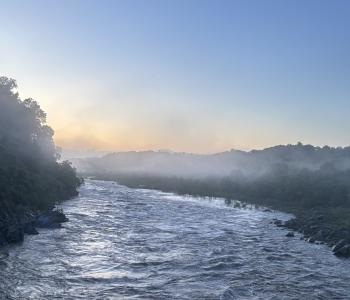
- Environmental Rehabilitation and Emergency Repair work on the Potomac Interceptor sewer line was slowed by rain and snow, as we enter day 33 without an overflow into the Potomac River.
- When there are measurable rain and snow, crews are unable to do environmental rehabilitation work due to the risk of spreading contamination. In addition, geopolymer being used to waterproof the trench boxes around the excavated pipe sections cannot be applied in wet weather.
- Work resumed on the emergency repair late in the day after the rain ended and will continue overnight. The final step to return the flow to the Potomac Interceptor involves applying geopolymer to seal the trench boxes. This will allow the wastewater flow to return in an “open flow channel” inside the pit where sections of the pipe remain open.
- Waterproofing the trench boxes is the last step before returning the flow to the Potomac Interceptor. This will involve a carefully orchestrated process to slowly lift the bulkhead gate under extreme hydraulic pressure while turning pumps off until all flow is returned.
- Inside the pit, the open pipe sections will be used for the previously planned long-term rehabilitation of the interceptor. Work is being accelerated to rehabilitate more than 2700 linear feet of the pipeline in this area using state-of-the-art slip lining and geopolymer technologies.
- Keeping the pipe open is the most efficient way to do this work – where the existing pipe is slip lined by inserting new pipe sections through the open pipe sections. In areas where slip lining can’t be done, high strength geopolymer will be applied. This will strengthen and reinforce the pipe to like new condition - extending its service life.
- Once flow is returned to the interceptor, DC Water and its contractor will demobilize the site, and begin staging new equipment inside the excavation pits. Construction will begin to install a hydraulic system inside the trench boxes, that will push in the new pipe sections while there is active flow going through.
- The long-term rehabilitation is expected to take about 9-10 months but will not impact the return of flow to the interceptor.
- Environmental rehabilitation work is expected to resume on Friday, with drier weather expected. Work continues in Area 1 from the collapse sit along the drainage channel, and in Area 2 by Rock Run Culvert and the unnamed tributary to the river.
- This is Phase 1 of the rehabilitation, where work is underway to clear debris, excavate contaminated soil, and install matting for erosion and soil control.
- Work will begin on Area 3 along the Potomac River shoreline once water levels recede, and work to clean-up Area 4 - C & O Canal – will start immediately upon completion of the emergency repair when wastewater levels in the canal drop.
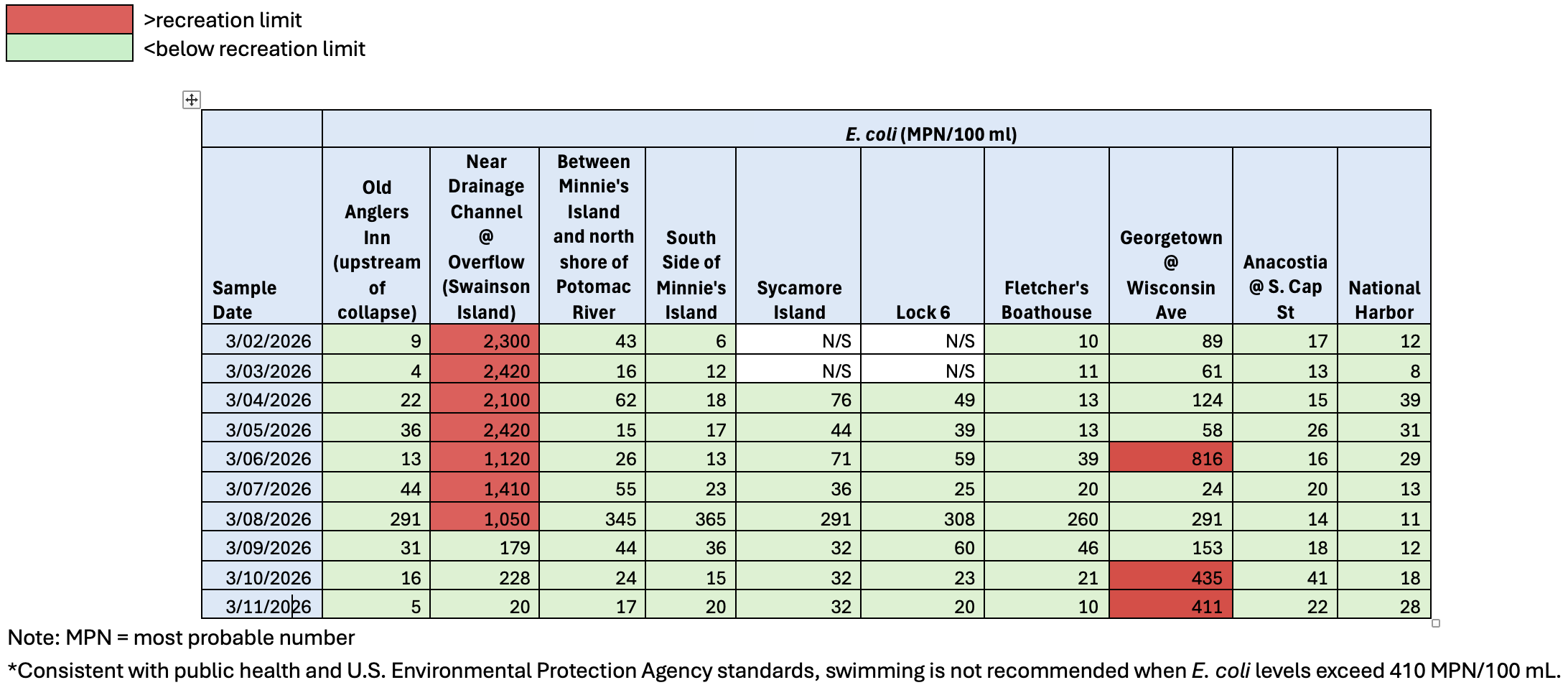
Water Quality Sampling Results
Fluctuations in water quality are influenced by factors such as rain, heat, or other weather events, river flow, runoff, pollutants, releases of combined overflows, and other sources discharging into waterways. Given these variables, measurements taken much further downstream cannot be attributed solely to this incident.
For the Potomac River, historical water quality data shows E. coli levels may vary from a range as low as 10 MPN/100mL to as much as 5,000 MPN/100mL on a given day. A more detailed explanation is posted on the District Department of Energy and Environment (DOEE) website at doee.dc.gov/release/potomac-interceptor-update-and-faqs.
As of March 4, two new sampling locations have been added at Sycamore Island and Lock 6. Sample results from February 23 - present. Past results may be found here.
For more information, including the latest news and updates, and to provide feedback on the Environmental Rehabilitation Plan go to our dedicated page for the Potomac Interceptor Repairs.