From Classroom to Community: A Student Spotlight on DC Water's SPLASH Program
“I’ve used water today. And so have you.”
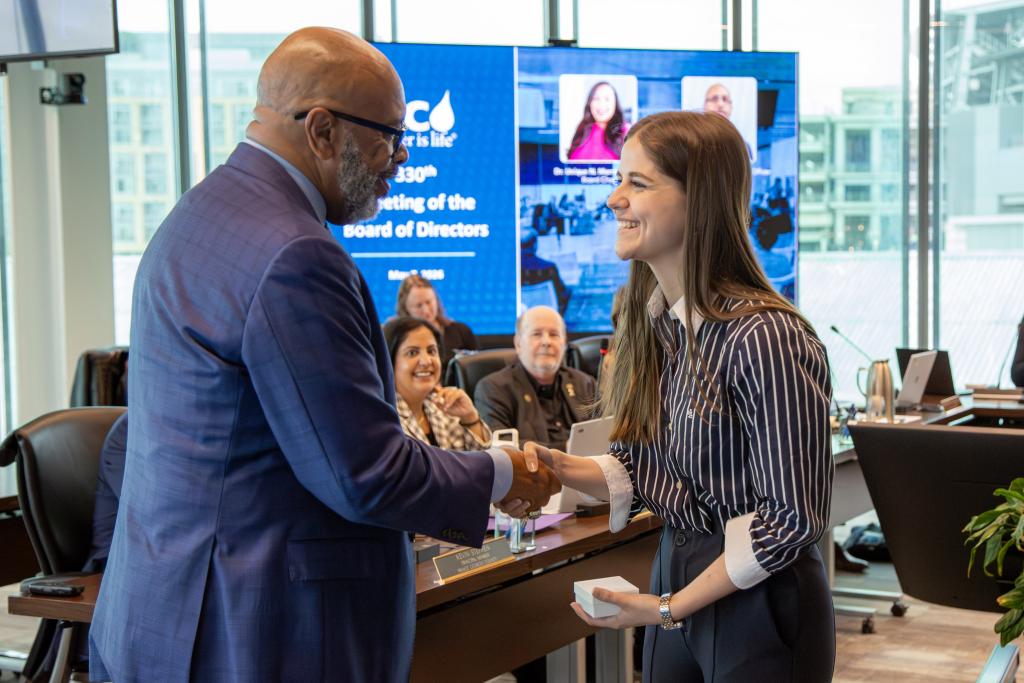
That’s how Lily MacDonald, a graduate student studying Strategic Communication at American University, opened her speech.
Originally from Scotland, MacDonald moved to Washington, D.C., in August 2025 on a Fulbright Scholarship.
Near the end of the spring semester, students in a speechwriting course taught by Professor Eric Schnure were tasked with delivering a short speech advocating for a cause that was personally meaningful to them.
MacDonald chose water.
More specifically, she chose to talk about what happens when it’s not there.
“When I first started brainstorming for the assignment, I realized the most powerful topic might be the one we often overlook: water,” she said. “We reach for it to cool down, to calm down, and to reset. It’s how I wake myself up in the morning and wind down at night.”
It’s also something, she admitted, many people rarely think twice about.
“Now imagine knowing that every drop you let slip down the drain is something a child is cupping their hands to catch - reaching, straining, and still coming up empty,” she said from the podium at the front of the classroom.
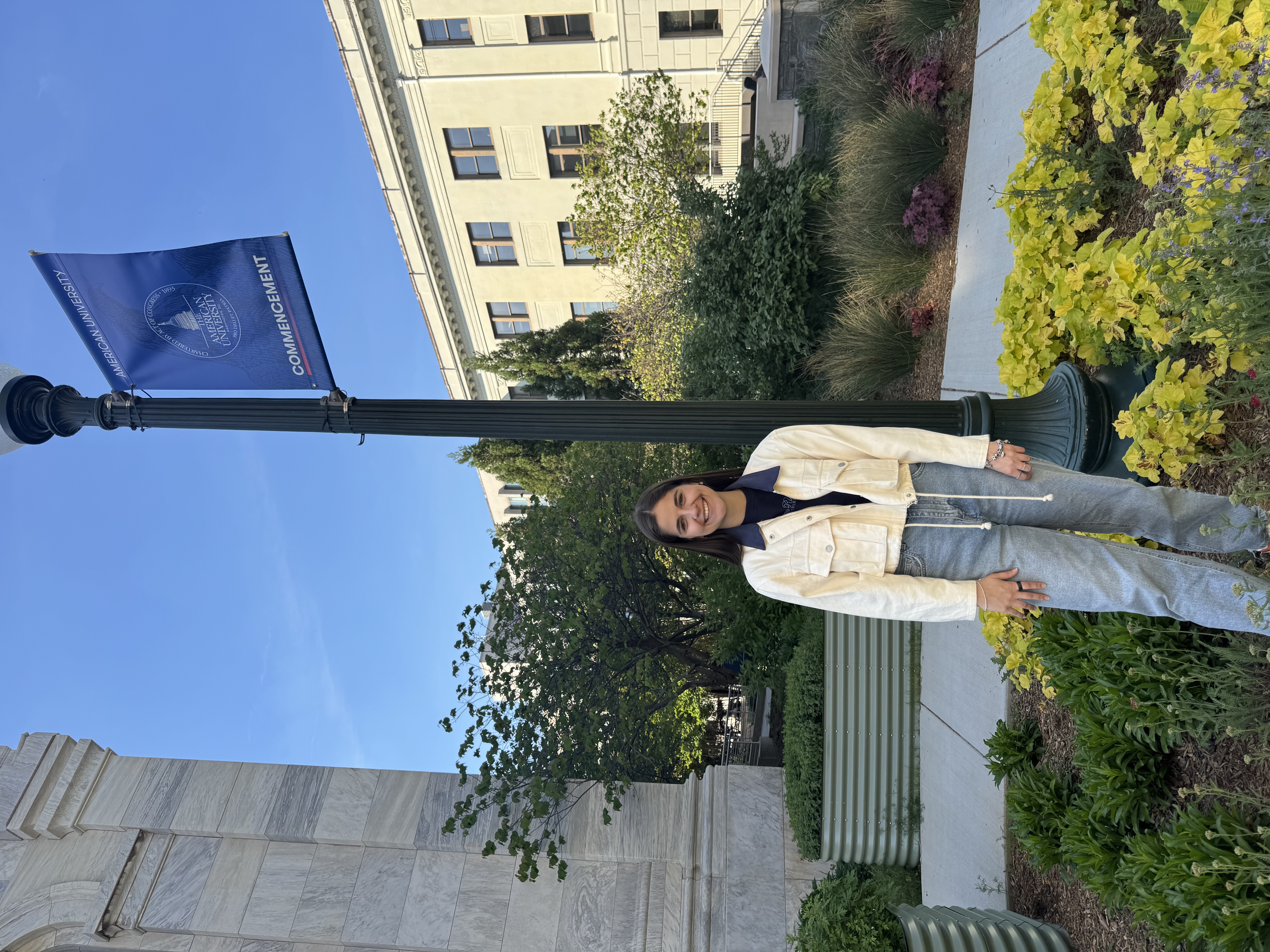
She then brought the issue closer to home.
“In this city [Washington], right now, thousands of families are choosing between their water bill and their dinner,” said MacDonald. “That’s not overseas. That’s Wards 4, 5, 7, and 8.”
The numbers, she explained, were difficult to ignore.
“9,000 American lives could be saved every year if water simply stayed on in homes that couldn’t pay. That’s the same as all of AU’s undergraduate students plus half of its graduate students combined.”
And the solution, she argued, doesn’t have to be complicated.
“For less than a dinner out. For less than a few Ubers. We can give our neighbors something real.”
That thinking led her to DC Water’s SPLASH (Serving People by Lending a Supporting Hand) program, launched in 2001. The program helps eligible customers maintain access to water service during financial hardship through voluntary donations that go directly toward keeping water on in people’s homes.
Over the years, SPLASH has helped thousands of D.C. residents maintain access to safe, reliable water.
What stood out to MacDonald was how immediate that impact could be.
“The thought that our neighbors could be going without something so fundamental is hard to ignore,” she said. “That proximity makes the problem feel immediate and personal in a way that many other issues, though equally important, do not.”
She added the results are tangible.
“Donations don’t disappear into something abstract. They go directly toward keeping water on in people’s homes,” she said.
“That could mean helping a family stay healthy, maintain basic hygiene, or simply live with dignity.”
Schnure said his annual assignment is designed to connect communication with real-world impact.
“I love this assignment because it encourages students to apply everything they’ve learned—persuasion, structure, language, and storytelling—to something meaningful,” he said.
“When communication skills meet passion and purpose, they can inspire real change.”
Each year, students contribute a small amount, typically five or ten dollars, into a shared pot. Schnure then matches the total. After delivering their speeches, students vote on the ones that moved them most, and the funds are distributed accordingly.
MacDonald’s speech received the most votes. She said she was “delighted” by the outcome.
“Knowing that the class chose to donate in support of this cause felt both meaningful and humbling,” she said. “It’s one thing to raise awareness, but it’s another to see that awareness translate into something that could genuinely help someone.”
This year, with Schnure’s match, the class raised $250. Of that total, $125 was donated to DC Water’s SPLASH program, with the remaining funds supporting other student-selected causes.
For MacDonald the takeaway is simple.
“If there’s one thing I’d want others to better understand, it’s how immediate and preventable this issue is,” MacDonald said. “Access to water shouldn’t be fragile. Programs like SPLASH exist because, for some people, it is.”
Inspired by Lily’s story? You can support DC Water’s SPLASH program and help keep water flowing for neighbors in need here.