From Germany to DC, Emily Arrives on a One-Way Ticket to Help Build the Potomac River Tunnel
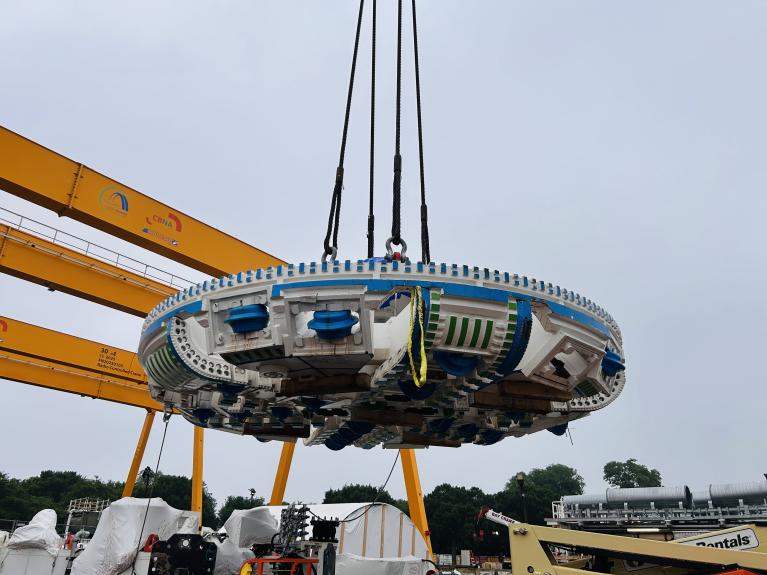
DC Water’s Newest Tunnel Boring Machine to Dig Tunnel’s Southern Segment
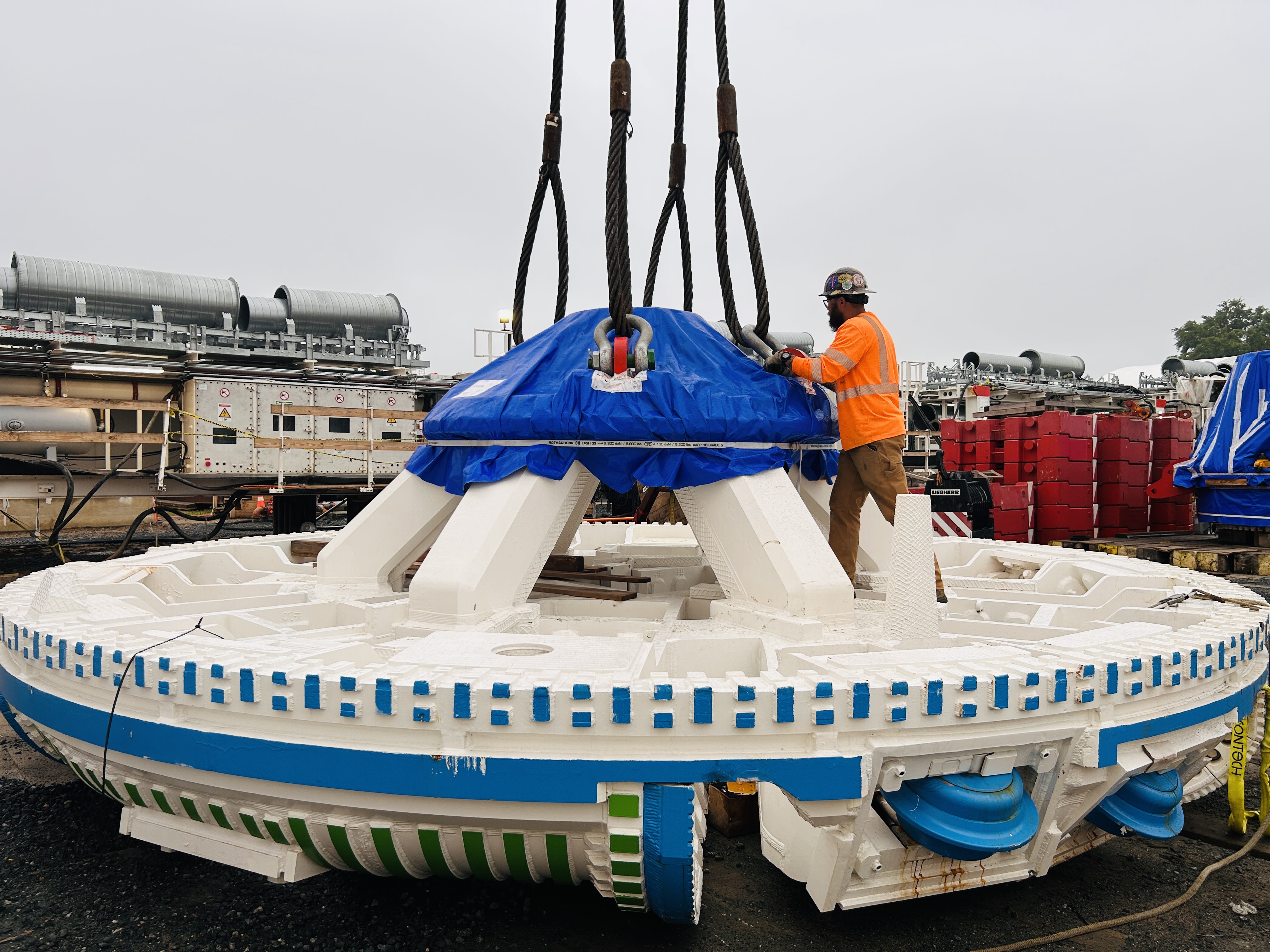
Emily, DC Water’s second tunnel boring machine for the Potomac River Tunnel Project, arrived early this morning at the West Potomac Park construction site. Once assembled and launched, she will excavate the tunnel’s southern section, helping reduce sewer overflows and improve water quality in the Potomac River.
Built and factory tested in Germany, Emily was disassembled, shipped across the Atlantic and transported from the Port of Baltimore to the District for reassembly on site. West Potomac Park will serve as her launch point and a hub for project operations. From there, she will dig south toward Joint Base Anacostia-Bolling.
“Emily’s arrival brings the scale and importance of this project into focus. With both tunnel boring machines now on site, we have the final piece needed to build the Potomac River Tunnel,” said DC Water Chief Executive Officer and General Manager David L. Gadis. “Soon, Emily will be underground helping advance a project that will protect the Potomac River, reduce pollution and serve the District for generations to come.”
Emily is a specialized machine designed to dig deep below ground. At nearly 21 feet wide, it breaks through soil and rock, removes excavated material and installs concrete tunnel segments behind it. Because Emily will move through different ground conditions — including softer soils beneath the river — it can adjust its operation to tunnel safely through each section and hold the surrounding earth in place.
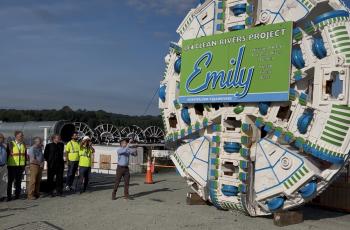
Alongside her sister TBM, Mary — already excavating north toward Georgetown — Emily will help construct the full 5.5-mile tunnel beneath the city. The two machines were built for different ground conditions: Mary for harder rock on the northern stretch, and Emily for softer soils and mixed ground on the southern stretch.
The Potomac River Tunnel is part of DC Water’s Clean Rivers Program, a long-term effort to reduce pollution in the District’s waterways. During heavy rain, the sewer system can overflow, sending a mix of stormwater and wastewater into the Potomac River. Once complete, the tunnel will capture and redirect that flow to the Blue Plains Advanced Wastewater Treatment Plant for treatment. The project is expected to reduce combined sewer overflows from about 74 events per year to just four in a typical year and cut overflow volume by 93 percent.
With Emily now in Washington, crews can begin the next phase of getting her ready to dig — bringing the Potomac River Tunnel another step closer to protecting the river and strengthening the District’s infrastructure.