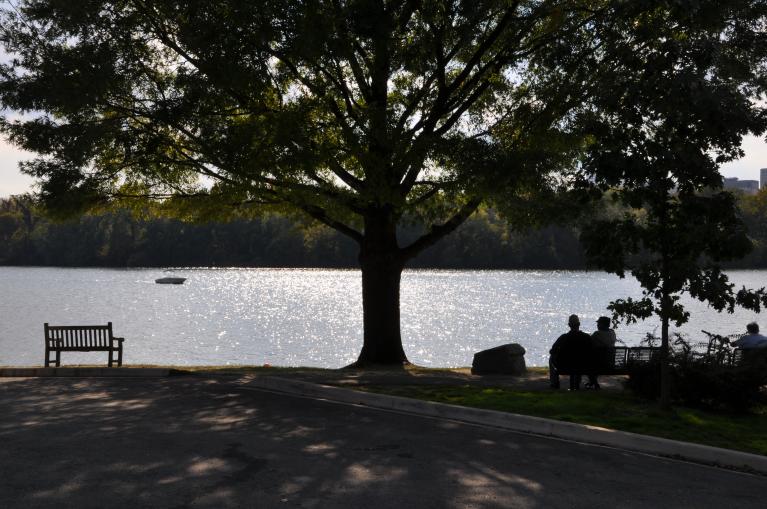
Protecting the Potomac River and Chesapeake Bay

The Chesapeake Bay is the largest estuary in the United States and is rich in history and natural beauty. In 2010, the U.S. Environmental Protection Agency established a "pollution diet" to restore clean water in the Chesapeake Bay and the region's streams, creeks, and rivers. Protecting this natural treasure is an important and complex task, involving the federal government, six states and the District of Columbia.

DC Water's Blue Plains Advanced Wastewater Treatment Plant is the largest plant of its kind in the world. Wastewater from the District and several counties in Maryland and Virginia is treated at Blue Plains and returned to the Potomac River, a tributary of the Chesapeake Bay, after being cleaned. The return of this treated water to the Potomac makes Blue Plains the largest single point discharger to the Chesapeake Bay.

DC Water has long been a leader in working to clean up the Bay by voluntarily reducing nitrogen levels and exceeding goals established by the Chesapeake Bay Agreement. DC Water has invested upwards of one billion dollars in upgrading treatment processes to meet or exceed the EPA’s goals of nitrogen reduction in the Bay.

While Blue Plains is the largest single point source discharger to the Chesapeake Bay, that only accounts for roughly 2 percent of the bay's nitrogen. Two-thirds of the nitrogen load in the Bay comes from agricultural and airborne influences. Although plants and animals need nutrients to survive, when too many nutrients enter waterways they fuel the growth of algae blooms and create conditions that are harmful for fish, shellfish and other underwater life.

Upcoming Meeting

Board of Directors Meeting

April 24, 2023

Monday 9:00 AM

Announcement

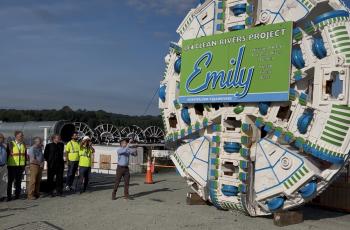
DC Water Officials with NPS and ANC commissioners doing ceremonial groundbreaking
DC Water Breaks Ground on Piney Branch Tunnel, Final Phase of DC Clean Rivers Project

Today, DC Water broke ground on the Piney Branch Tunnel, the final major tunnel in our Clean Rivers Project. This work will help keep sewage and trash out of local waterways and make Rock Creek, the Potomac River, and the Chesapeake Bay cleaner for our community.

When we finish the Piney Branch Tunnel, it will hold at least 4.2 million gallons of rainwater and wastewater during heavy storms. Instead of overflowing into Piney Branch, that water will go to the Blue Plains Water Resource Recovery Facility, where it will be treated.

Latest Blog Post
Five photos from the American Water Works Association (AWWA) ACE26 conference featuring panel discussions, technical presentations, networking, and attendees posing at the ACE26 display.
ACE26 Highlights: How DC Water Advanced the Conversation on Water
More than 80 DC Water employees joined thousands of water professionals in Washington, D.C., sharing expertise, building partnerships and advancing conversations that will help shape the future of water.
Upcoming Meeting
Date
July 23, 2026
Thursday, 9:30 AM

Upcoming Events

Jul 23
Jul 25

Customer Service Center Announcement

Payment Plan Incentive: provides a credit back of 50% of the last 3 payments made. Eligible participants are residential customers who have had an outstanding balance for 60 days or greater and with an outstanding balance of $500 or more.