The Future of DC's Water Starts Here
Pure Water DC is DC Water’s plan to make the District’s drinking water supply stronger and more reliable. Today, all of the District’s drinking water comes from the Potomac River and is treated at the Washington Aqueduct. If drought, pollution, equipment problems, or another emergency affects that supply, it could disrupt water service for hundreds of thousands of residents, along with schools, hospitals, and businesses.
That possibility became all too real on July 3, 2024. An algal blooms on the Potomac nearly caused a system-wide shutdown that would have left the nation's capital without water on the Fourth of July. DC Water responded quickly and avoided major disruptions — but the risk was clear.
Pure Water DC is a plan to change that - a coordinated set of investments to strengthen long-term reliability of DC's water system. This icludes protecting the Potomac River supply, adding more local storage, and developing a new drought-proof water source using advanced water purification technology.
As the only major capital city in the United States without a secondary source of drinking water, the goal is simple: make sure DC Water has more than one way to keep safe drinking water flowing.
Why It Matters
The District depends on a steady supply of clean drinking water every day. DC Water serves more than 700,000 residents and millions of visitors each year, along with homes, schools, hospitals, businesses and federal buildings. A serious problem with the Potomac River or Washington Aqueduct could affect public health, daily life and the local economy — which is why building redundancy into the system now is critical.
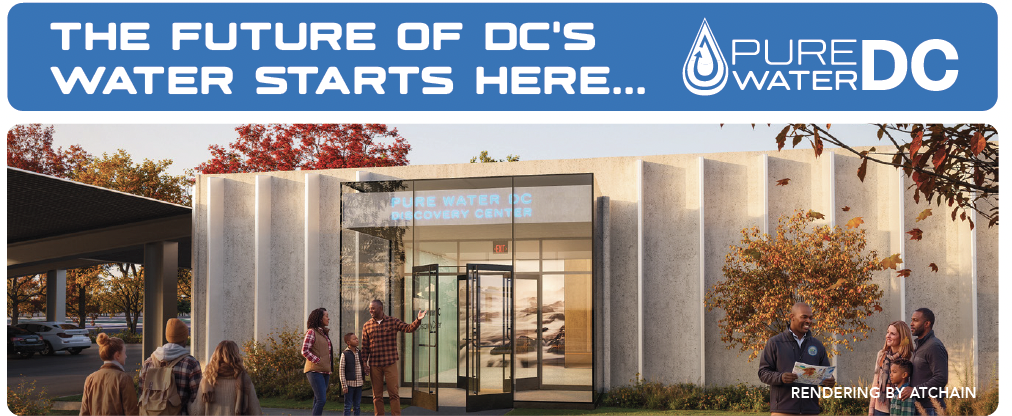
Pure Water DC Discovery Center
At the heart of Pure Water DC is the Discovery Center — a new research, demonstration, and education facility being built at DC Water's Blue Plains Advanced Water Purification Facility.
The Discovery Center will test and demonstrate advanced purification technology, collect information, and show how water can be cleaned and reused safely. The same technologies will also help address emerging contaminants. These are chemical compounds like PFAS (per- and polyfluoroalkyl substances) that don't break down easily in the environment, viruses, microbes, and other contaminants that may pose a health risk but are not yet regulated under the Safe Drinking Water Act.
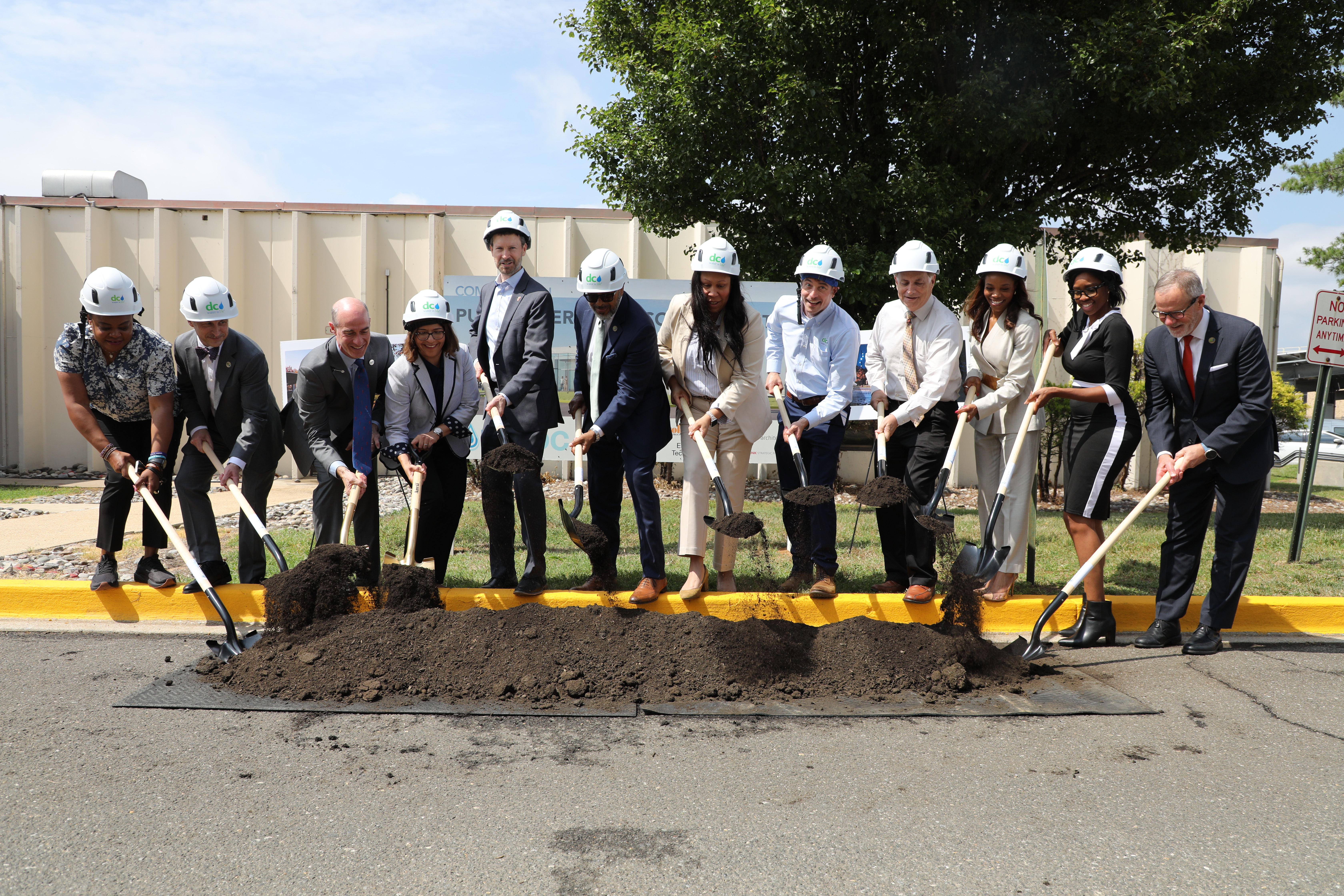
Construction on the Discovery Center will begin in 2026, with a targeted grand opening of Fall 2027.