Why It Matters
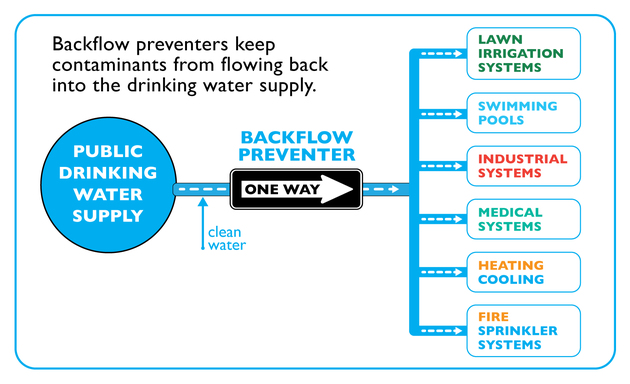
Cross-connections are physical links that allow contaminating materials to enter a potable water supply. Contaminants may include gases, liquids, or solids such as chemicals, waste products, steam, water from other sources (potable or non-potable), or any matter that alters the color or adds an odor to the water. The primary way to combat cross-connections is to use a backflow preventer.
What are Backflow Preventers?
Backflow preventers are non-testable devices, testable assemblies, or other non-mechanical methods installed within the plumbing system to protect potable water from contamination or pollution by stopping water from flowing backward in the pipes. Both backflow devices and backflow assemblies may protect against both pollutant or contaminant risks and against backsiphonage or back-pressure conditions
- Backsiphonage – A reduced or negative pressure in the supply piping, caused by:
- A break at a water main or service connection prior to the point of entry or high water use (e.g., fire demands)
- Backpressure – Downstream system pressure is greater than the supply pressure. Examples include:
- Potable system connected to pressurized industrial fluid systems or a submerged inlet to non-potable water reservoirs
What is a CCC Inspection?
DC Water conducts regular inspections to ensure that water customers comply with DC Municipal Regulations. The CCC inspections do not involve disconnecting or interrupting the water service. This inspection evaluates the plumbing system to identify potential or existing cross-connections, documents existing backflow prevention devices, and reviews the most recent test and maintenance logs to determine whether the property complies with regulations.
Common areas of interest for the DC Water Compliance Specialist are the point of entry (containment) where incoming plumbing enters the building, sub-level floor mechanical area, fire sprinkler rooms, plant (room) area, janitor’s closet, pool (pump) house, penthouse mechanical room, and any area where the plumbing laterals separate the domestic water from the auxiliary water.
Cross-Connection Risks for Residential Water Customers
Cross-connection risk for residential homeowners is usually present in systems such as a pool with submerged inlets or an irrigation system. If you are unsure about a potential cross-connection at your home, contact your local backflow prevention service provider or consult DC Water for guidance.
Roles & Responsibilities
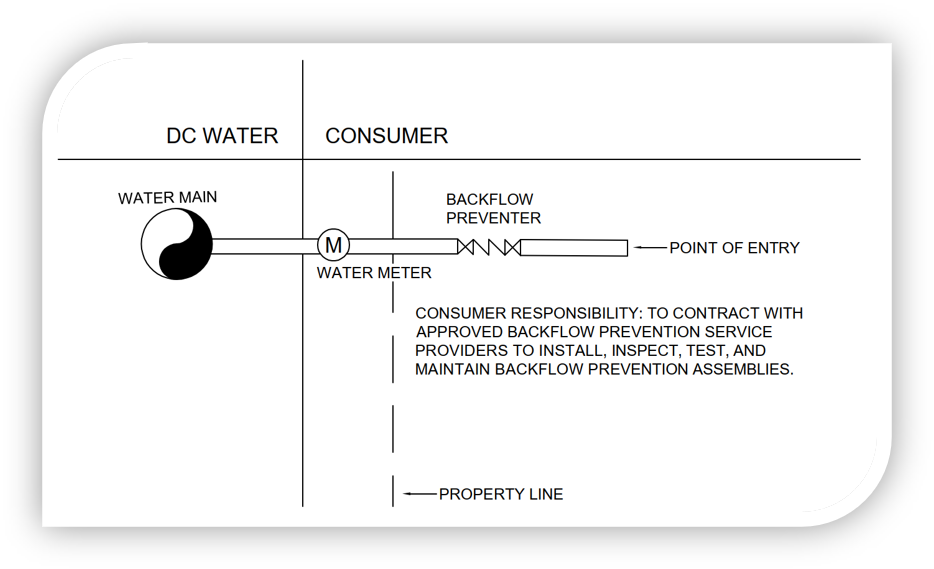
The following content describes the DC Water and Sewer Authority (DC Water) Cross-Connection Control Program and the responsibilities for DC Water, the water customers, and DC Water-approved BPA Service Providers outlined below:
|
DC Water
|
|
Consumer
|
|
Backflow Service Provider
|
To select a Backflow Service Provider, click here
Questions about cross-connection control should be directed to the DC Water Compliance Program by telephone at 202-364-3144 or through email at bpa@dcwater.com