UPDATE: Excavation Site Extended Around Damaged Section of Potomac Interceptor to Access Rock Blockage
Potomac Interceptor Repairs Update
February 23, 2026
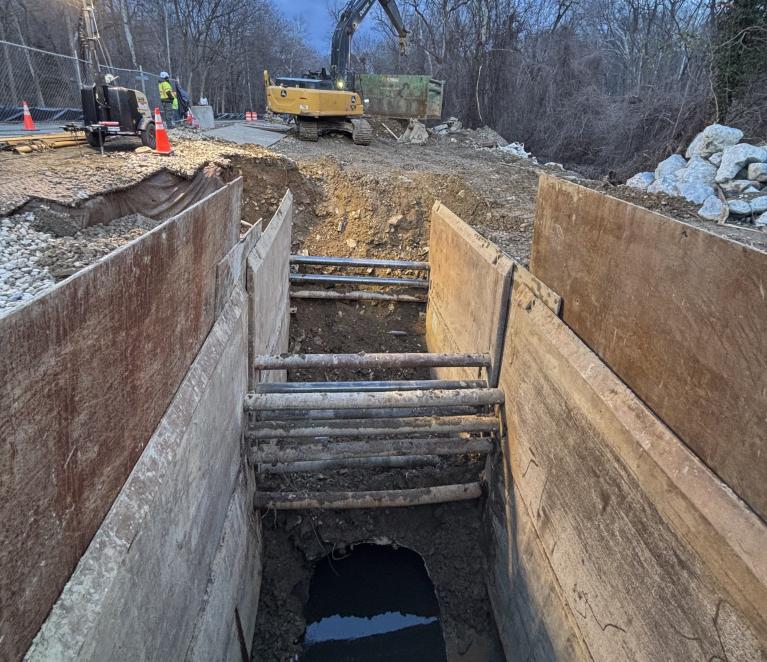
- The excavation around the damaged section of pipe has been extended and trench boxes installed to provide shoring and stability. This doubles the size of the excavated area, to connect the collapse site with a downstream access point to the Potomac Interceptor.
- The newly excavated section will allow crews to reach an area of the pipe believed to be blocked by large rocks and debris. The section, adjacent to the collapse site, is too compromised for crews to safely complete this work from inside the pipe. Instead, crews plan to remove the crown of the pipe section to access the rocks and debris for removal.
- On-site coordination continues with U.S. Army Corps of Engineers (USACE) to assist with stormwater management to protect pumping operations.
- Cleaning efforts continue to remove muck and debris upstream from the damaged section and downstream portions.
- Development of the Environmental Restoration Plan is ongoing in coordination with Environmental Protection Agency (EPA), National Park Service, Maryland Department of the Environment, USACE, and the District Department of Energy and Environment with some preliminary mediation efforts underway.
- DC Water is partnering with USACE and EPA to divert runoff away from the contaminated land and install “catchment basins” below street drains and in the creek to capture runoff that may carry residual wastewater contaminants to the Potomac River.
Water Quality Sampling Results
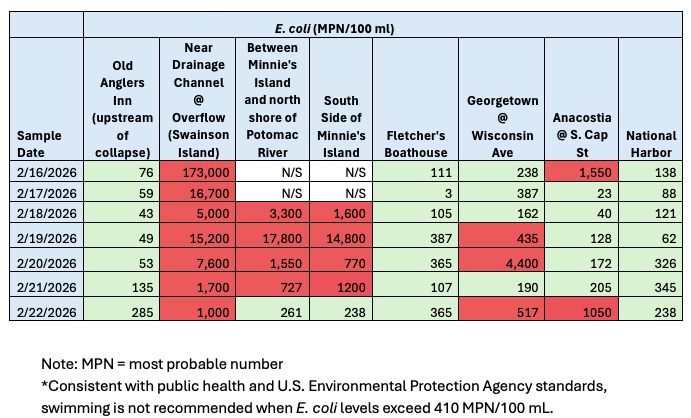
DC Water is performing daily water quality sampling. It’s important to note that historically the E. coli levels in the Potomac and Anacostia rivers vary widely from day to day. This is reflected in recent sampling results. Fluctuations in water quality are influenced by factors such as weather events, river flow, runoff, pollutants, releases of combined overflows, and other sources discharging into waterways. Given these variables, measurements taken much further downstream cannot be attributed solely to this incident.
For the Potomac River, historical water quality data shows E. coli levels may vary from a range as low as 10 MPN/100mL to as much as 5,000 MPN/100mL on a given day.A more detailed explanation is posted on the District Department of Energy and Environment (DOEE) website at doee.dc.gov/release/potomac-interceptor-update-and-faqs.
Below are the results of sampling from the one-week period of February 16-22, 2026. Past results may be found on our dedicated Potomac Interceptor Response page.
For more information about the ongoing repair efforts go to dcwater.com/Potomac-interceptor-collapse.