UPDATE: Crews Closer to Reaching Rocks and Debris Blocking Damaged Potomac Interceptor
Potomac Interceptor Repairs Update
February 24, 2026
- No overflows entering the Potomac River have occurred in 16 days. The last release into the river occurred on February 8, supported by the enhanced bypass system that has provided a significant increase in pumping capacity to improve redundancy and reliability.
- Crews continue working 24/7 to provide cleaning and maintenance and keep the bypass pumps running.
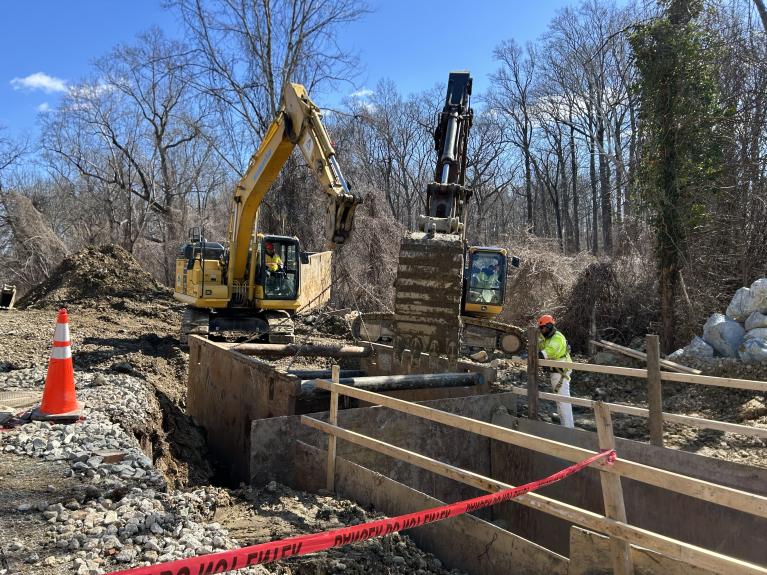
- Repairs are moving forward, with crews closer to reaching a debris dam and large rocks blocking a section of the damaged Potomac Interceptor. Work has been completed to fully extend the excavation site and install trench boxes to stabilize and isolate the additional pipe sections.
- Crews are preparing for next steps to cut into the crown of the pipe where the blockage is located to inspect and begin safely removing the large rocks and debris inside the sewer line. This work will involve both manually removing rocks and heavy equipment for larger boulders.
- On-site preparations are underway as part of remediation efforts. An Environmental Restoration Plan is being developed in coordination with federal, state, and local regulators and will be released to the public when approved.
- Coordination continues with U.S. Army Corps of Engineers (USACE) on-site to assist with stormwater management to protect pumping operations.
Water Quality Sampling Results
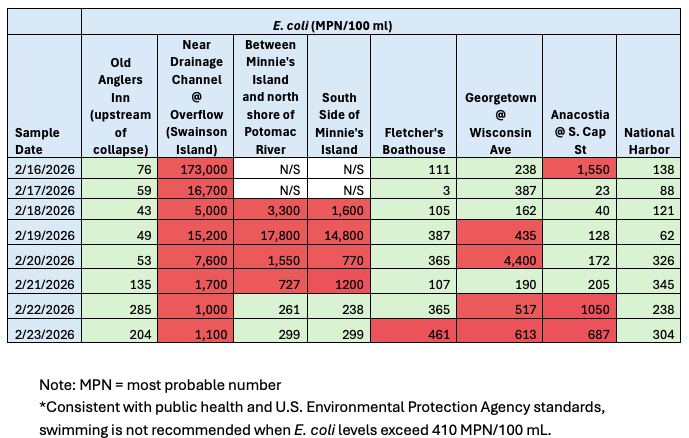
DC Water is performing daily water quality sampling. It’s important to note that historically the E. coli levels in the Potomac and Anacostia rivers vary widely from day to day. This is reflected in recent sampling results with stormwater runoff from rain and snow impacting water quality. Fluctuations in water quality are influenced by factors such as weather events, river flow, runoff, pollutants, releases of combined overflows, and other sources discharging into waterways.
Given these variables, measurements taken much further downstream cannot be attributed solely to this incident.
For the Potomac River, historical water quality data shows E. coli levels may vary from a range as low as 10 MPN/100mL to as much as 5,000 MPN/100mL on a given day. A more detailed explanation is posted on the District Department of Energy and Environment (DOEE) website at doee.dc.gov/release/potomac-interceptor-update-and-faqs.
Below are the results of sampling during the period from February 16 – present. Past results may be found on our dedicated Potomac Interceptor Response page.
For more information about the ongoing repair efforts go to dcwater.com/potomac-interceptor-collapse.