Soil Removal in C & O Canal reaches half-way point with locks 12-14 complete
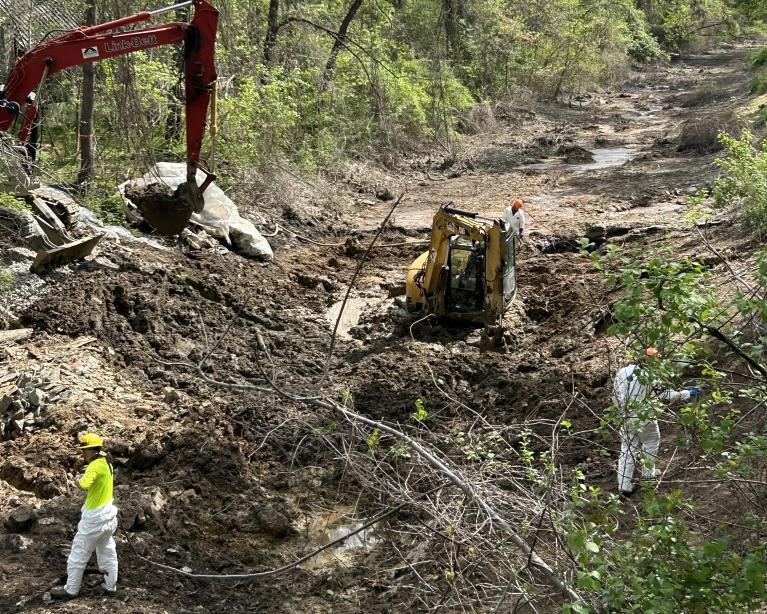
- DC Water and its contractor have removed all the soil down to the clay liner between locks 12 and 13, marking 50% completion of the canal clean-up. Soil removal between Locks 13 and 14 was completed earlier this month.
- Clean-up efforts continue between locks 10 and 12, with sludge removal complete and soil removal now underway.
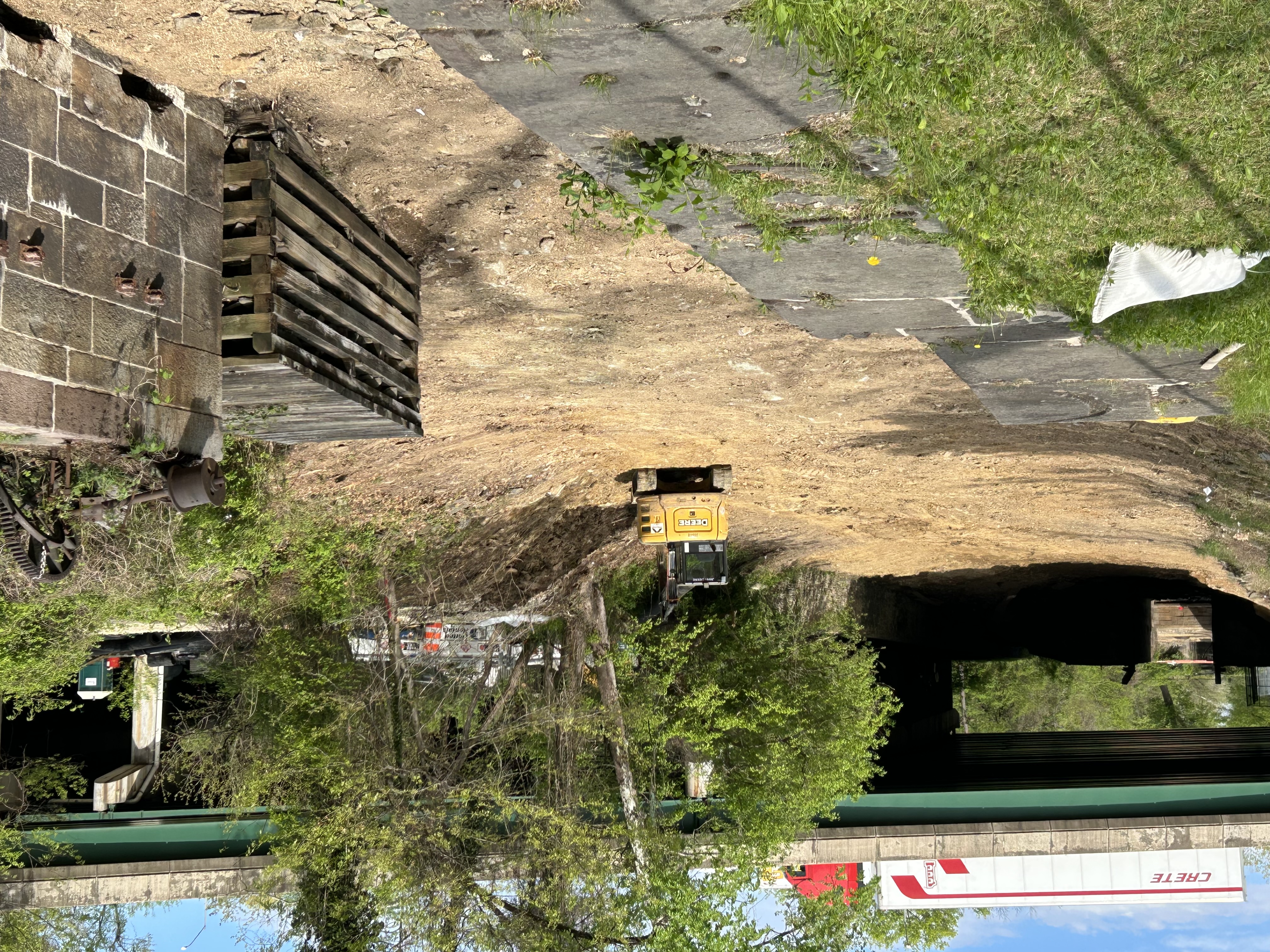
- As crews complete soil removal, work is underway to clean the historic locks as prescribed by the National Park Service. Cleaning at Lock 13 has been completed, and work is underway at Lock 12.
- DC Water is also coordinating with NPS to rebuild sections of the C & O Canal used as a bypass during Potomac Interceptor repairs, once soil removal is complete. In preparation, a clay supplier has been identified to repair the clay liner and restore the canal to NPS standards.
- Site preparations continue for the previously planned long-term rehabilitation of the Potomac Interceptor, which has been accelerated to address more than 2,700 linear feet in the area where the pipe failure occurred.
- Crews are excavating a third site outside the I-495 Beltway, that will be used to rehabilitate the pipe using a process called slip lining. New pipe sections will be inserted into the existing pipe at three locations with long, straight stretches. This includes the two locations of the pipe – at the collapse site and the bypass pumping site – that remain open to more efficiently complete the slip lining process. This approach creates a new pipe within the existing pipe, strengthening and reinforcing the interceptor to a like new structural condition.
Water Quality Sampling Results
It is important to understand that rain, snow, heat, contaminated runoff, and natural sources of E. coli such as wildlife, can cause elevated bacteria levels in urban rivers like the Potomac River.
Because there have been no overflows to the river from the Potomac Interceptor for more than a month prior to the completion of emergency repairs, fluctuations in sampling results are more likely due to these other known factors.
For the Potomac River, historical water quality data shows E. coli levels may vary from a range as low as 10 MPN/100mL to as much as 5,000 MPN/100mL on a given day. A more detailed explanation is available on the District Department of Energy and Environment (DOEE) website at doee.dc.gov/release/potomac-interceptor-update-and-faqs.
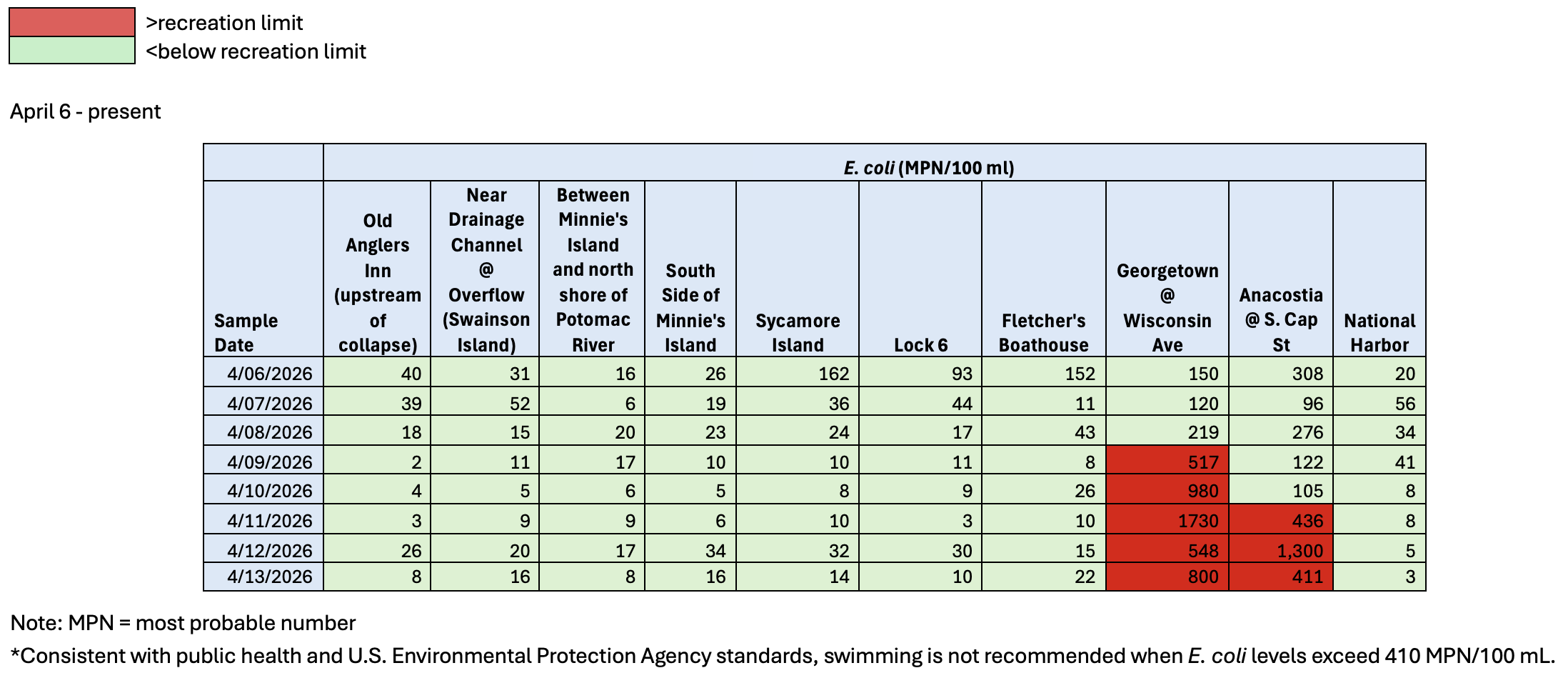
Sample results from March 23 - present are below. Past results may be found here.