Significant Progress Made to Reinforce Downstream Section of Damaged Potomac Interceptor
Significant Progress Made to Reinforce Downstream Section of Damaged Potomac Interceptor
- As emergency repairs continue, today marks 27 days, nearly one month, with no overflow reaching the Potomac River. The last release that entered the river was February 8.
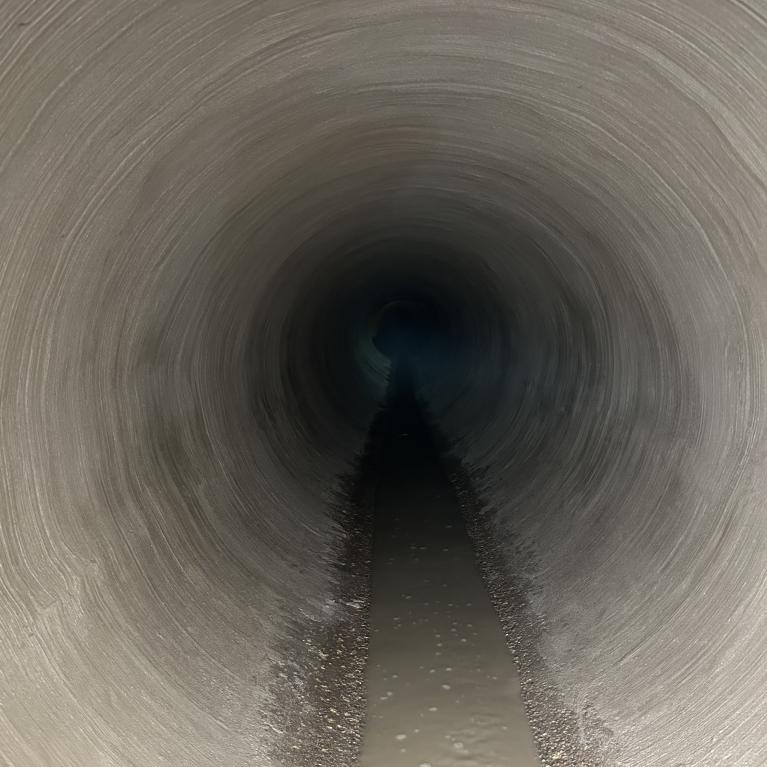
- Crews are making significant progress to reinforce the downstream section of pipe from the collapse site and completed 240 linear feet of geopolymer overnight. Crews are working to apply another layer of geopolymer today. The material is similar in strength to concrete and when applied restores the structural integrity of the pipe.
- Completing the geopolymer on the downstream section of pipe is the last major step in the emergency repair.
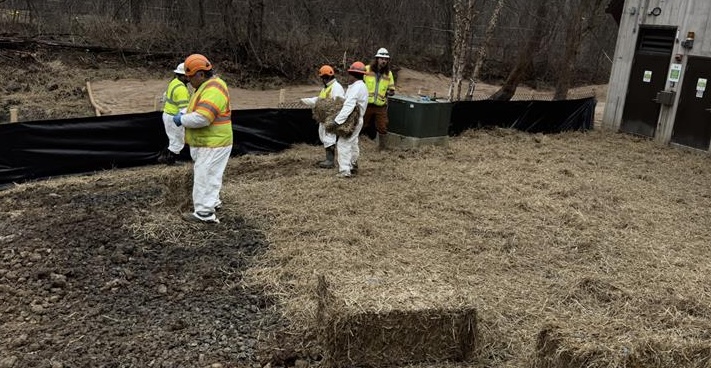
- DC Water crews are working on clearing trees and brush in Area 1, closest to the collapse site, as part of the environmental rehabilitation work. They will also be installing silt fences and performing erosion and sediment control.
- After an area is cleared, annual rye seed, straw, and coir matting are being applied for soil stabilization.
- Residents and community members who would like to provide feedback on the Environmental Rehabilitation Plan will now be able to contact us to fill out a form through our dedicated webpage for the Potomac Interceptor Repair.
- Geopolymer work was completed yesterday on the upstream section of the damaged pipe, covering more than 300 linear feet. This marked the halfway point in the emergency repair.
- Once the emergency repair is completed, the flow will be restored to the Potomac Interceptor and the bypass pumping system deactivated. Work continues concurrently on the environmental rehabilitation. Daily water quality sampling also continues.
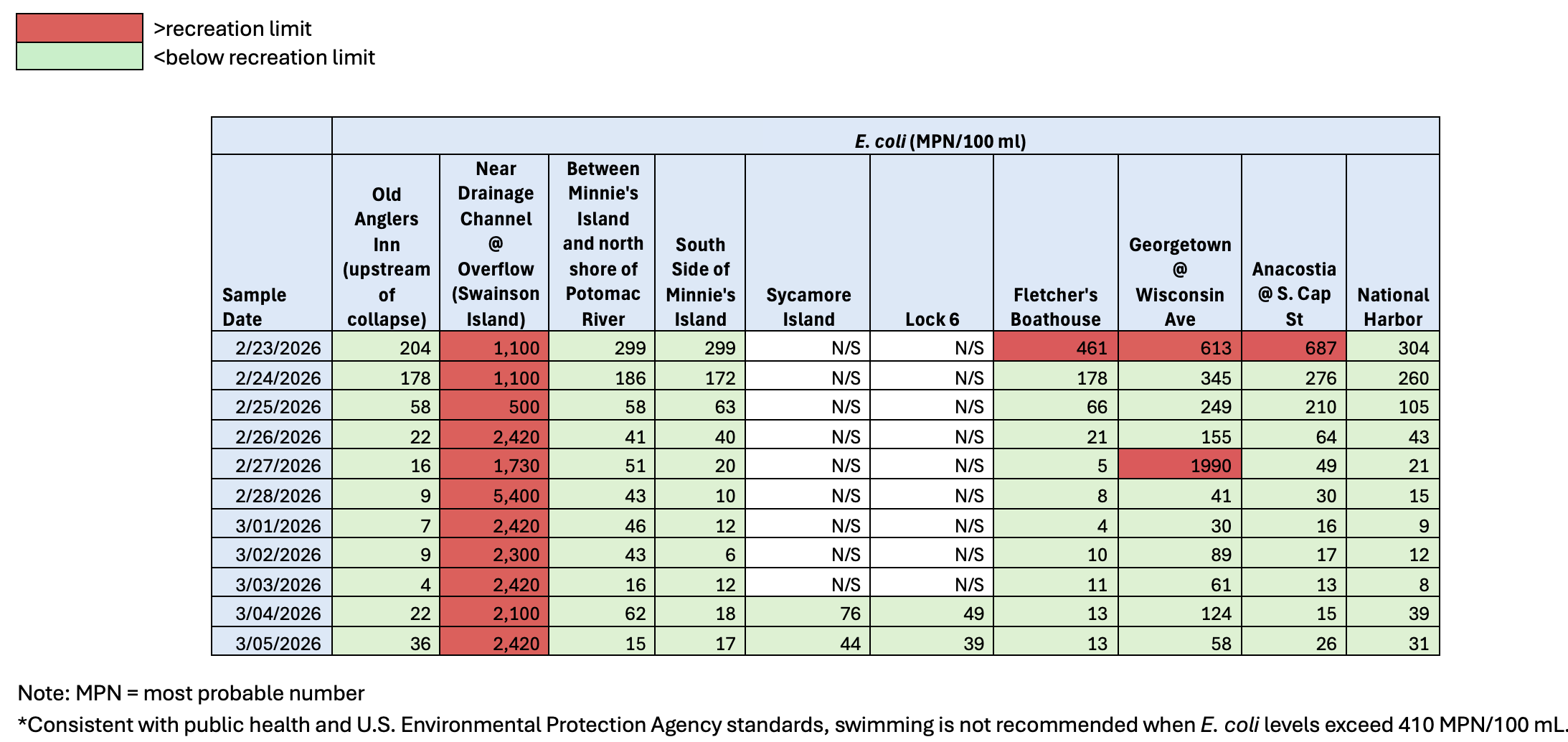
Water Quality Sampling Results
Fluctuations in water quality are influenced by factors such as weather events, river flow, runoff, pollutants, releases of combined overflows, and other sources discharging into waterways. Given these variables, measurements taken much further downstream cannot be attributed solely to this incident.
For the Potomac River, historical water quality data shows E. coli levels may vary from a range as low as 10 MPN/100mL to as much as 5,000 MPN/100mL on a given day. A more detailed explanation is posted on the District Department of Energy and Environment (DOEE) website at doee.dc.gov/release/potomac-interceptor-update-and-faqs.
As of March 4, two new sampling locations have been added at Sycamore Island and Lock 6. Sample results from February 23 - present. Past results may be found here.
For quality assurance purposes, lab results are unavailable on weekends and will be posted on the following Monday, excluding holidays.