Pipe Reinforcement Underway to Repair Damaged Section of Potomac Interceptor
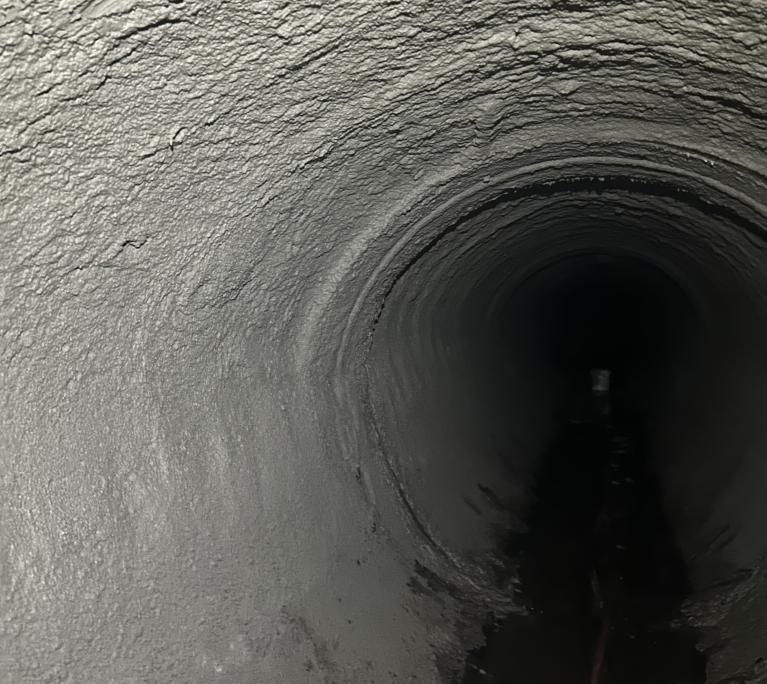
Pictured above: Geopolymer applied inside upstream section of Potomac Interceptor
DC Water and its contractor have taken significant steps toward repairing the Potomac Interceptor. The repair process currently underway involves reinforcing the damaged section of the pipe using geopolymer. This material is known for its concrete-like strength and durability.
Starting last night and through today, crews successfully applied an initial layer of geopolymer along the upstream portion of the damaged pipe, covering approximately 160 feet. This application will continue over the coming days, building up the material to the required thickness to ensure structural integrity.
The reinforcement of the pipe is essential to restore full flow and functionality to the Potomac Interceptor. Crews are operating from within a steel encasement placed inside the 72-inch pipe, advancing carefully as they spray on the geopolymer. This method not only ensures the effectiveness of the repair but also prioritizes worker safety, especially given concerns about the pipe’s structural condition.
Alongside pipe repairs, teams are working around the clock to maintain the bypass pumping system, which is a crucial element of the overall operation. This system diverts wastewater around the collapse site and back into the interceptor, preventing overflows into the Potomac River.
Today marks the 24th consecutive day with no overflows entering the Potomac River. In addition, enhanced stormwater management measures have been implemented to prevent runoff from the surrounding community from introducing contaminants into the drainage channel and, ultimately, the river. These efforts include the use of catch basins, pumps, and temporary dams to contain precipitation and stormwater.
DC Water met on-site today representatives with the Environmental Protection Agency, US Army Corps of Engineers, National Park Service, and Maryland Department of the Environment to coordinate the initial steps in the environmental rehabilitation. Discussions are ongoing to evaluate the plan, as well as testing of soil and water quality, which will help guide any additional rehabilitation work necessary.
Water quality sampling was initiated at two new locations today: Sycamore Island and the Feeder Channel at Lock 6, where a kayak slalom course is located. The results from these samples require at least 24 hours to process and will be included in the daily water quality reports.
The first phase of environmental rehabilitation is focused on the immediate area surrounding the collapse site, the drainage channel, and sections along the Potomac River and affected shoreline. Crews have already removed substantial amounts of vegetation near the collapse site. However, clean-up activities are weather-dependent and may be paused during rain events to avoid the risk of spreading contamination.
As emergency repairs continue on the upstream section of the damaged interceptor, crews are also making progress on debris removal downstream of the collapse. Once the upstream reinforcement is complete, the geopolymer application will move to the downstream section. The emergency repair project remains on schedule, with completion anticipated in mid-March.
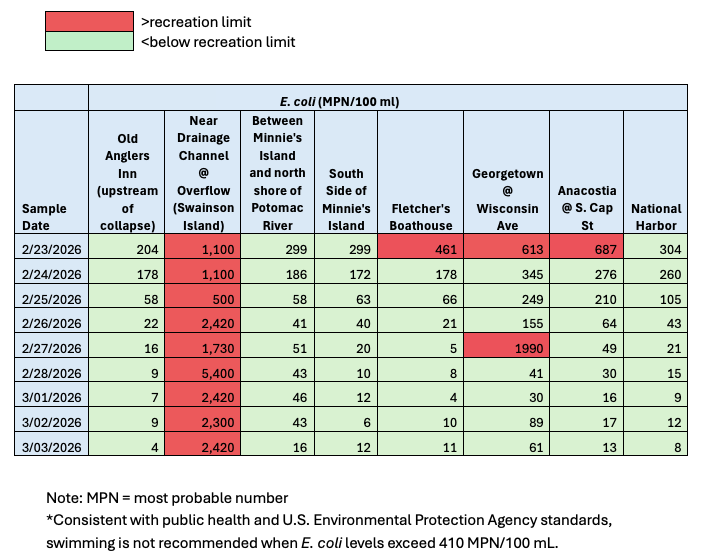
Water Quality Sampling Results
Fluctuations in water quality are influenced by factors such as weather events, river flow, runoff, pollutants, releases of combined overflows, and other sources discharging into waterways. Given these variables, measurements taken much further downstream cannot be attributed solely to this incident.
For the Potomac River, historical water quality data shows E. coli levels may vary from a range as low as 10 MPN/100mL to as much as 5,000 MPN/100mL on a given day. A more detailed explanation is posted on the District Department of Energy and Environment (DOEE) website at doee.dc.gov/release/potomac-interceptor-update-and-faqs.
Sample results from February 23 - present. Past results may be found here.
For more on the Potomac Interceptor repair efforts, including news and updates, community engagement, answers to your questions and concerns, and additional information, go to our dedicated page at dcwater.com/potomac-interceptor-collapse.