Final Steps Complete, Preparations Underway for Returning Flow to the Potomac Interceptor
- DC Water has completed final site preparations to return the flow to the Potomac Interceptor, marking and important milestone after 33 consecutive days without an overflow to the Potomac River.
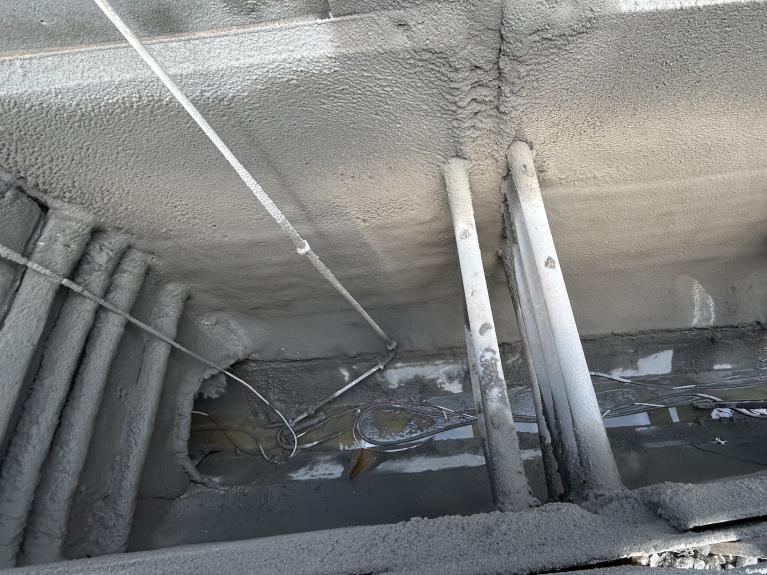
- The geopolymer – used to seal and waterproof the trench boxes around the open pipe sections – finished curing today. This will allow the flow to safely be returned to the interceptor itself, allowing the bypass pumping system and use of the C & O Canal to be deactivated.
- Testing is expected to begin this weekend to confirm the flow can safely be restored to the interceptor. Once confirmed, DC Water and its contractors will remove the steel bulkhead gate blocking flow in the pipe and shut down the bypass pumps that have been diverting the flow into the C & O Canal, around the collapse site, and back into the sewer system further downstream.
- After flow is restored, the trench boxes and pipe sections where the crown has been removed will remain open to facilitate the previously planned rehabilitation of this section of the interceptor.
- Crews will monitor the flow for 48-hours, keeping pumps on standby, before beginning to demobilize the site.
- Work will then transition to the long-term rehabilitation of more than 2,700 linear feet of the pipe. This phase of the project is being accelerated, and efforts will soon begin to build out the mechanical system that will push new pipe sections into place using the existing open areas. The process called slip lining – will strengthen and reinforce the pipe to like-new condition.
- Although the emergency repairs are nearing completion, activity at the site continues to rehabilitate the surrounding environment. DC Water, working with the U.S. Army Corps of Engineers and the Environmental Protection Agency, continue to clear brush and debris, remove impacted soils, and provide temporary erosion and sediment control and soil stabilization measures.
- Once flow is returned to the interceptor, DC Water teams will also begin the environmental rehabilitation of the C & O Canal.
The initial clean-up of the canal will involve flushing the canal with freshwater from the Potomac River coming in at Violet’s Lock and flowing downstream. The flushed water and sludge from the cleaning operation will be routed into to the Potomac Interceptor using the existing bypass channels downstream.
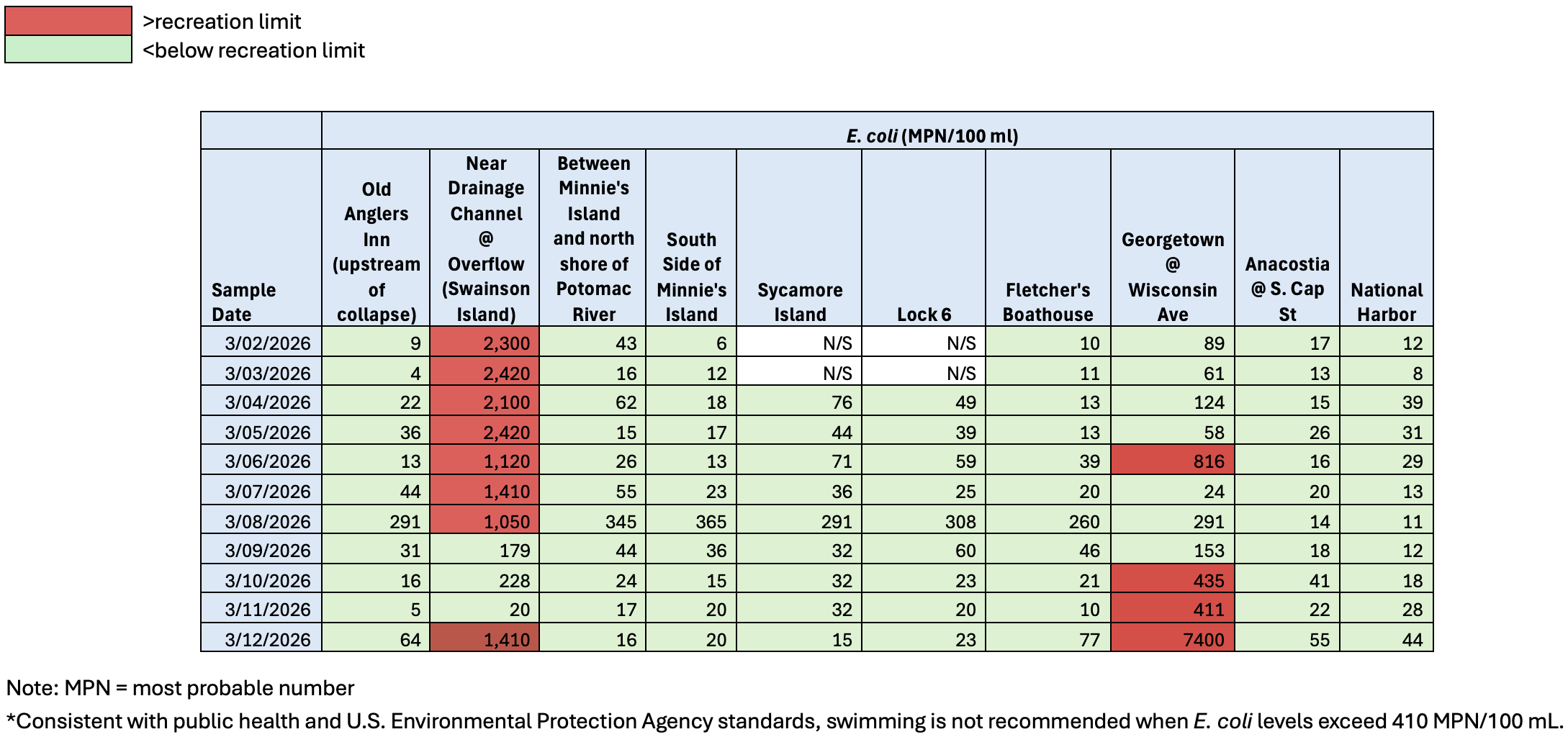
Water Quality Sampling Results
Fluctuations in water quality are influenced by factors such as rain, heat, or other weather events, river flow, runoff, pollutants, releases of combined overflows, and other sources discharging into waterways. This is reflected in the sampling results for March 12, which coincides with heavy rain and stormwater runoff. Given these variables, measurements taken much further downstream cannot be attributed solely to this incident.
For the Potomac River, historical water quality data shows E. coli levels may vary from a range as low as 10 MPN/100mL to as much as 5,000 MPN/100mL on a given day. A more detailed explanation is posted on the District Department of Energy and Environment (DOEE) website at doee.dc.gov/release/potomac-interceptor-update-and-faqs.
Sample results from March 2 - present. Past results may be found here.