Environmental Rehabilitation Work Underway on C & O Canal
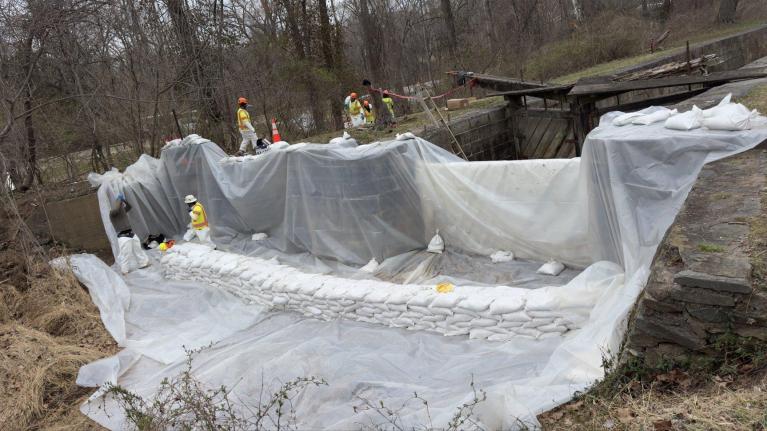
- With flow returned to the Potomac Interceptor work has begun on the initial phase of clean-up for the C & O Canal which had been used as a bypass to redirect wastewater around the collapse site and into the pipe further downstream.
- Crews are finishing work on a freshwater dam at Lock 14, which will be used to help flush out residual waste and contaminants in the C & O Canal. The flushed water will be directed into the interceptor using the entry points created for the bypass downstream.
- Crews also continue to vacuum out sludge in the canal. With no flow any longer in the canal, two of the channels used for the bypass back into the pipe downstream have been closed, with one remaining open for the ongoing canal clean-up effort.
- There have been no issues with the return of flow to the Potomac Interceptor. The repair involves using open flow channels – where the pipe remains open from the repair but is contained inside waterproof trench boxes.
- As DC Water begins to transition to the previously planned rehabilitation of more than 2700 linear feet of the pipe in this area, work will begin to prepare the pit inside the trench boxes with equipment to push new pipe sections into place using the pipe openings. The process, called slip lining, will create a new pipe within the existing pipe to strengthen and reinforce it to like-new condition.
- Preparations are underway for the upcoming rain and snow overnight and Monday. The rain is expected to assist with cleaning the canal. While sections of the repaired pipe remain open, there is no danger expected from the rain. The pipe sections are contained in the trench boxes and the interceptor has excess capacity for any additional flow caused by rain infiltration.
- In addition to the canal, work continues with our partners from US Army Corps of Engineers and the Environmental Protection Agency on the environmental rehabilitation of the drainage channel, culvert, and river shoreline impacted by the overflows.
Water Quality Sampling Results
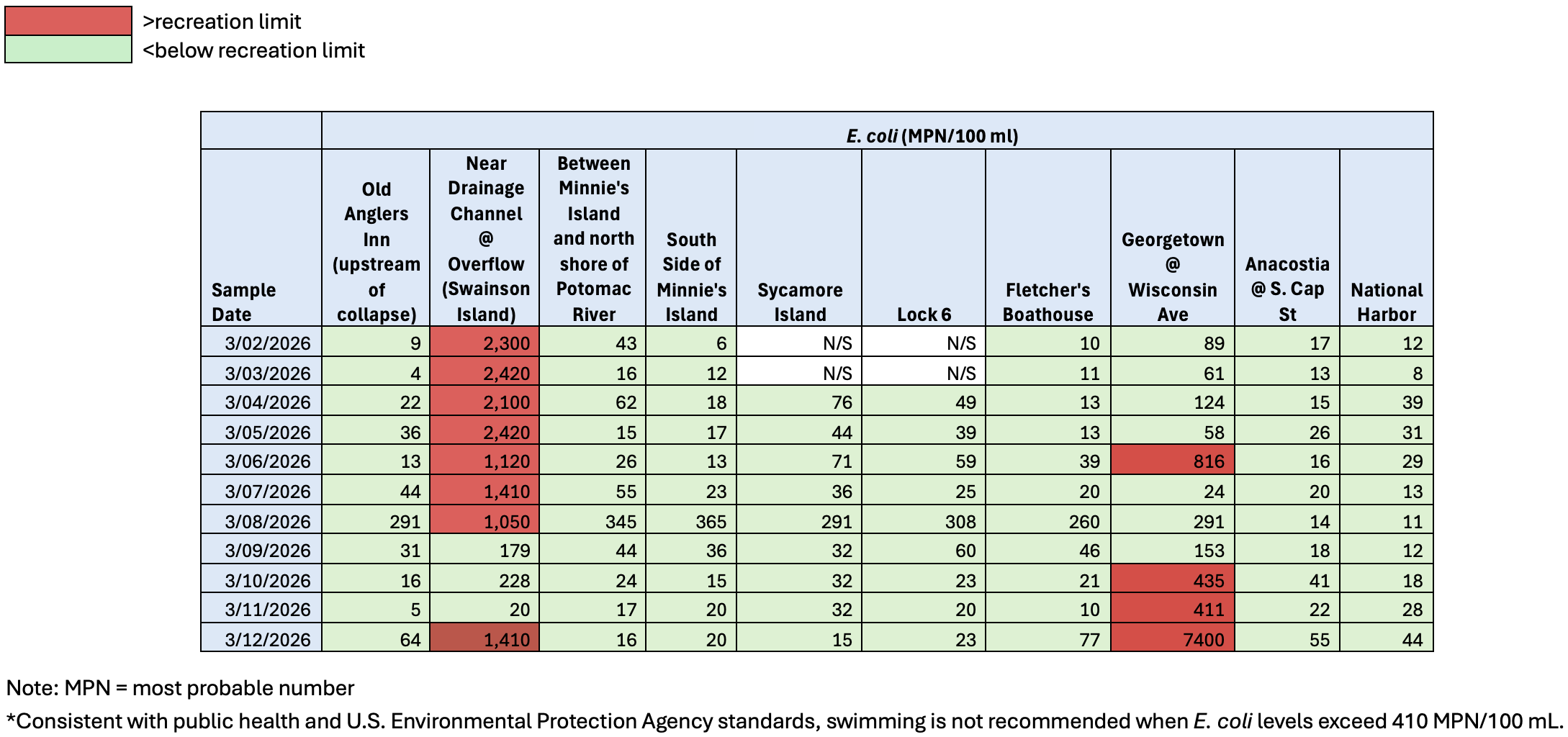
Fluctuations in water quality are influenced by factors such as rain, heat, or other weather events, river flow, runoff, pollutants, releases of combined overflows, and other sources discharging into waterways. This is reflected in the sampling results for March 12, which coincides with heavy rain and stormwater runoff. Given these variables, measurements taken much further downstream cannot be attributed solely to this incident.
For the Potomac River, historical water quality data shows E. coli levels may vary from a range as low as 10 MPN/100mL to as much as 5,000 MPN/100mL on a given day. A more detailed explanation is posted on the District Department of Energy and Environment (DOEE) website at doee.dc.gov/release/potomac-interceptor-update-and-faqs.
For quality assurance purposes, lab results are unavailable on weekends and will be posted on the following Monday, excluding holidays.
Sample results from March 2 - present. Past results may be found here.
DC Water is also hosting two community meetings next week: March 18 in Bethesda, MD and March 19 in Alexandria, VA.
Concerned residents are invited to join us as part of an ongoing dialogue and to gather feedback. Both meetings will include an open-house format, with a shortened presentation to allow more time for Q&A and direct engagement with subject-matter experts stationed at information tables.
To learn more about the community meetings, and to get the latest information on the ongoing environmental rehabilitation efforts, go to our dedicated page for the Potomac Interceptor Response.