Emergency Repairs Completed: Flow Restored to Potomac Interceptor
DC Water Celebrates Massive 55-Day Effort, Outlines Next Steps for Rehabilitation and Environmental Restoration
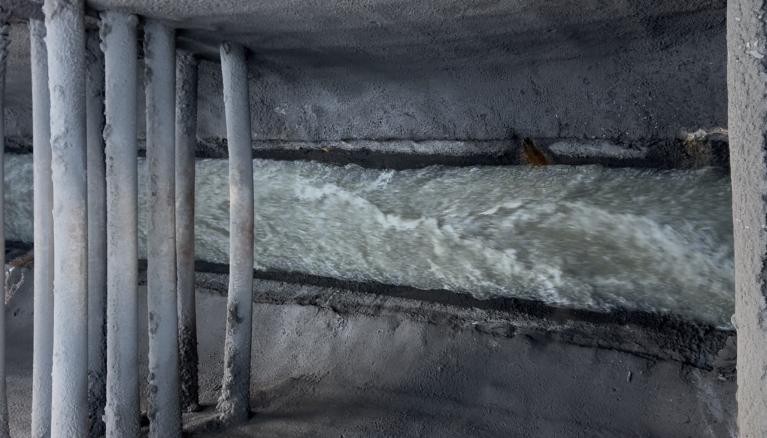
After 55 days of extraordinary effort with crews working around the clock, DC Water has successfully completed emergency repairs and returned the flow to the Potomac Interceptor to mark a major milestone. The wastewater rushed back into the pipe today, and bypass pumps were turned off, as a large crane lifted the steel bulkhead gate that had been blocking flow for the repairs.
Soon after the bypass pumps were turned off, the flow in the C & O Canal quickly dropped as the wastewater that had been diverted around the collapse site drained from the canal. Crews immediately began work on the environmental rehabilitation of the canal. The initial cleanup will involve flushing it with freshwater from the Potomac River, followed by debris clearing, mucking, and removing contaminated soil.
“This operation was extremely challenging, but our teams rose to the occasion, working tirelessly through harsh weather and tough conditions. Their expertise, dedication, and collaboration were key to our success,” said David L. Gadis, DC Water CEO and General Manager. “Although this marks a significant achievement, there is still work ahead to address environmental concerns and uphold our commitment to the community. We deeply appreciate the support of our federal, state, and local partners as we continue these efforts.”
When the collapse occurred January 19, DC Water teams mobilized quickly, setting up the initial bypass pumping system in just five days. Within 21 days overflows to the Potomac River were fully contained, mitigating the impact to the surrounding community and environment. This prevented about two billion gallons of wastewater from entering the river.
Getting the work done also required overcoming obstacles and tremendous resources to keep the repair work going day and night. Some of which included:
- 10,500 gallons of bags filled with rags were cleaned from pumps. Enough to fill a home swimming pool.
- 35 tons of gravel were hauled in daily to be used at the site. Enough to cover four football fields in a week.
- 3,680 gallons of fuel was used daily for pumps and heavy equipment. Enough to power 11-12 homes for an entire year.
With emergency repairs complete, we are moving forward to the next phase and have accelerated a previously planned rehabilitation of more than 2,700 linear feet of pipe. Sections of the pipe will remain open from the repair, creating an open flow channel contained within the trench boxes. These openings will be used to insert new pipe sections through a process called slip lining, which will strengthen and reinforce the interceptor for years to come. Efforts will soon begin to build out the mechanical system that will push those new pipe sections into place.
Environmental restoration is already underway. DC Water, alongside our federal, state, and local partners, continues to clear brush and debris, remove impacted soils, and implement erosion and sediment control measures.
While the C & O Canal has been mostly drained, odors may continue to be strong temporarily while the clean-up gets underway. This is expected until all remaining contaminated soils and materials are excavated and removed in the next 1-2 months.
DC Water remains committed to keeping the community informed as we move ahead with the next steps in rehabilitation of the pipe and environmental stewardship. Two community meetings are scheduled for next week on March 18 in Bethesda, MD and March 19 in Alexandria, VA. Details can be found here.
Concerned residents are invited to join us as part of an ongoing dialogue and to gather feedback. Both meetings will include an open-house format, with a shortened presentation to allow more time for Q&A and direct engagement with subject-matter experts stationed at information tables.