DC Water Launches Tunnel Boring Machine Mary, Marking Important Step for Potomac River Tunnel Project
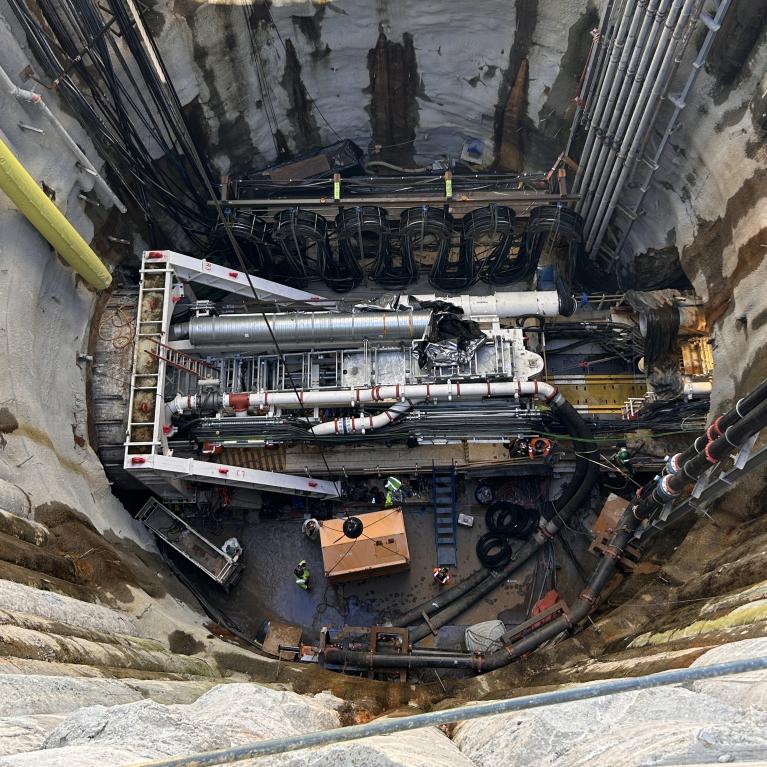
First turn of cutterhead signals the start of excavation for the Potomac River Tunnel Project
In a defining moment for one of the District’s largest infrastructure investments, DC Water has marked its next major milestone in the Potomac River Tunnel Project. The first tunnel boring machine, Mary, has launched her northbound journey breaking through the soil to signal the start of excavation.
With the first turn of Mary’s drill-like cutterhead underground, the machine pushed forward to begin tunneling, representing the transition from years of planning and preparation to active tunnel construction on the $819 million project.
“Launching Mary is a significant step forward for this project and for the future of the Potomac River,” said DC Water Chief Executive Officer and General Manager David L. Gadis. “This moment reflects years of planning, and the incredible coordination, engineering, and dedication required to bring a machine of this scale to life underground. It’s how we turn planning into progress.”
As Mary advances through the tunnel, additional sections – called gantries – will be attached one by one until fully assembled. The gantries—supporting systems for power, ventilation, material transport, and worker access—will be progressively lowered and connected, forming a continuous underground operation. Once fully assembled, she will be a 21-foot diameter, 1,200-ton, 700-foot-long mammoth tunneling machine.
Extensive preparations went into the launch, including constructing a 100-foot-deep overflow mining shaft and excavating a starter tunnel. The front portion of Mary was lowered and assembled inside the shaft and starter tunnel earlier this year. At the very front is the cutterhead—a massive, drill-like tool for excavation. Right behind that sits the front and middle shields - huge, heavy-duty steel cylinders for the crew and equipment. Trailing behind are the initial gantries that support the machine’s underground operation.
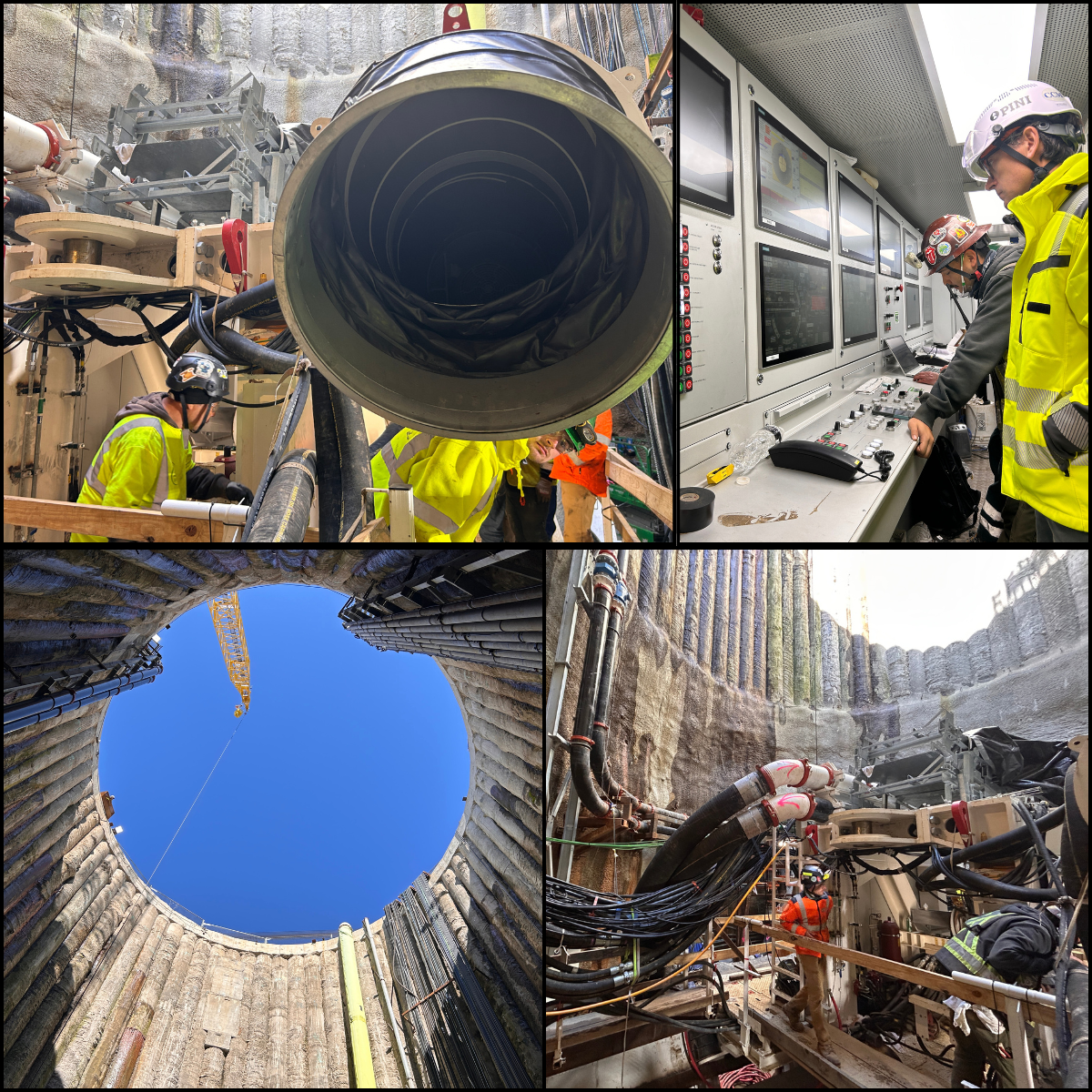
During the launch the first concrete tunnel ring is installed and connected to a thrust frame, allowing the TBM’s hydraulic jacks to push the machine forward. As the cutterhead rotates, it excavates the ground while crews assist the TBM with simultaneously building the tunnel lining behind it using precast concrete segments.
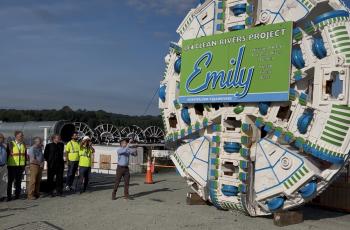
Mary will bore approximately 2.4 miles north from West Potomac Park to Georgetown University, excavating through the District’s hard bedrock. Her sister machine, Emily, is scheduled to arrive from Germany later this spring and will excavate south toward Joint Base Anacostia-Bolling, completing the full 5.5-mile tunnel system.
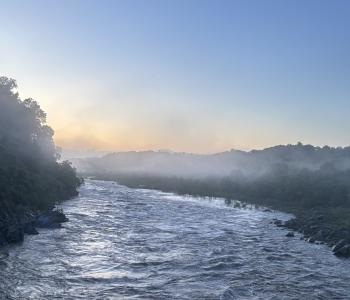
The Potomac River Tunnel is part of DC Water’s Clean Rivers Program, a long-term initiative to reduce pollution in the Potomac River and Chesapeake Bay. Currently, about 650 million gallons of untreated combined stormwater and sewer overflow enter the river each year. Once completed, the 5.5-mile tunnel system will reduce overflow volume by 93% and cut the number of overflow events from 74 to just four in a typical year.
With Mary’s launch commencing, DC Water enters the next phase of construction as tunneling progresses beneath the city —advancing a project that will help protect local waterways, support the river’s diverse ecosystem, strengthen infrastructure, and support healthier communities for generations to come. Learn more at dcwater.com/prt.