DC Water CEO David L. Gadis Updates Congress During Hearing on Potomac Interceptor Collapse
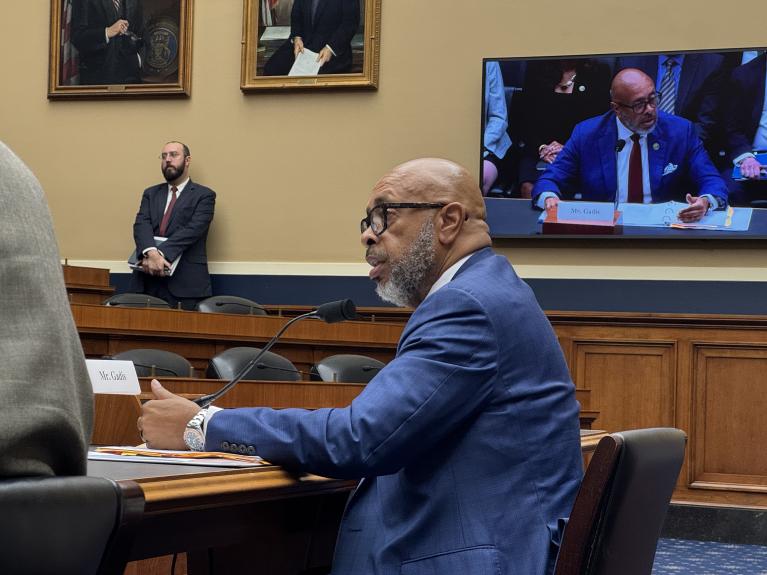
Today DC Water Chief Executive Officer and General Manager David L. Gadis testified before the House Energy and Commerce Committee’s Subcommittee on Oversight and Investigations regarding the Potomac Interceptor collapse to update members on our emergency response, ongoing rehabilitation efforts, and what we are doing to prevent future incidents.
Here is his written testimony provided to the committee:
CONGRESS OF THE UNITED STATED
HOUSE OF REPRESENTATIVES
COMMITTEE ON ENERGY AND COMMERCE
SUBCOMMITTEE ON OVERSIGHT AND INVESTIGATIONS
CORROSION, COLLAPSE, AND CLEAN-UP: EXAMINING THE POTOMAC INTERCEPTOR COLLAPSE
TESTIMONY
DAVID GADIS
CHIEF EXECUTIVE OFFICER AND GENERAL MANAGER
DC WATER
Mr. Chairman, members of the House Committee on Energy and Commerce’s Subcommittee on Oversight and Investigations, thank you for inviting me to testify today.
I am David Gadis, Chief Executive Officer and General Manager of DC Water. I appreciate the opportunity to discuss the January 19 collapse of the Potomac Interceptor, the emergency response that followed, and the long-term efforts currently underway to restore, rehabilitate, and strengthen this critical piece of infrastructure.
I. DC Water’s Mission and Regional Importance
DC Water is one of the nation’s leading water and wastewater utilities, serving more than 700,000 District residents and millions of daily commuters and visitors each year, while also providing wastewater treatment services for neighboring jurisdictions in Maryland and Virginia, including Montgomery and Prince George’s Counties in Maryland and Fairfax and Loudoun Counties in Virginia. DC Water also proudly serves the Capitol, White House and other federal building.
Originally established in 1996 by District law with the approval of the United States Congress as part of the District’s unique governance structure, DC Water today operates and maintains some of the nation’s oldest, most complex, and most historically significant water and wastewater infrastructure systems.
For decades, DC Water has been recognized as a national leader in environmental stewardship, infrastructure modernization, water quality improvement, and financial management.
At the center of those efforts is the Blue Plains Advanced Wastewater Treatment Plant (“Blue Plains”), the largest advanced wastewater treatment facility in the world. Every day, Blue Plains treats wastewater from the District of Columbia and surrounding jurisdictions before safely returning treated water to the Potomac River at exceptionally high environmental standards. Blue Plains plays a critical role in protecting public health, the Potomac River, and the Chesapeake Bay watershed.
II. Environmental Stewardship and Infrastructure Investment
One of the clearest examples of DC Water’s environmental leadership is the DC Clean Rivers Project, a multi-billion-dollar infrastructure initiative designed to dramatically reduce combined sewer overflows into the District’s waterways, including the Anacostia and Potomac Rivers and Rock Creek.
Before this work began, approximately 2.1 billion gallons of untreated sewage and stormwater overflow entered the Anacostia River annually during an average rainfall year. Through high rate treatment at Blue Plains, the construction of deep underground tunnels, diversion facilities, and associated infrastructure, DC Water has fundamentally changed the trajectory of one of the nation’s most historically impaired urban rivers.
Today, the Anacostia River Tunnel System captures and diverts combined sewage and stormwater that previously would have flowed directly into the river and conveys it to Blue Plains for treatment. As a result, combined sewer overflows into the Anacostia River are projected to be reduced by approximately 98 percent in an average rainfall year.
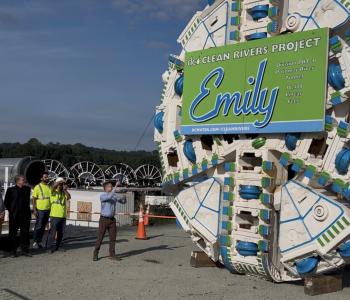
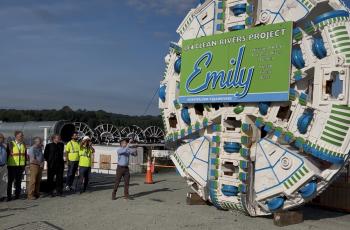
DC Water’s environmental restoration efforts continue today through the next major phase of the Clean Rivers Project, the Potomac River Tunnel Project, which is now under active construction.
The 5.5-mile deep tunnel system will capture combined sewage and stormwater that historically discharged into the Potomac River during major rain events and convey those flows to Blue Plains for treatment instead.
Once completed in 2030, the Potomac River Tunnel is expected to reduce combined sewer overflows into the Potomac River by approximately 93 percent during an average rainfall year. Together with the Anacostia River Tunnel System and other Clean Rivers infrastructure, the project will complete one of the nation’s largest and most ambitious wastewater and environmental restoration programs.
The broader Clean Rivers Project is projected to reduce combined sewer overflows across the District’s waterways by approximately 96 percent systemwide in an average rainfall year, dramatically improving water quality in the Potomac and Anacostia Rivers and helping protect the Chesapeake Bay watershed for future generations.
DC Water’s environmental leadership extends beyond wastewater treatment and river restoration. Through its Lead Free DC initiative, DC Water has become a national leader in lead service line replacement.
Lead Free DC is one of the nation’s most ambitious lead remediation programs and reflects DC Water’s long-standing commitment to protecting public health and modernizing critical infrastructure. The program was designed to accelerate the replacement of lead service lines throughout the District and reduce barriers to replacement for residents.
As of the end of 2025, DC Water had replaced more than 10,000 lead service lines as part of the initiative. The program has received national recognition for its leadership, innovation, and commitment to environmental stewardship and public health protection.
Our commitment to industry excellence expands beyond our service area and traditional utility operations. DC Water is the only utility in the country accredited in emergency management (nationally known as the Emergency Management Accreditation Program)and we were proud to deploy an Incident Management Team (IMT) to Asheville, North Carolina in the fall of 2024 to assist with disaster recovery and the restoration of drinking water and sewer services following Tropical Storm Helene.
In addition to operational and environmental leadership, DC Water is nationally recognized for strong financial management and long-term infrastructure planning. Despite increasing financial pressures facing utilities nationwide, DC Water maintains among the strongest credit ratings in the utility industry, including AAA/AA+ ratings from S&P Global Ratings, Aa1/Aa2 ratings from Moody’s, and AA+/AA ratings from Fitch Ratings.
These ratings reflect recognition of DC Water’s prudent capital planning, independent rate-setting authority, operational management, and long-term financial stability despite increasing infrastructure and regulatory pressures facing utilities across the country.
III. The Potomac Interceptor and Aging Infrastructure Challenges
This longstanding record of environmental stewardship, infrastructure investment, operational excellence, and financial discipline is important context for understanding the Potomac Interceptor collapse. The incident did not occur because DC Water ignored infrastructure challenges. Rather, it occurred within one of the nation’s oldest and most complex wastewater systems, a system DC Water has spent decades modernizing, rehabilitating, and improving for the benefit of the region and the environment.
Like many utilities across the nation, DC Water is responsible for operating, maintaining, and rehabilitating infrastructure originally constructed generations ago, infrastructure that remains essential to protecting public health, regional wastewater reliability, environmental quality, and the Potomac River watershed even as portions of the system continue to age beyond their originally intended service life.
The Potomac Interceptor is a critical component of the region’s wastewater infrastructure system. Constructed by the Federal Government over an approximately three-year period in the 1960s, prior to District home rule, the interceptor was built during a markedly different era of engineering practices, environmental regulation, documentation standards, and inspection technology than exists today.
The interceptor is part of a broader 54-mile wastewater conveyance system that serves communities throughout the District of Columbia, Maryland, and Virginia and ultimately conveys wastewater flows to the Blue Plains Advanced Wastewater Treatment Plant for treatment.
IV. January 19 Collapse and Emergency Response
Late on the afternoon of January 19, DC Water discovered a significant failure in the Potomac Interceptor near the Potomac River. Our teams immediately mobilized to contain the release, protect public health and the environment, and stabilize wastewater operations for the region.
The emergency response and subsequent rehabilitation effort unfolded under extraordinarily difficult operational and environmental conditions.
Crews worked through severe winter weather, unstable terrain, challenging riverbank conditions, and highly constrained access areas adjacent to the Potomac River and the Chesapeake & Ohio Canal National Historical Park. The location of the collapse, nestled within a heavily regulated and environmentally sensitive federal corridor, significantly increased the complexity of both emergency operations and long-term rehabilitation planning.
Despite these challenges, DC Water, in coordination with federal, state, and local partners, rapidly implemented emergency bypass pumping operations, stabilized the site, protected wastewater system reliability for the region, and worked continuously to reduce impacts to the Potomac River.
The response required unprecedented coordination among numerous agencies and stakeholders, including the U.S. Environmental Protection Agency, National Park Service, U.S. Army Corps of Engineers, the Federal Emergency Management Agency, Maryland Department of the Environment, District Department of Energy and Environment, local emergency management agencies, regional water utilities, and numerous elected officials and community stakeholders across multiple jurisdictions.
DC Water is deeply appreciative of the extraordinary partnership, coordination, and technical support provided throughout the response and recovery effort. In particular, I would like to recognize the leadership of EPA Assistant Administrator for Water Jessica Kramer, whose engagement and collaborative approach were instrumental throughout this incident, as well as the support provided by Administrator Lee Zeldin and our many federal, state, and regional partners including Mayor Muriel Bowser of the District of Columbia.
V. Operational Challenge
As crews gained access to the damaged section of pipe, engineers encountered large boulders and debris in and adjacent to the impacted interceptor. Collectively weighing approximately 18 tons, roughly the equivalent weight of 10 passenger vehicles, these materials obstructed flow within the pipeline and likely contributed to significant structural stress to the Interceptor over many decades.
The presence of the rock blockage significantly complicated emergency response and rehabilitation operations. The boulders restricted access to the damaged sections of pipe, impeded wastewater flow, created dangerous and unstable working conditions for crews, and substantially increased the complexity of excavation and debris removal efforts within an environmentally sensitive and highly constrained work area. All during historically cold weather and ice.
The rock dam explains why the incident evolved into a far more operationally challenging response than initially anticipated. Removal of the obstructions required specialized equipment, careful staging, continuous coordination among engineering and environmental teams, and extensive safety precautions to protect workers, nearby infrastructure, and the surrounding river environment.
VI. Transparency, Community Engagement, and Environmental Monitoring
Throughout the incident, DC Water approached its communications and community engagement efforts with a recognition that the Potomac River is a shared environmental resource deeply valued by the public, regional communities, environmental advocates, and partner agencies alike. Protecting the long-term health of the river and maintaining public trust required not only an aggressive operational response, but also a commitment to transparency, collaboration, and proactive public communication.
Recognizing the significant public interest and concern surrounding the collapse, DC Water provided frequent public updates regarding operational conditions, environmental monitoring, repair progress, and restoration activities. These efforts included regular press briefings, daily public website updates, community meetings hosted in the District of Columbia, Maryland and Virginia, stakeholder outreach sessions, direct engagement with environmental organizations, and ongoing coordination with federal, state, and local elected officials.
DC Water also publicly released closed circuit, sonar, and lidar-based inspection records, engineering assessments, and repair planning information related to the impacted section of pipe in an effort to ensure transparency and provide the public with access to the same technical information available to the utility prior to and following the incident.
DC Water understood from the outset that public trust would depend not only on the effectiveness of the emergency response itself, but also on the willingness to communicate openly, share information promptly, and acknowledge the seriousness of the event.
VII. Permitting, Coordination, and National Infrastructure Lessons
This experience has also highlighted broader challenges associated with maintaining and rehabilitating major infrastructure systems that cross multiple federal, state, and local jurisdictions, particularly within environmentally sensitive and nationally significant corridors such as the Potomac River and the Chesapeake & Ohio Canal National Historical Park.
The permitting and coordination processes governing work in these areas are understandably rigorous and reflect important environmental, historical, and public interests. DC Water respects and values those protections and has worked collaboratively with permitting agencies and regulatory partners throughout both the planning and emergency response phases of this project.
Importantly, prior to the January 19 collapse, DC Water had already identified portions of the Potomac Interceptor for rehabilitation and had been actively engaged in planning, engineering, environmental review, and permitting discussions associated with future repair work. In fact, it had been part of our capital improvement planning process for several years, to begin construction in spring 2026, and the permit request was submitted to the National Park Service, before the collapse occurred. Those efforts reflected the utility’s recognition that portions of the interceptor required continued long-term investment and modernization as part of its broader asset management and infrastructure rehabilitation programs.
DC Water has learned that having long-term easements to access the Potomac Interceptor, standardized permitting timelines, streamlined reviews for similar rehabilitation work, and better field coordination with regulatory authorities can help to prevent a recurrence of the failure.
Nationally, this incident underscores the importance of ensuring that critical infrastructure rehabilitation and resiliency projects can advance as efficiently as possible while still maintaining strong environmental protections, intergovernmental coordination, and public transparency. Aging wastewater infrastructure systems across the country increasingly require complex rehabilitation work, and this experience demonstrates the need for continued collaboration among utilities, regulators, and policymakers to balance infrastructure resiliency, environmental stewardship, and timely project delivery.
VIII. Conclusion
The Potomac Interceptor collapse was a serious and deeply consequential event for our region, our environment, and the communities we serve. While this incident does not define DC Water’s decades-long record of environmental stewardship, operational excellence, and infrastructure investment, it does demand accountability, reflection, and continued action - responsibilities we fully embrace.
We recognize that this incident impacted not only critical infrastructure, but also the confidence and sense of security of the communities we serve and the many people who treasure the Potomac River.
We have listened to community concerns, shared information quickly and openly, and worked collaboratively with our federal, state, regional, and local partners throughout both the emergency response and restoration efforts.
We take seriously our obligation to learn from this incident, strengthen our systems, and continue earning the trust placed in us by our customers, our regional partners, and future generations who will inherit this infrastructure after us.
Thank you for the opportunity to discuss the incident and our response. I look forward to your questions.