Emergency Work to Rehabilitate Section of Potomac Interceptor to Begin in Potomac, MD
Measures are in place to help protect downstream drinking water infrastructure
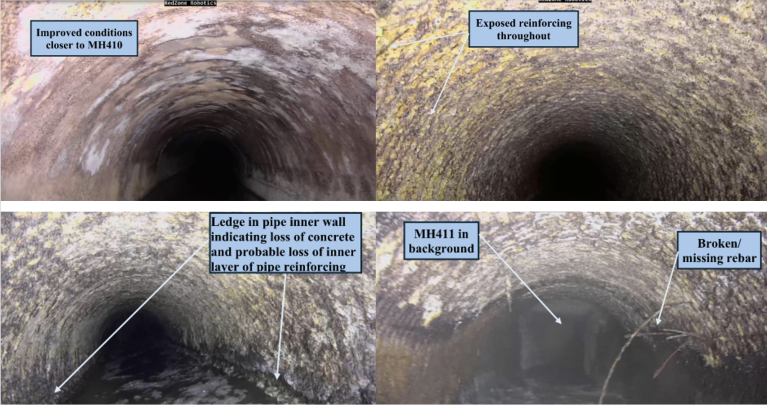
DC Water is accelerating rehabilitation work on a section of the Potomac Interceptor at Muddy Branch near Pennyfield Lock (Lock 22) in Potomac, Maryland. Inspections found structural deterioration, including significant corrosion and exposed rebar, that requires immediate attention.
We will begin mobilizing at the site on Monday, June 15, to rehabilitate about 1,700 linear feet of the interceptor as part of an emergency repair effort. Tree trimming and brush clearing has already begun. Construction is expected to continue through the end of September 2026.
On a typical dry weather day, this section carries an average of six million gallons of wastewater a day and connects to the main trunk of the Potomac Interceptor. It is located upstream of the WSSC Water’s Potomac Water Filtration Plant and the Washington Aqueduct’s intakes at Great Falls. Addressing the deterioration now is a necessary risk mitigation measure intended to reduce the likelihood of a more serious issue that could impact the Potomac River and downstream drinking water supply intakes.
“As soon as we identified the severity of the deterioration in this section of the interceptor, we moved quickly to put monitoring and protective measures in place and advance an emergency repair,” said Matt Brown, DC Water Chief Operating Officer. “We understand the public concern and are monitoring conditions closely, coordinating with our partners, and taking every step we can to reduce risk and protect public water supplies, public health and the environment.”
Although the findings identified in this section warranted moving this work to the top of DC Water’s repair priorities, the most deteriorated portion of the pipe is fully encased in concrete, which reduces the risk of failure and the likelihood of an impact to public water supplies, public health and the environment. Other sections within this segment include a concrete cap, providing added structural support.
DC Water expanded inspections of the 54-mile Potomac Interceptor after the January 19 failure along Clara Barton Parkway in Cabin John, Maryland. Along with standard video inspections, we used LiDAR to measure wall thickness and sonar to identify debris or blockages. In mid-April, we notified WSSC Water that inspections identified conditions warranting a high-priority emergency repair. Since then, DC Water has provided multiple briefings to WSSC Water on the rehabilitation plan and mitigations.
In the meantime, our teams are conducting twice-weekly visual inspections and installing monitoring equipment that can quickly detect changes in flow that may indicate leakage or a structural failure. We will also build a bypass pipeline and pumping system to move wastewater around the work area and return flows to the interceptor downstream.
The rehabilitation will primarily use slip lining, which places new pipe sections inside the existing interceptor to create a reinforced pipe within the old one. While the new pipe is being manufactured, crews will apply a geopolymer liner, a concrete-like material, to the approximately 175-foot section identified as the most critical part of the repair area. Crews will also excavate two “push pits” where the new pipe sections will be inserted into the existing pipe.
The location is within the C&O Canal National Historical Park and the Pennyfield Lock Conservation Area. During construction, residents and visitors may see heavy equipment, work crews, and temporary staging. We understand this may be disruptive and we will provide updates and briefings for community members and stakeholders throughout the project.
DC Water continues to evaluate other sections of the 54-mile Potomac Interceptor and will share more information about upcoming rehabilitation work available.