Clean-up Continues on C & O Canal, Initial Work in Remaining Areas Nearly Complete
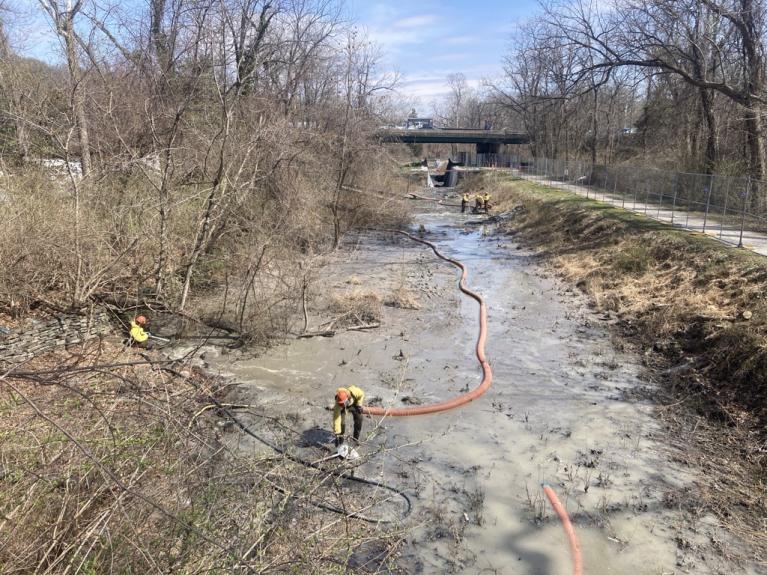
- Work is ongoing to complete the initial phase of environmental rehabilitation and temporary stabilization this week in areas directly impacted by the overflows. A small section of the drainage channel along Clara Barton Parkway remains. Preliminary clean-up of the culvert, tributary, and Potomac River shoreline has also been completed.
- The first phase of the environmental rehabilitation included removing brush and debris, mucking, soil removal, and installing erosion control and soil stabilization measures.
- On the C & O Canal, crews are working downstream at Lock 10 and upstream around Lock 13 to remove sludge and debris from the canal. Freshwater is being pumped into the canal to form a shallow channel. This allows workers to rake the sludge and debris into the water, creating a slurry that can be vacuumed out more efficiently.
- As the collapse site and bypass pumping locations transition from the emergency repair to long-term rehabilitation, equipment and materials have been demobilized.
- The two large, excavated pits where the pipe remains open are now covered pending the next phase to rehabilitate more than 2700 linear feet of the interceptor. The work was part of a previously planned capital project and is being accelerated. The excavated pipe sections will be utilized to get the work done more quickly and efficiently.
- Keeping an open channel flow – with section of the pipe open - will allow crews to use the pipe openings to insert a new slightly smaller pipe into the existing interceptor, to strengthen and reinforce the pipe to like-new condition.
Water Quality Sampling Results
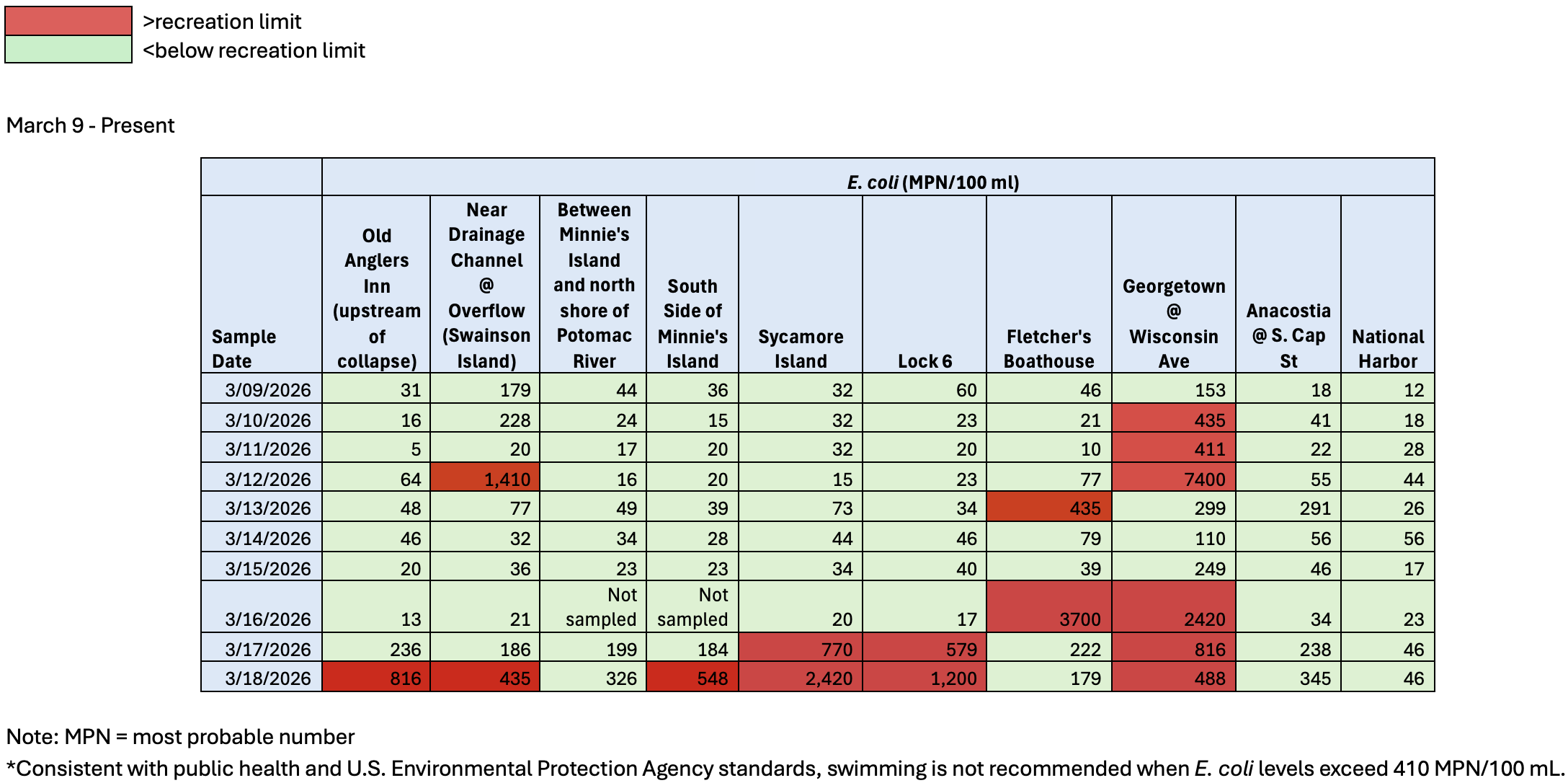
It's important to understand that rain, snow, heat, contaminated runoff, and natural sources of E. coli such as wildlife can cause higher bacteria levels in urban rivers such as the Potomac. For this reason experts recommend avoiding the water for at least 48-72 hours after heavy rain. This is reflected in the data on March 16, 17, and 18, where significant spikes are seen that coincide with heavy rainfall including areas upstream where measurements are unrelated to the overflow event.
As there have been no overflows to the river from the Potomac Interceptor for more than a month prior to completion of emergency repairs, fluctuations in measurements are more likely due to these other known factors.
For the Potomac River, historical water quality data shows E. coli levels may vary from a range as low as 10 MPN/100mL to as much as 5,000 MPN/100mL on a given day. A more detailed explanation is posted on the District Department of Energy and Environment (DOEE) website at doee.dc.gov/release/potomac-interceptor-update-and-faqs.
Sample results from March 9 - present. Past results may be found here.
For the latest updates and information, including how to provide feedback on the environmental rehabilitation, go to our dedicated Potomac Interceptor Response page.