Work Underway on Final Steps to Return Flow to the Potomac Interceptor, Complete Emergency Repair
- More than one month after the last overflow into the Potomac River, DC Water is preparing to return flow in the coming days to the Potomac Interceptor and meet the mid-March target to complete the emergency repair on the damaged pipe section.
- Crews have completed work to reinforce the pipe sections upstream and downstream of the collapse site using geopolymer to strengthen the pipe. The work included 320 linear feet of the upstream section, 300 linear feet of the downstream section, and drop sections where the elevation changes. Geopolymer, is strong like concrete but more resistant to sewer gases and when applied strengthens the pipe and provides structural integrity.
- Work is now underway to waterproof the excavation sites where the pipe is open. This is necessary to prepare the sites to restore flow to the interceptor. A CCTV camera inspection will take place later this week to verify the pipe is ready to restore flow.
- Returning the flow to the Potomac Interceptor is a phased process, slowly lifting the bulkhead gate blocking the pipe to gradually reintroduce flow. Crews will monitor the pipe sections to ensure there are no issues. As more flow is introduced, the pumps will be systematically taken out of service in careful coordination until all flow is restored and the bypass pumping system deactivated.
- The remaining wastewater in the C & O Canal will flow downstream back into the Potomac Interceptor, and the residual wastewater that remains in the canal will be pumped out.
- When the emergency repair is completed, the full flow and function of the Potomac Interceptor will be restored with what is known as “open channel flow.” Wastewater will continue to flow through the open pipe sections contained within the trenches while the long-term rehabilitation work takes place.
- DC Water is accelerating rehabilitation for this section of the Potomac Interceptor which was part of a planned rehabilitation project. Crews will slip line more than 2700 linear feet of the sewer line, using the pipe that is already open to insert new pipe segments into the existing pipe. The slip lining, expected to take 9-10 months will restore this section of the sewer line to like new condition.
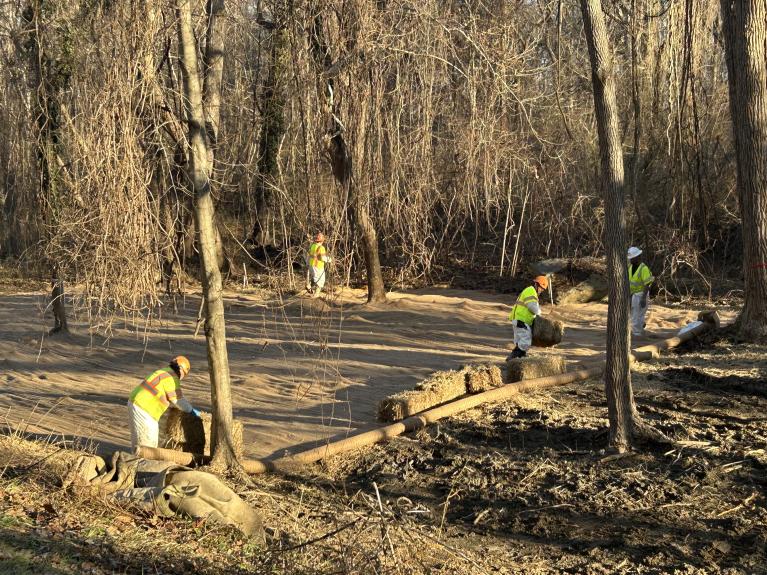
- Environmental rehabilitation work continues in Area 1, adjacent to the collapse site and the drainage channel along Clara Barton Parkway. Crews are clearing vegetation, excavating contaminated soil, mucking the area, and implementing erosion control measures and soil stabilization as part of the initial clean-up.
- Area 1 is divided into two sections – east and west. On the western section, the initial phase of rehabilitation work is now more than 30% complete.
Water Quality Sampling Results
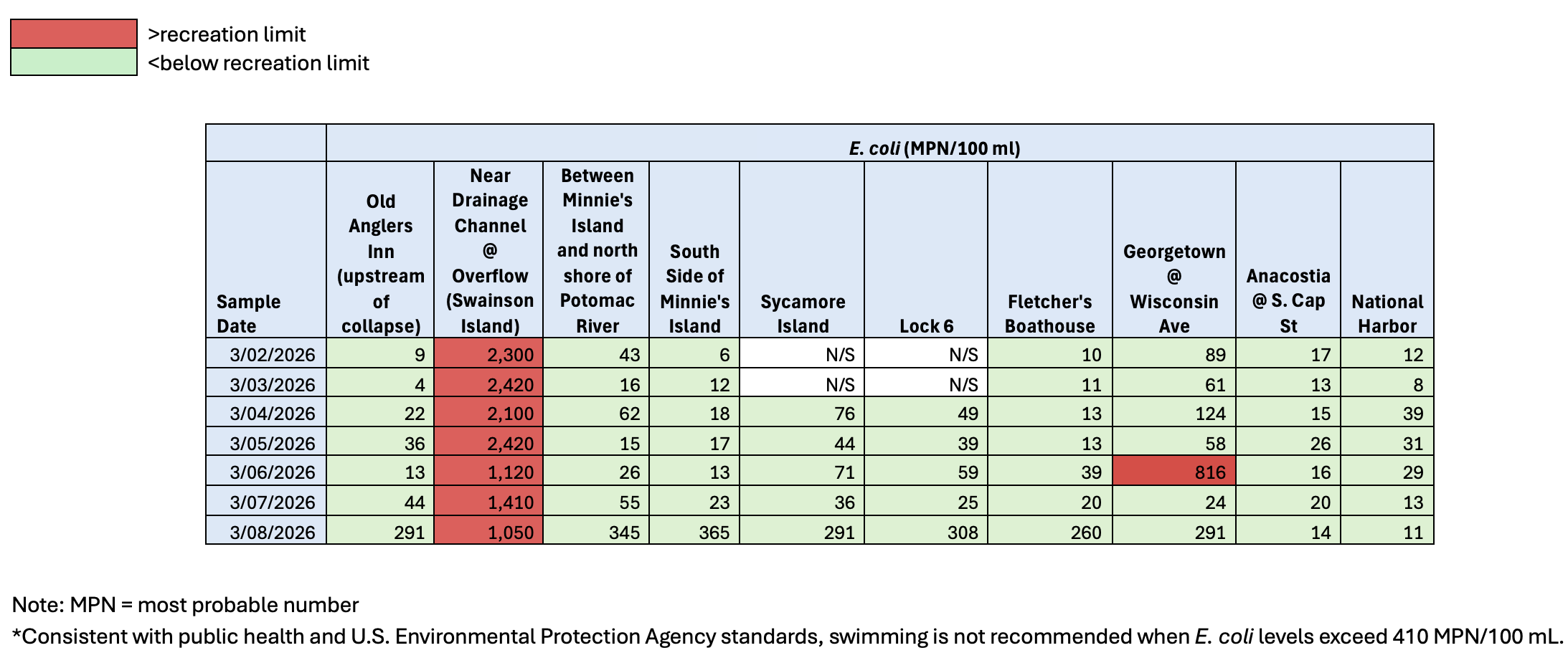
Fluctuations in water quality are influenced by factors such as rain, heat, or other weather events, river flow, runoff, pollutants, releases of combined overflows, and other sources discharging into waterways. Given these variables, measurements taken much further downstream cannot be attributed solely to this incident.
For the Potomac River, historical water quality data shows E. coli levels may vary from a range as low as 10 MPN/100mL to as much as 5,000 MPN/100mL on a given day. A more detailed explanation is posted on the District Department of Energy and Environment (DOEE) website at doee.dc.gov/release/potomac-interceptor-update-and-faqs.
As of March 4, two new sampling locations have been added at Sycamore Island and Lock 6. Sample results from February 23 - present. Past results may be found here.
For more information, including the latest news and updates, and to provide feedback on the Environmental Rehabilitation Plan go to our dedicated page for the Potomac Interceptor Repairs.