UPDATE: Work to Remove Rocks and Debris Dam Blocking Damaged Potomac Interceptor Nearly Complete
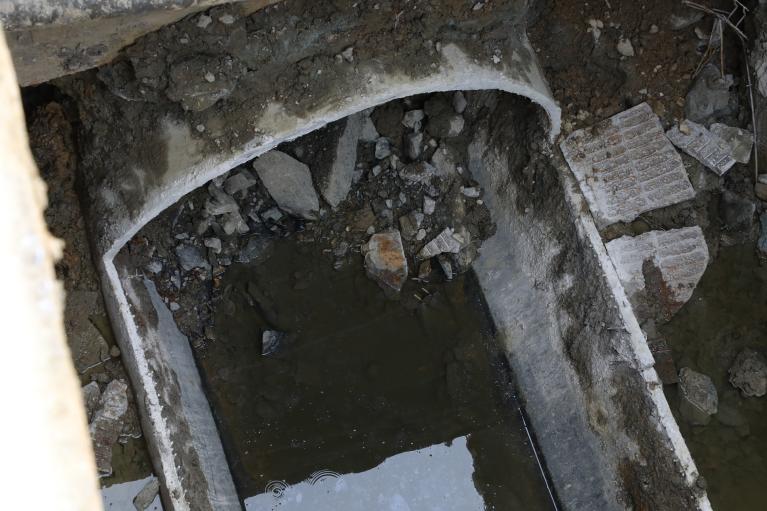
Potomac Interceptor Repairs Update
February 25, 2026
- Crews are nearly done removing a rock and debris dam that was blocking the damaged section of the Potomac Interceptor. Several feet of rocks and debris remain to be cleared and is expected to be completed overnight.
- Since Monday, crews have cleared about 45 feet of rocks and debris. To do this, the excavation area was extended around the damaged pipe section to expose the pipe, cut the top off, and reach the debris dam.
- No overflows have been reported entering the Potomac River in 17 days. The last release into the river occurred on February 8.
- Additional work is underway to clear soil, muck, and other debris in the upstream section of pipe around the collapse site.
-
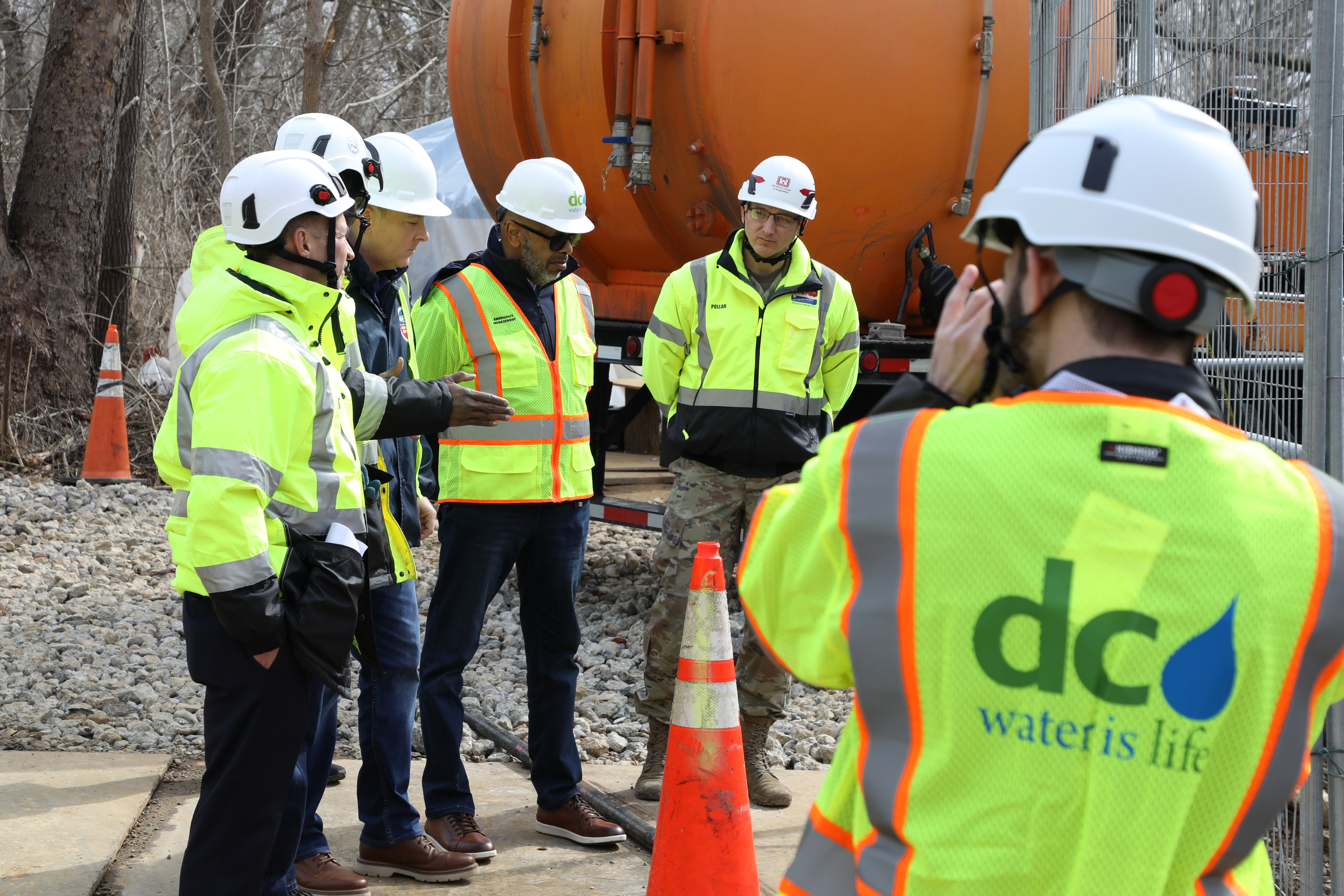
DC Water CEO David L. Gadis shows EPA Secretary Lee Zeldin the progress being made to repair the damaged section of the Potomac Interceptor. Once the rocks, muck, and debris are removed, work will begin to prepare the pipe for repair. To ensure the geopolymer – a material with similar strength to concrete and more resistant to sewer gases – can properly adhere the sewer pipe must be pressure washed and thoroughly cleaned out to eliminate any debris.
- Once the pipe is cleaned and prepared, the geopolymer will be sprayed on. This could begin as early as next week. The geopolymer will be applied in layers and will require time to cure before more layers are added to reach the desired thickness.
- Works is progressing and is on target to complete the emergency repairs by mid-March, restoring the full flow and functionality to the Potomac Interceptor and eliminating the need for the bypass pumping system that is currently using the C&O Canal to divert the flow around the collapsed section and back into the Potomac Interceptor further downstream.
- Work is underway in coordination with the US Army Corps of Engineers on some environmental mitigations to divert stormwater runoff away from the creek bed and channel, to avoid carrying any residual wastewater or contaminates in the soil to the river.
- Teams are also on site, beginning initial preparations and marking the area to begin the environmental restoration process.
DC Water is committed to protecting public health and the environment and completing emergency repairs as quickly and safely as possible and to restore the immediately impacted areas.
Water Quality Sampling Results
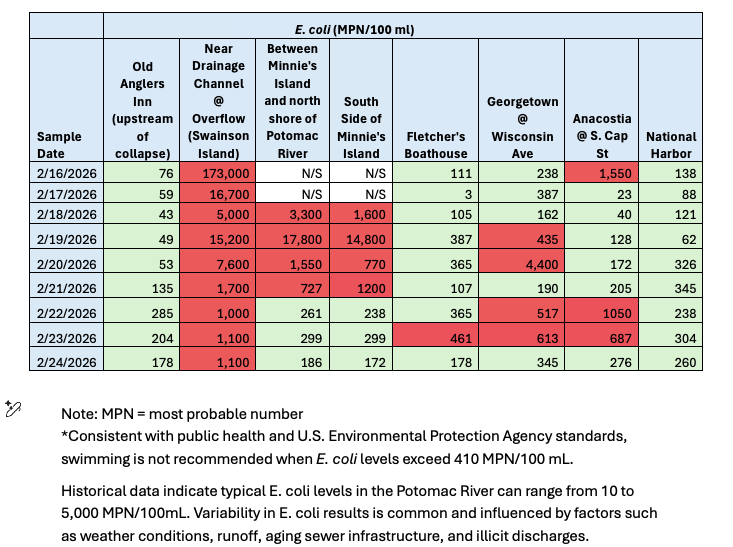
DC Water is performing daily water quality sampling. It’s important to note that historically the E. coli levels in the Potomac and Anacostia rivers vary widely from day to day. This is reflected in recent sampling results with stormwater runoff from rain and snow impacting water quality. Fluctuations in water quality are influenced by factors such as weather events, river flow, runoff, pollutants, releases of combined overflows, and other sources discharging into waterways.
Given these variables, measurements taken much further downstream cannot be attributed solely to this incident.
For the Potomac River, historical water quality data shows E. coli levels may vary from a range as low as 10 MPN/100mL to as much as 5,000 MPN/100mL on a given day. A more detailed explanation is posted on the District Department of Energy and Environment (DOEE) website at doee.dc.gov/release/potomac-interceptor-update-and-faqs.
Below are the results of sampling during the period from February 16 – present. Past results may be found on our dedicated Potomac Interceptor Response page.
For more information about the Potomac Interceptor Response go to dcwater.com/potomac-interceptor-collapse.