Update: Potomac Interceptor Repairs, February 15
Potomac Interceptor Repairs Update
February 15, 2026
- No overflow events impacting surface waters have been reported in the past 24 hours.
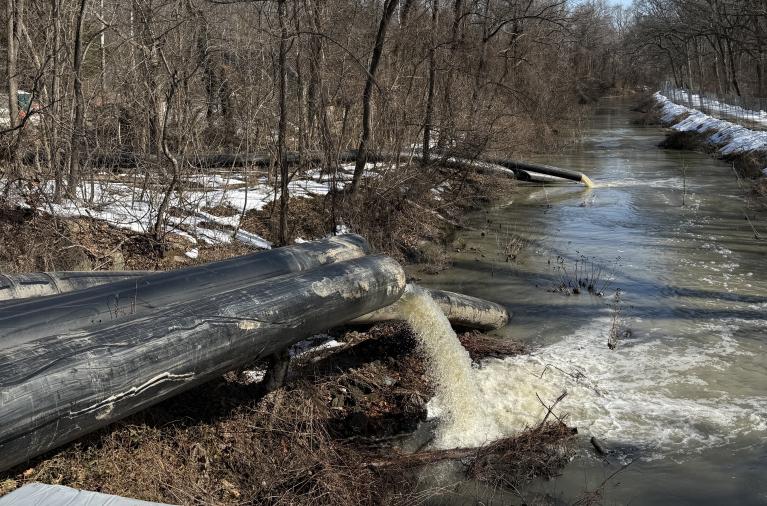
- The four high-capacity bypass pumps installed this week are now fully primed and operational, increasing overall system capacity and reliability.
- In addition, the third flume at the downstream end of the canal near Lock 10 is now active and conveying wastewater back into the Potomac Interceptor, joining the two original flumes already in service. These measures are helping improve flow management and provide additional operational redundancy.
- Three additional bypass pumps have also arrived on site and will be available to further supplement pumping capacity as needed later this week.
- Crews are finishing fabrication of the steel bulkhead that will be installed late next week to block flow ahead of the damaged section of pipe. Installation of this bulkhead will allow crews to safely begin stabilizing the ground around the collapse, remove the rock dam obstructing the interceptor, and initiate permanent repairs to restore normal flow conditions.
- Due to the configuration of the system and the location of the rock dam, the potential for an overflow remains until the obstruction is removed and flow is returned to the Potomac Interceptor.
Protecting public health and the Potomac River remains DC Water’s top priority. Updates will be provided as work continues.
The latest water quality sampling results are below and can also be found on the dedicated project page at www.dcwater.com/potomac-interceptor-collapse.
Water Quality Sampling Results
*Lab results are unavailable on weekends and will be provided the following Monday (excluding holidays).
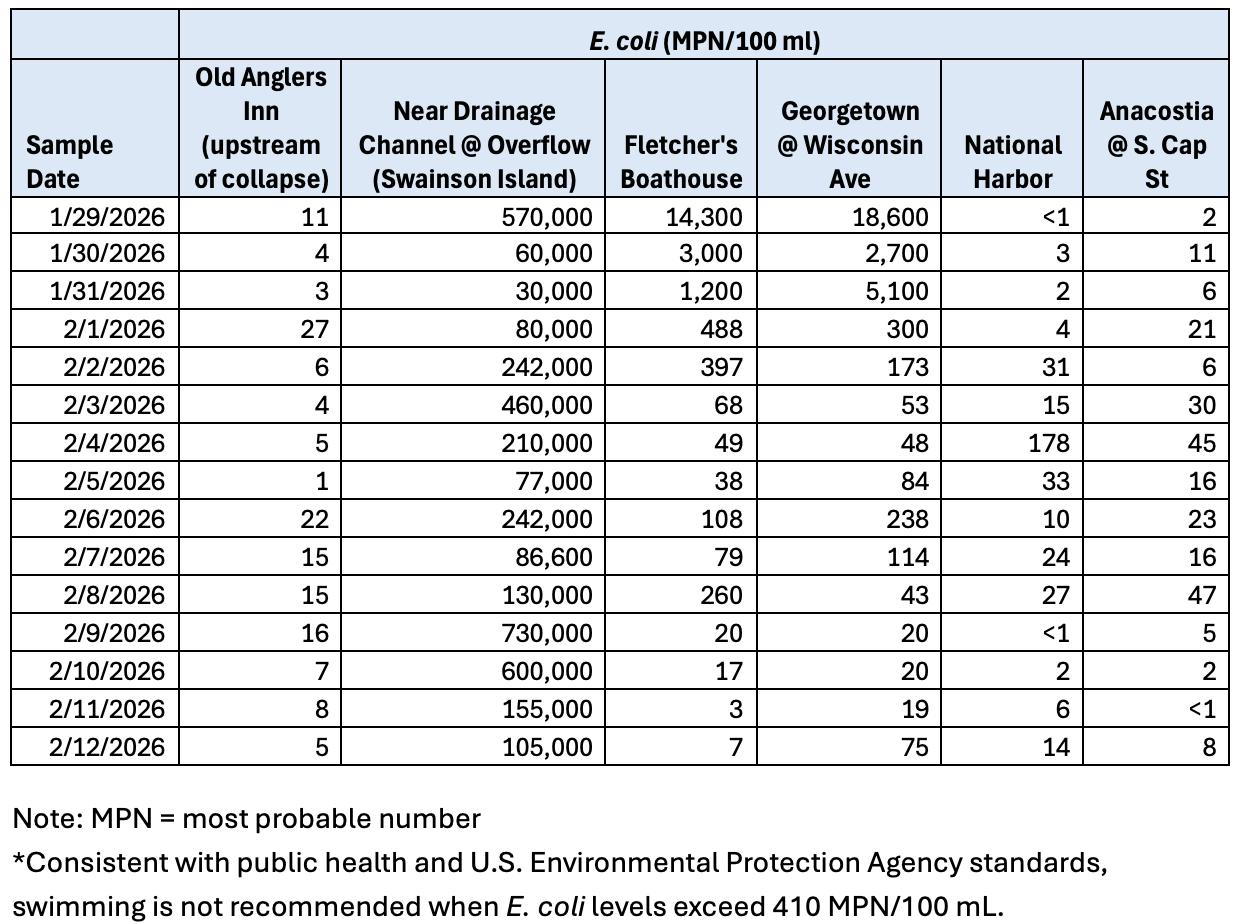
Historical data indicate typical E. coli levels in the Potomac River can range from 10 to 5,000 MPN/100mL. Variability in E. coli results are common and are influenced by multiple factors, such as weather (rainfall/snow melt and associated runoff) and subwatershed activities and conditions, including aging sewer infrastructure and illicit discharges.