UPDATE: Potomac Interceptor Repairs, February 14
Potomac Interceptor Repairs Update
February 14, 2026
- No overflow events impacting surface waters have been reported in the past 24 hours.
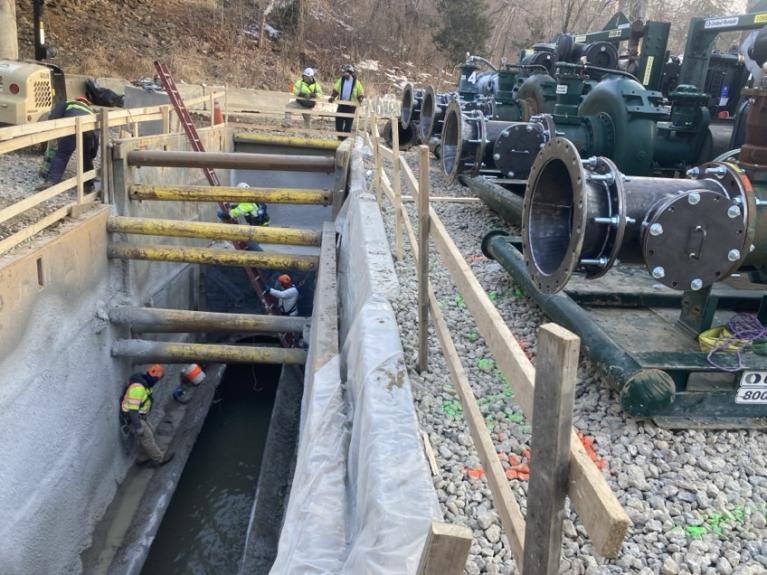
- Crews have completed construction of the two new access pits to support full installation of the enhanced bypass pumping system. To accomplish this, a section of the Potomac Interceptor upstream of the collapse site was opened to accommodate additional high-capacity pumps.
- Three of these high-capacity bypass pumps have been installed and are operational, with a fourth pump expected to be activated later tonight or early Sunday ahead of the forecasted weather to help manage anticipated higher flows associated with rainfall and snowmelt.
- The addition of the four pumps, combined with the eight already on site, will bring pumping capacity up to a flow rate of 114 million gallons a day to provide additional capacity and system redundancy when pumps are temporarily taken out of service for cleaning and maintenance when clogged with wipes or other issues.
- Construction continues in preparation to install a bulkhead that will block flow in the pipe to safely begin removal of a rock dam within the damaged section of the interceptor.
- Due to the configuration of the system and the location of the rock dam, the potential for an overflow remains until crews are able to safely access and remove the obstruction and complete repairs to fully restore normal flow conditions.
Protecting public health and the Potomac River is DC Water’s top priority. Updates will be provided as work continues.
The latest water quality sampling results are below and can also be found on our dedicated page with the latest information on the Potomac Interceptor Collapse at dcwater.com/potomac-interceptor-collapse.
Water Quality Sampling Results
*Lab results are unavailable on weekends and will be provided the following Monday (excluding holidays).
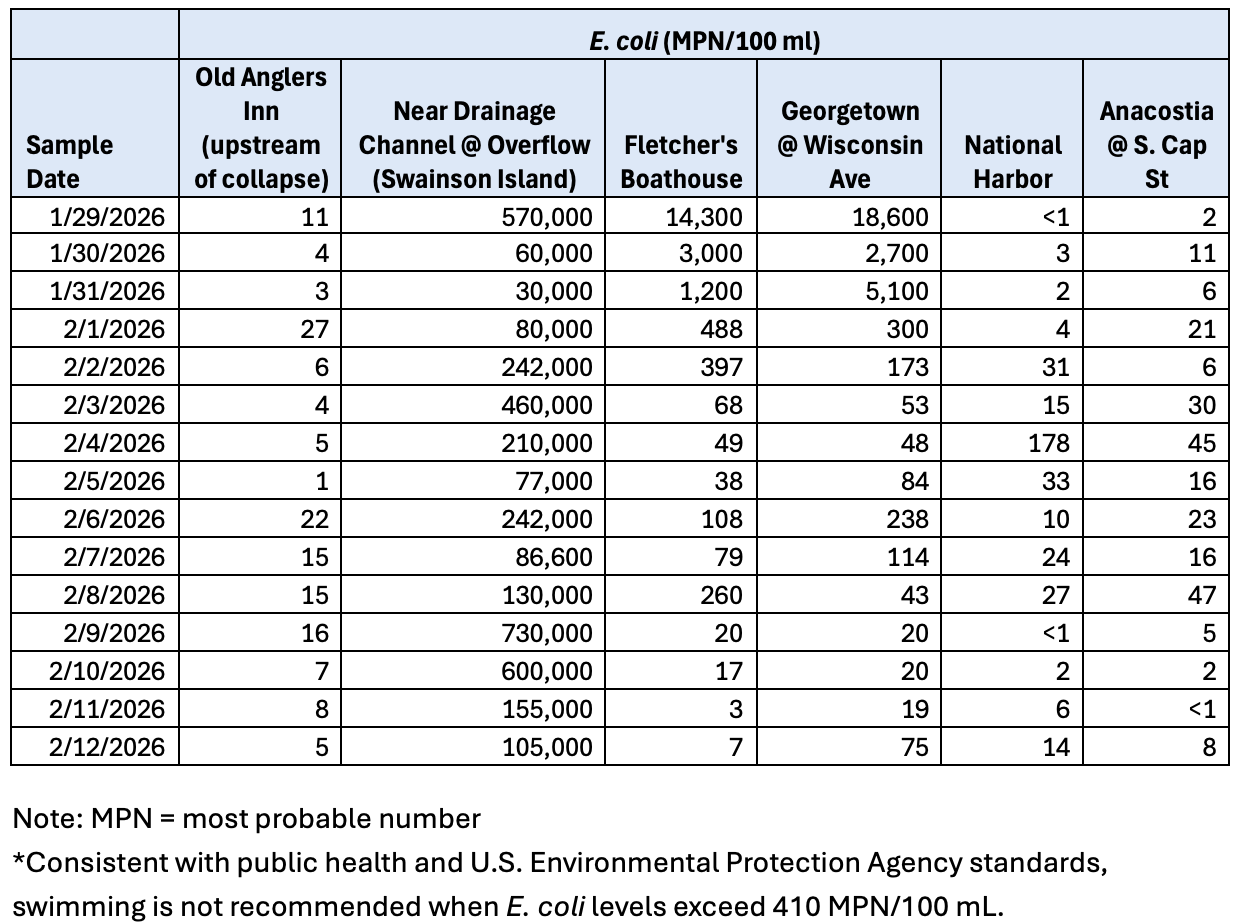
Historical data indicate typical E. coli levels in the Potomac River can range from 10 to 5,000 MPN/100mL. Variability in E. coli results are common and are influenced by multiple factors, such as weather (rainfall/snow melt and associated runoff) and subwatershed activities and conditions, including aging sewer infrastructure and illicit discharges.