UPDATE: Potomac Interceptor Repair February 10
Potomac Interceptor Repair Update
February 10, 2026
Highlights:
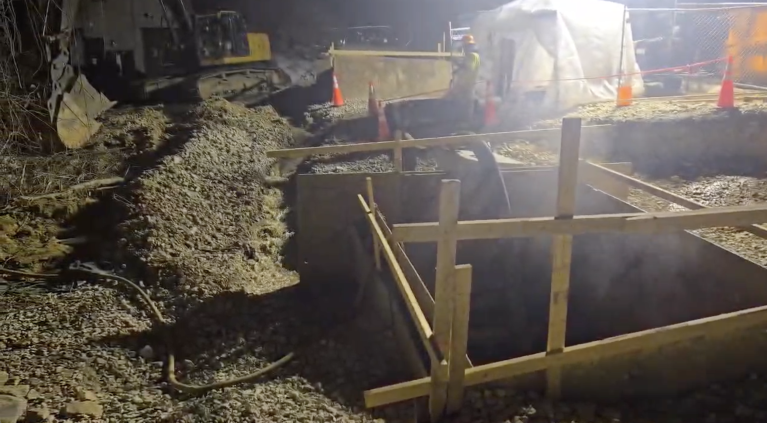
- A limited overflow occurred at the collapse site due to pump maintenance and operational challenges.
- The overflow – estimated to be less than 5,000 gallons - was contained on-site and did not enter the Potomac River.
- Work is progressing to install additional bypass pumps and insert a bulkhead inside the pipe. These measures will block flow and allow crews to safely remove a rock dam blocking the damaged pipe section.
Pumping capacity remains a challenge, due to ongoing maintenance and operational issues. An overflow occurred late Monday night, when two pumps – clogged with non-disposable wipes – were taken out of service for cleaning and maintenance. During a period of high flow, the volume of wastewater temporarily exceeded pumping capacity resulting in the overflow.
The overflow did not enter the Potomac River and was contained on-site by an earthen dam and a trench system that captured and redirected the wastewater back into the sewer system.
Water quality sampling continues. Elevated E. coli levels were detected in samples collected near the channel by Lock 10 where the wastewater enters the Potomac. These elevated levels are consistent with a much larger overflow event that occurred late Sunday evening, as well as increased snowmelt which carries residual wastewater from the creek bed into the channel. Downstream sampling locations continue to show E. coli levels below the acceptable standards set by the U.S. Environmental Protection Agency for recreational activity such as swimming.
Water Quality Sample Results:
As noted previously, data highlighted in yellow represents corrections made following a review of the sampling data that identified reporting errors. These errors were promptly corrected, and additional quality control measures have been implemented to ensure the accuracy of the data being reported.
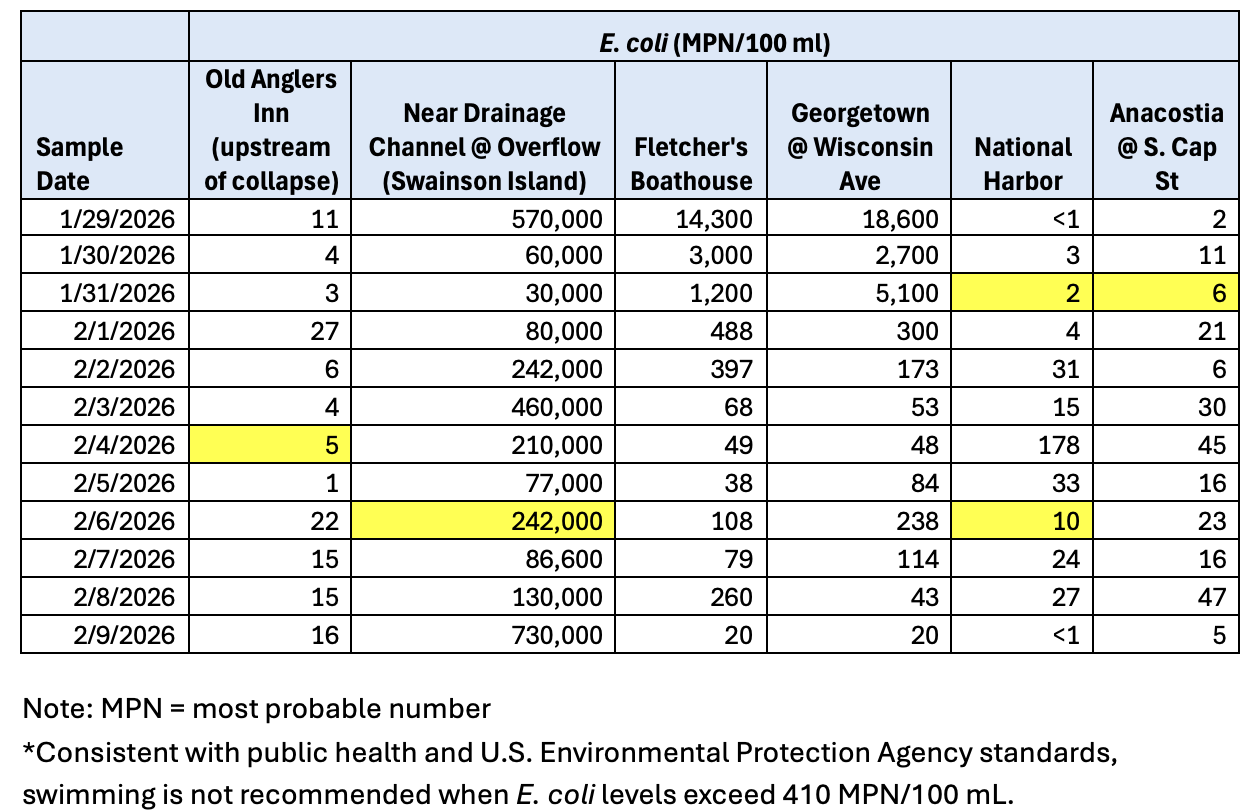
Historical data indicate typical E. coli levels in the Potomac River can range from 10 to 5,000 MPN/100mL. Variability in E. coli results are common and are influenced by multiple factors, such as weather (rainfall/snow melt and associated runoff) and subwatershed activities and conditions, including aging sewer infrastructure and illicit discharges.