UPDATE: Potomac Interceptor Collapse, February 20
Highlights
- Today marks the 12th consecutive day with no new overflow events entering the Potomac River or impacting surface waters.
- The bulkhead installed in the Potomac Interceptor at I-495 continues to function as designed, preventing flow from moving downstream toward the damaged section of pipe.
- Bypass pumping remains fully operational, despite heavy rains and snowmelt increasing flow.
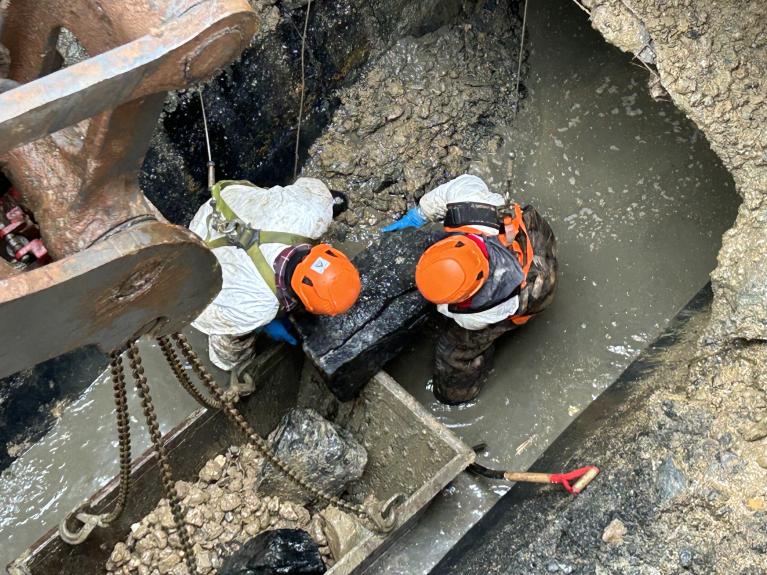
- Crews continue to vacuum debris downstream of the collapse and work has begun to remove a rock dam blocking the pipe, as well as additional boulders and other debris upstream and downstream of the collapse site, advancing efforts to clear the obstruction and stabilize the area.
- Crews and contractors remain on site 24/7, monitoring site conditions and preparing for forecasted rain events. Overnight rainfall increased flows within the system, and water quality conditions may fluctuate following heavy rain.
- We are also working to implement additional odor control measures to help mitigate impacts in the surrounding area.
Protecting public health and the Potomac River remains DC Water’s top priority. Updates will be provided as work continues.
Water Quality Sampling Results
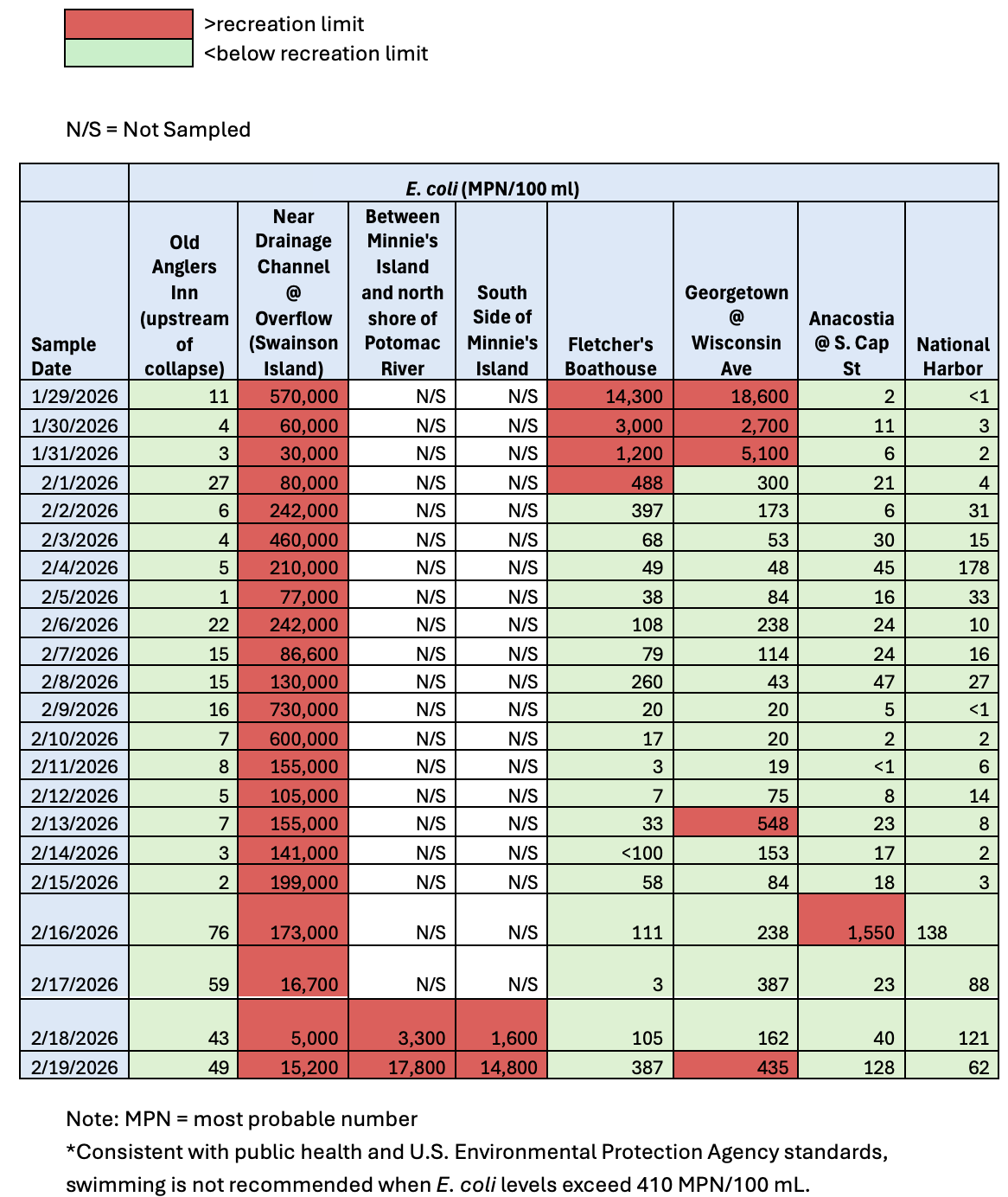
DC Water is performing daily water quality sampling. It’s important to note that historically the E. coli levels in the Potomac and Anacostia rivers vary widely from day to day. Fluctuations in water quality are influenced by factors such as weather events, river flow, runoff, pollutants, and other sources discharging into waterways; and measurements taken much further downstream cannot be attributed solely to this incident.
For the Potomac River, historical water quality data shows E. coli levels may vary from a range as low as 10 MPN/100mL to as much as 5,000 MPN/100mL on a given day.
A more detailed explanation is posted on the District Department of Energy and Environment (DOEE) website at https://doee.dc.gov/release/potomac-interceptor-update-and-faqs
DC Water has added two new sampling locations to the daily sampling. These locations add data points closer to the overflow site. The Minnie’s Island sample locations are approximately 0.54 miles from the overflow site compared to the Fletcher's location which is 5.2 miles from the overflow site. These sample locations provide a better understanding of the impact in the river near the collapse site and allow us to compare the main stem of the Potomac River (south side sample) to the inlet areas along the shoreline around Minnie’s Island (north side sample) where the water flows more slowly.
*Lab results are unavailable on weekends and will be provided the following Monday (excluding holidays).
For more information go to our dedicated page for the Potomac River Collapse at www.dcwater.com/potomac-interceptor-collapse.