UPDATE: Potomac Interceptor Collapse, February 18
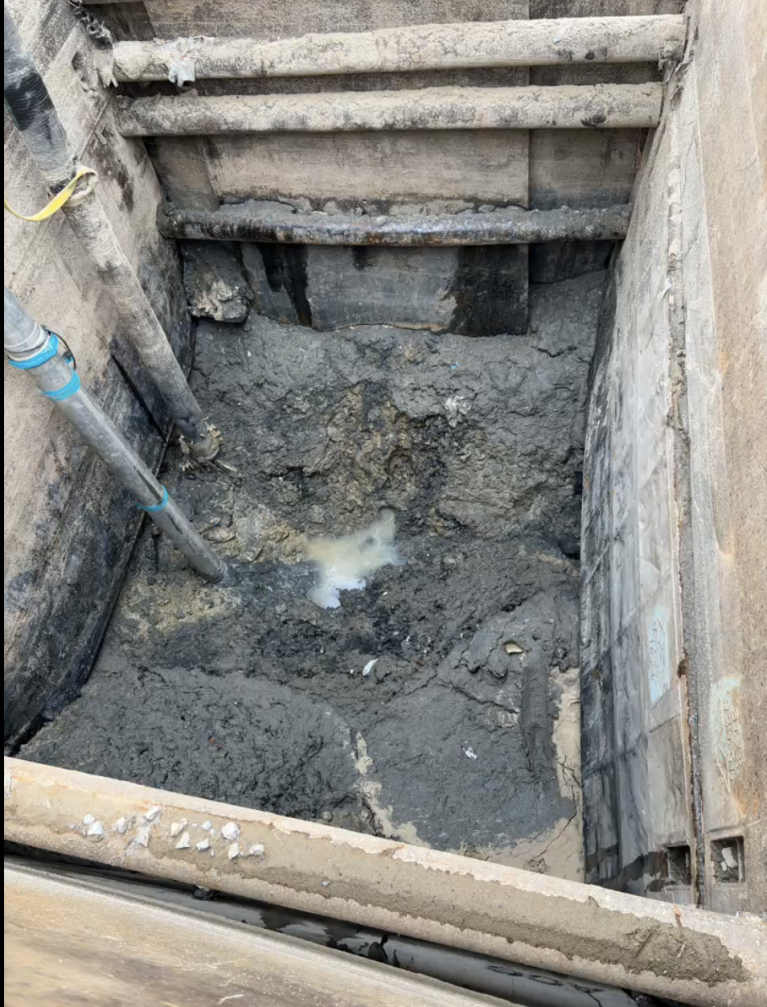
Image above shows collapse site with water drained following successful testing of bulkhead and enhanced bypass system
Potomac Interceptor Collapse Update
Wednesday, February 18, 2026
- No overflow events entering the Potomac River and impacting surface waters have occurred since Super Bowl Sunday.
- Efforts to isolate the damaged section of pipe are moving forward. Engineers are on site and preparations are underway to permanently install a steel bulkhead gate that will cut off flow to the collapse site in combination with an enhanced bypass pumping system that will continue to divert wastewater around the failure and into the Potomac Interceptor further downstream. Once fully activated, the system will allow contractors to begin stabilizing the area around the break and initiate excavation down to the damaged pipe and rock dam.
- Successful testing of the bulkhead gate and enhanced bypass system has allowed crews to draw down the water at the collapse site. Work is underway to remove several feet of muck to access the damaged pipe.
- Soil in the area is highly saturated from the overflow event, rain, and heavy snowmelt. Due to the potential ground instability, the excavation will require a careful and cautious approach to ensure the safety of workers and the integrity of the repair.
- Since the incident was first reported, DC Water has provided daily updates to constituents in the District, Maryland, and Virginia, as well as to local, state, and federal officials and regulators. DC Water is engaged with the U.S. Environmental Protection Agency, the National Park Service, Federal Emergency Management Agency, Maryland Department of the Environment, the Maryland Governor’s Office, District Department of Energy and the Environment and other stakeholders to coordinate repair efforts and environmental restoration planning. This includes on-site visits to observe the ongoing work and conditions firsthand.
- Crews and contractors have been working around the clock to respond to this complex and challenging situation for nearly a month, under extremely challenging weather conditions.
- DC Water appreciates the support from the community during this challenging time, including residents who have generously provided meals, coffee, and other refreshments for crews working long hours on site.
- Protecting public health and the Potomac River remains DC Water’s top priority. Updates will be provided as work continues.
Water Quality Sampling Results:
DC Water is performing daily water quality sampling. It’s important to note that historically the E. coli levels in the Potomac and Anacostia rivers vary widely from day to day. DC Water is performing daily water quality sampling. It’s important to note that historically the E. coli levels in the Potomac and Anacostia rivers vary widely from day to day due. Fluctuations in water quality are influenced by factors such as weather events, river flow, runoff, pollutants, and other sources discharging into waterways; and measurements taken much further downstream cannot be attributed solely to this incident.
Notably, there was an elevated sample result at our testing location on the Anacostia on February 16, likely due to a recent rain event and snowmelt. The following day, February 17, sample results dropped back down consistent with prior levels. A more detailed explanation is posted on the District Department of Energy and Environment (DOEE) website at https://doee.dc.gov/release/potomac-interceptor-update-and-faqs
For the Potomac River, historical water quality data shows E. coli levels may vary from a range as low as 10 MPN/100mL to as much as 5,000 MPN/100mL on a given day.
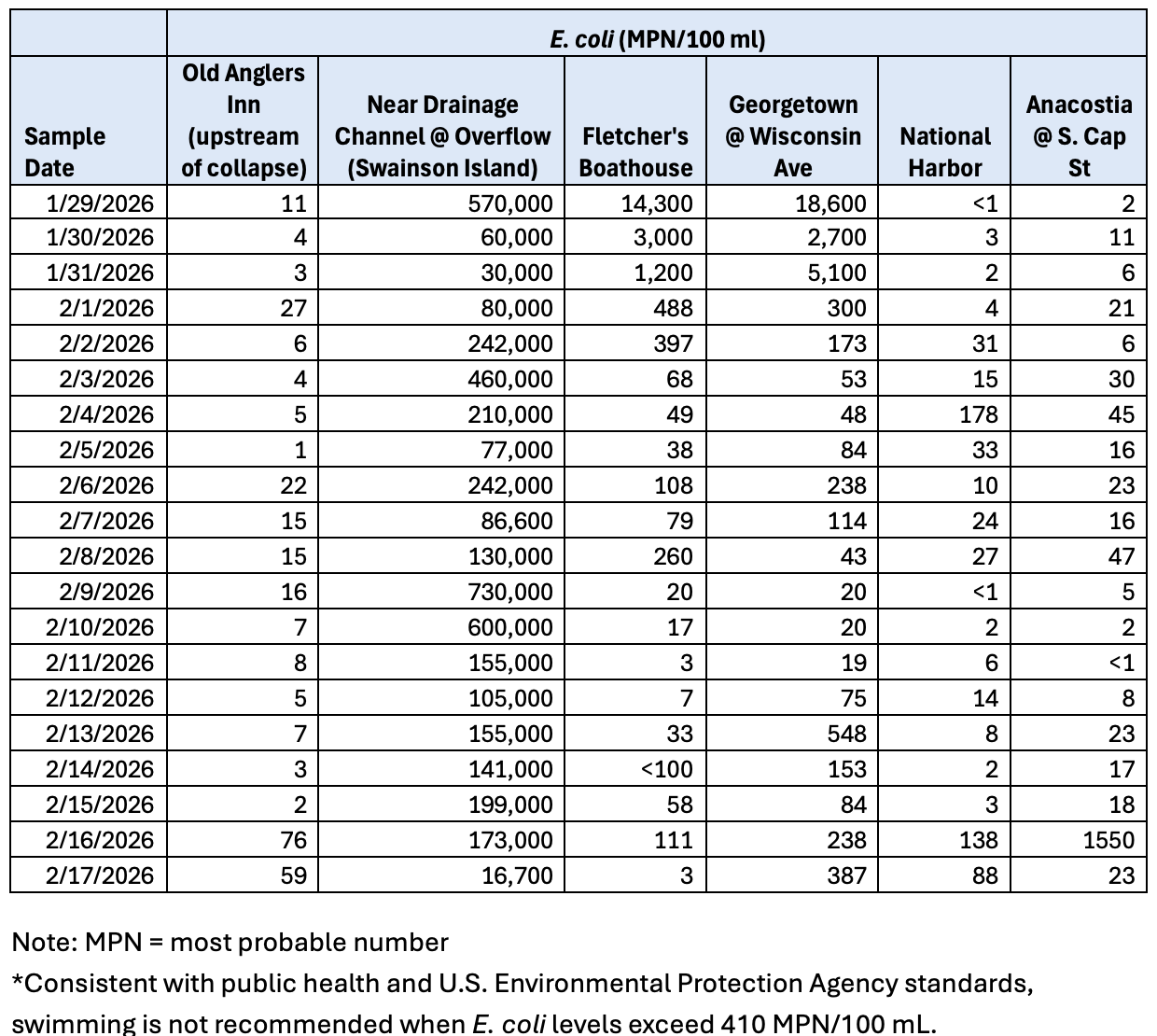
Information about the Potomac Interceptor Collapse, including all updates and water quality sampling results is available at: dcwater.com/potomac-interceptor-collapse.