Time for a Spring Refresh: DC Water Gives the System Its Annual Clean Sweep
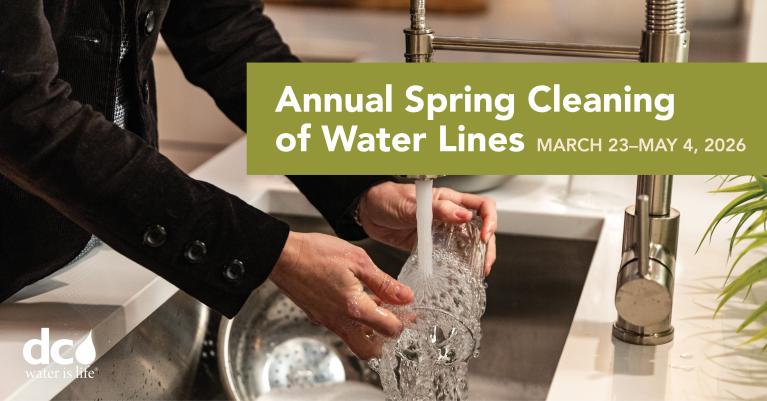
Spring cleaning isn’t just for closets and cabinets. DC Water’s system gets a refresh too!
Starting March 23, DC Water will begin work that helps maintain more than 1,300 miles of water lines across the District. During this time, the disinfectant used in drinking water will temporarily switch from chloramine to chlorine through May 4. This switch helps support overall water quality throughout the year.
The Washington Aqueduct, which is operated by the U.S. Army Corps of Engineers and supplies treated drinking water to DC Water, carries out this disinfectant switch each year as part of routine system maintenance. DC Water will also conduct planned hydrant flushing throughout the city to help move fresh water through the mains and support overall system performance.
This annual cleaning process is known as “chlorine burning,” which simply means using a stronger disinfect to wash away bacteria and natural biofilm buildup in the system. Some customers may notice a slight change in taste or smell, but these changes are normal, temporary, and safe.
DC Water monitors water quality throughout this period to ensure drinking water continues to meet Environmental Protection Agency standards. The Washington Aqueduct will also continue using a corrosion control inhibitor during the temporary switch to help protect household plumbing.
The chlorine switch is temporary and is a common practice among water utilities. DC Water in partnership with the Washington Aqueduct does the disinfection process in the spring. This is unrelated to recent events with the Potomac Interceptor sewer line collapse, which is a completely separate system from the drinking water lines that deliver water to homes.
If you notice a stronger chlorine taste or smell during this time, running cold water for a short period or refrigerating cold tap water in an open container can help the taste fade. Faucet and pitcher-style filters that meet NSF certification may also reduce the taste. These changes are temporary and usually resolve once the system returns to normal operation.
Customers and facilities that normally take special precautions to remove chloramine from tap water, such as dialysis centers, medical offices, or aquatic pet owners, should continue using the same methods during the temporary chlorine period. Anyone with specific health concerns about using tap water should speak with their health care provider.
For more information, please visit dcwater.com/chlorine-switch.
DC Water customers may also call 202-612-3440 (Monday-Friday, 8:00 a.m. - 4:30 p.m.) or our 24-hour Command Center at 202-612-3400.