DC Water Celebrates Completion of the Northeast Boundary Tunnel
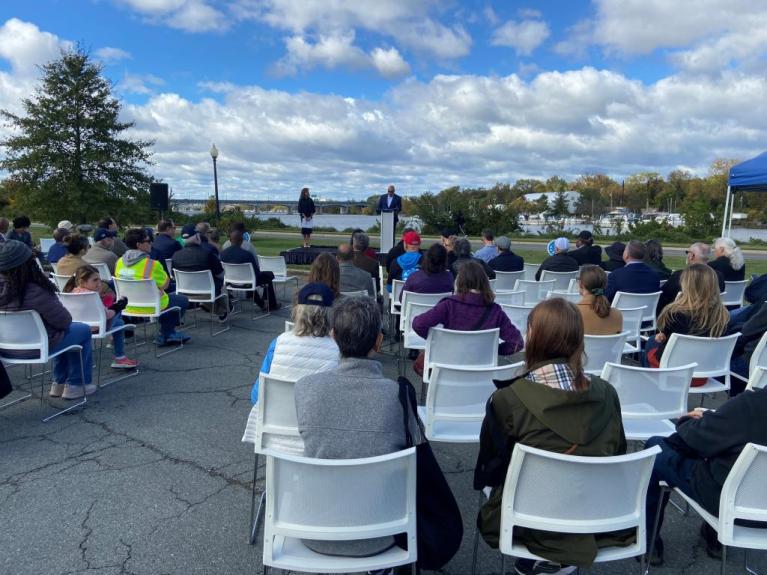
(Washington, DC) – DC Water CEO and General Manager David L. Gadis today joined U.S. EPA Deputy Assistant Administrator Mae Wu, Congresswoman Eleanor Holmes Norton, and other District and Federal officials to celebrate the commissioning of the Northeast Boundary Tunnel (NEBT). The five-mile-long tunnel is the final component of the Anacostia River Tunnel System which will reduce combined sewer overflows to the Anacostia River by 98 percent in an average year, significantly improving water quality in the river. The NEBT will also mitigate flooding in many District neighborhoods where flooding has been a chronic issue during intense rainstorms.
Mr. Gadis said, “The completion of the Northeast Boundary Tunnel, more than a year ahead of schedule, delivers on our promise to help clean up the Anacostia River and provide relief for residents who have experienced flooding in their homes and communities. We know the construction over the past 5 years has tested everyone’s patience, but this project will return tremendous benefits with cleaner water and an improved quality of life in many neighborhoods.”
Gadis made his remarks at a large celebration event today in Anacostia Park, which featured family-friendly activities and boat tours of the Anacostia, acknowledging the work of hundreds of DC Water employees and contractors who worked to make the NEBT a reality.
The tunnel was placed in service on September 15, providing an additional 90 million gallons of storage for combined sewage and stormwater, that otherwise would overflow into the Anacostia River or contribute to inland flooding during heavy rains. The $583 million dollar project is part of the overall DC Clean Rivers Project which is funded by DC Water ratepayers and Federal appropriations.
The Clean Rivers Project is DC Water's ongoing program to reduce combined sewer overflows (CSOs) into the District's waterways, as agreed to in the Consent Decree the Authority signed in 2005 with the U.S. Environmental Protection Agency, the Department of Justice, and the District of Columbia.
“DC Water’s immense advancement of its local water infrastructure is a shining example of what we at EPA know – that investing in the nations’ water is one of the best bets we can make,” said U.S. Environmental Protection Agency Deputy Assistant Administrator for Water Mae Wu. “Thanks to $50 billion from President Biden’s Bipartisan Infrastructure Law, EPA is making critical investments in drinking water, wastewater and stormwater infrastructure all around the country.”
The NEBT connects deep underground to the Anacostia River Tunnel near RFK Stadium and winds its way north through historically flood-vulnerable areas along Mt. Olivet Road and Rhode Island Avenue, Northeast, where it turns west and terminates at 6th & R Streets, Northwest.
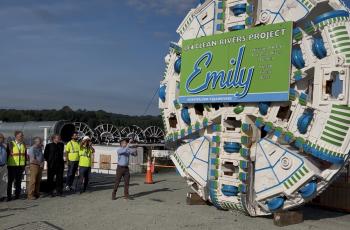
Mining of the NEBT with a tunnel boring machine (TBM) named “Chris,” began on September 9, 2018 at the construction site just south of RFK Stadium and ended April 21, 2021 at the R Street, Northwest site. The tunnel is 23-feet in diameter and is comprised of more than 31,000 concrete segments, placed in rings by the TBM as it excavated through the earth.
Speaking at the event, DC Water Board Member Howard Gibbs said, “To all the individuals who have contributed to the success of this project, including the impacted customers, thank you for your tireless efforts and dedication. This program showcases DC Water’s unwavering commitment to providing quality water delivery and wastewater treatment services and serving as responsible stewards of our assets and the environment in which we operate.”
Much of the District’s sewer infrastructure was built by the Federal Government in the late 1800’s and a third of the city is served by a combined system where sanitary sewage and stormwater drain into the same pipes. When heavy rainfall overwhelms the sewers, the system is designed to overflow into the Anacostia and Potomac Rivers and Rock Creek.
A seven-mile-long section of the Anacostia River Tunnel System (ARTS) opened in March 2018 and to date has captured more than 15 million gallons of combined sewage that otherwise would have overflowed to the Anacostia River. The flow diverted to the tunnel system is conveyed to DC Water’s Blue Plains Advanced Wastewater Treatment Plant.
With the commissioning of the NEBT, it is expected there will only be two overflows in an average year, down from 84 overflows annually prior to the start of the Clean Rivers Project. In addition, the NEBT is built to what is considered a 15-year storm capacity, standard among modern urban sewage infrastructure systems. That is to say, the risk of flooding in an average year of rainfall is reduced from 50 percent to 7 percent.
To learn more, please visit dcwater.com/NEBT.
An online press kit is available at dcwater.com/NEBTPressKit.