DC Water Breaks Ground on Potomac River Tunnel Project
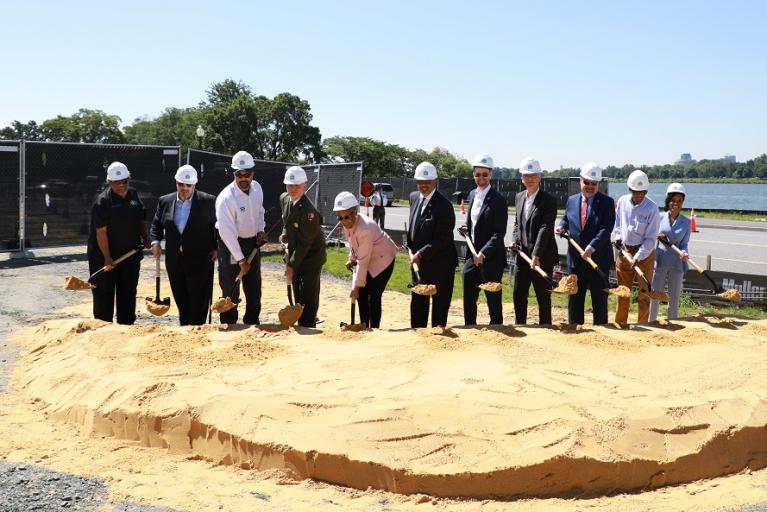
(Washington, DC) - Today DC Water hosted a groundbreaking ceremony to officially commence construction activities for the Potomac River Tunnel Project at West Potomac Park. The Potomac River Tunnel is the next major phase of the DC Clean Rivers Project, which is DC Water's ongoing program to improve the water quality of the Anacostia and Potomac rivers and Rock Creek by increasing the capacity of the sewer system.
The Project consists of a large-diameter deep sewer tunnel, diversion facilities, drop shafts, and support structures to capture flows from existing combined sewer overflows (CSOs) along the Potomac River and convey them to the Blue Plains Advanced Wastewater Treatment Plant. The 5.5-mile-long tunnel will be completed in 2030, providing a 93% reduction in the volume of CSOs to the Potomac River in an average year of rainfall.
“Today we break ground with a sense of purpose and responsibility. This project is critical to ensure we reduce the CSOs that contribute to water quality impairment of the Potomac,” stated DC Water CEO David L. Gadis. “We are proud to have the support of so many of the city’s leaders and concerned citizens in this effort. Together we can shape a future where cleaner water flows and the Potomac River thrives as a beacon of environmental vitality.”
The ceremony gathered key stakeholders including Congresswoman Eleanor Holmes Norton, Ward 6 Councilmember Charles Allen, Deputy Superintendent Sean Kennealy of the National Park Service, Department of Energy and Environment Director Richard Jackson and other city leaders and agency partners to highlight the importance of this new project that will improve water quality and aesthetics of the Potomac River for the benefit of all.
Congresswoman Norton said, “During my time in office, I have worked with DC Water to improve the water systems in the District of Columbia. Since 2003, I have secured annually a special federal appropriation for the Clean Rivers Project, totaling approximately 300 million dollars, which is being used for construction of the Potomac River Tunnel. I look forward to seeing the continued improvements DC Water is making and to working with DC Water to provide funding for these essential investments.”
CSOs impair water quality by increasing water bacteria levels, which negatively impacts aquatic life, and contributes to an increase in the amount of trash in waterways. An estimated 654 million gallons of CSOs currently enter the Potomac River each year by way of average rainfall. This project was established in accordance with the 2005 Federal Consent Decree entered by DC Water, the District of Columbia, the US Environmental Protection Agency, and the US Department of Justice, as amended in January 2016.
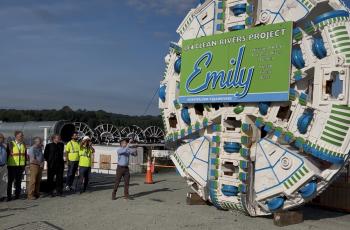
The 18-foot-diameter tunnel will run deep underground beneath the Georgetown waterfront, along the edge of the National Mall and East Potomac Park, past Hains Point and connect by gravity to the existing Anacostia River Tunnel. Construction will require two tunnel boring machines. Starting from West Potomac Park, one machine will mine south through mostly soft ground, and another machine will head north to bore through rock.
The $819 million project, the largest contract ever awarded by DC Water, is being constructed by a joint venture of CBNA and Halmar.
About DC Water
DC Water provides more than 700,000 residents and 21.3 million annual visitors in the District of Columbia with retail water and wastewater (sewer) service. With a total service area of approximately 725 square miles, DC Water also treats wastewater for approximately 1.8 million people in neighboring jurisdictions, including Montgomery and Prince George’s counties in Maryland and Fairfax and Loudoun counties in Virginia.
About the DC Clean Rivers Project
The Clean Rivers Project is DC Water's ongoing program to reduce combined sewer overflows (CSO's) into the District's waterways - the Anacostia and Potomac Rivers and Rock Creek. The Project is a massive infrastructure and support program designed to capture and clean wastewater during rainfalls before it ever reaches our rivers. The project also includes improving the capacity of the system to mitigate chronic flooding that has plagued some areas of the District since the early 1900's.
The Clean Rivers Project is comprised of a system of deep tunnels, sewers, and diversion facilities to capture CSO's and deliver them to DC Water’s Blue Plains Advanced Wastewater Treatment Plant. The Clean Rivers Project is also installing Green Infrastructure or "GI" to assist with the reduction of CSO's to the Potomac River and Rock Creek. The Anacostia River and Potomac River tunnel systems include more than 18 miles of tunnels that are larger than the Metro tunnels and are constructed more than 100 feet below the ground.
For more information
Project Email: dcpotomacrivertunnel@dcwater.com
Project Website: www.dcwater.com/prt