DC Water Welcomes the Community Underground to See the Potomac River Tunnel and Christens Tunnel Boring Machine Emily
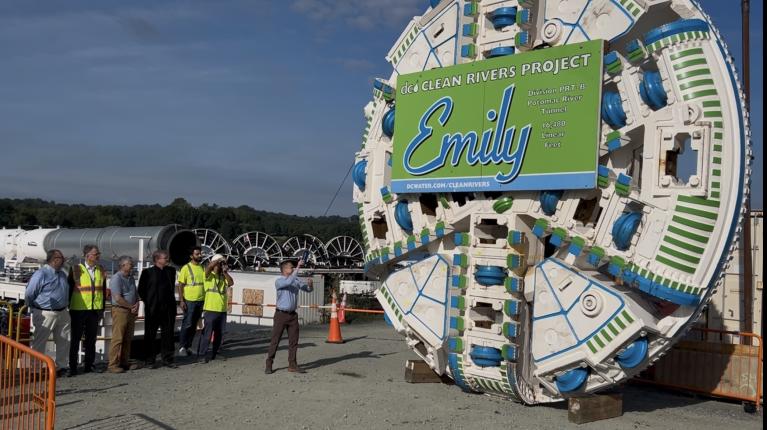
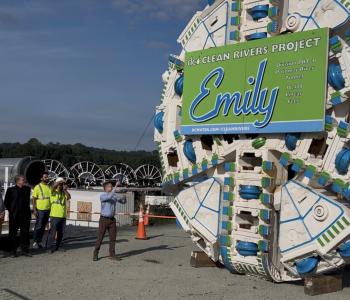
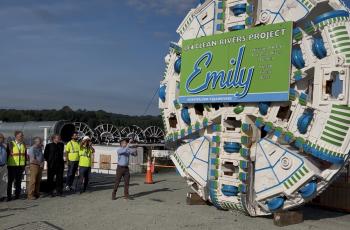
DC Water celebrated the christening of Emily today. It’s the second giant tunnel boring machine (TBM) that will help build the 5.5-mile Potomac River Tunnel. The celebration continued with Community Day. Residents and families met Emily and stepped inside the tunnel where she will soon begin digging.
DC Water Interim General Manager Matthew T. Brown led the christening by breaking a bottle of DC tap water against Emily’s front face. Local leaders, DC Water Board members and the project team joined the ceremony. The event follows a long tunneling tradition meant to wish the machine and its crew a safe and successful journey.
“Blessing Emily is an exciting milestone but today is also about giving our community a chance to see the remarkable work happening beneath the city,” Brown said. “Emily and her sister TBM, Mary, will help build a tunnel that will serve the District for generations, protect the Potomac River and support a cleaner, healthier future for the District and our region.”
After the ceremony, visitors toured the site, saw the equipment up close and enjoyed family-friendly activities. The main event was heading 105 feet—about 10 stories—underground to step inside the tunnel where the work is happening.
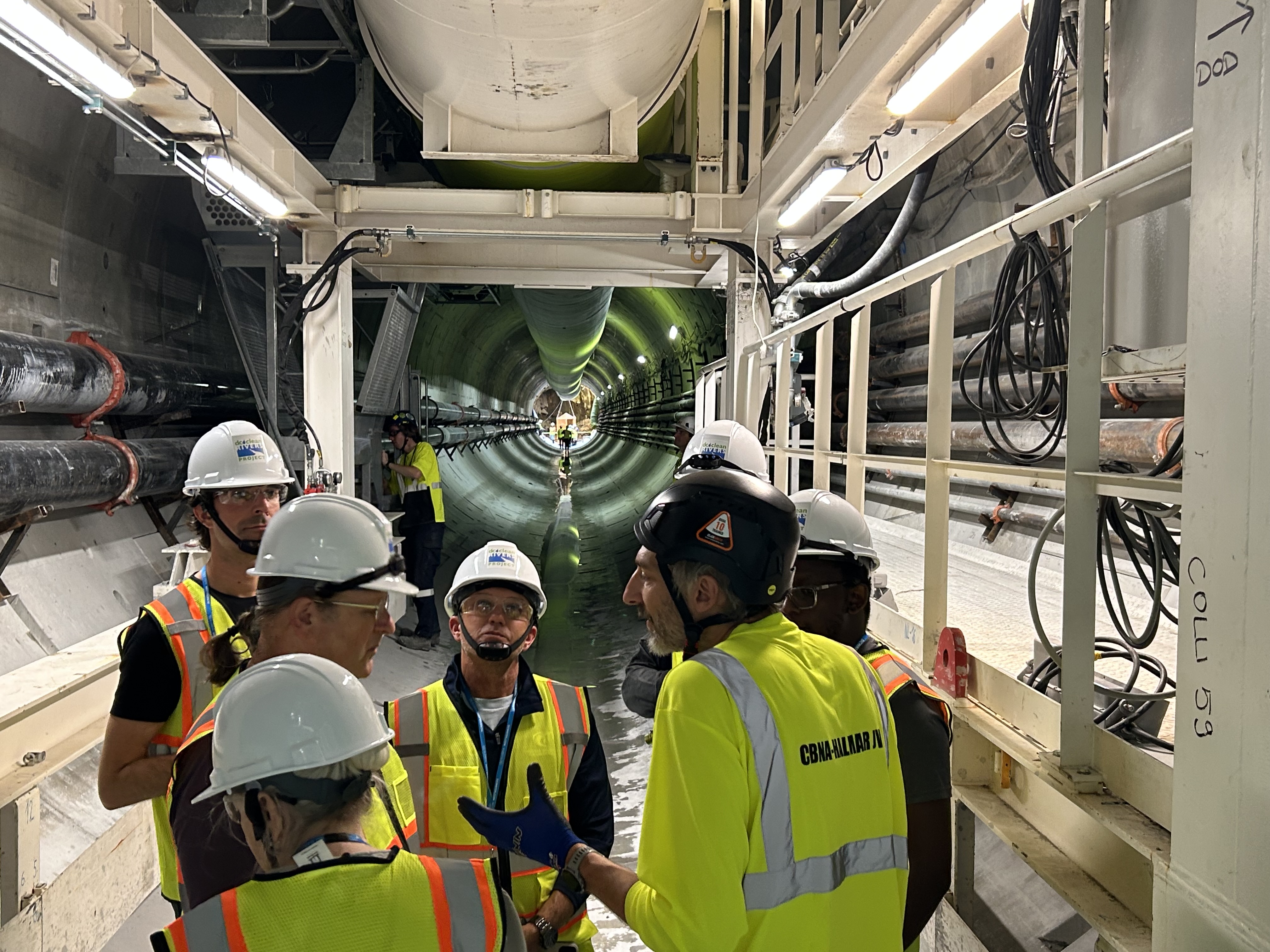
Soon, crews will lower Emily underground. She’ll join Mary, which is already digging 2.4-miles north from West Potomac Park to Georgetown University. Emily will travel about 3.1 miles south toward Joint Base Anacostia-Bolling. There, the Potomac River Tunnel will connect to the existing Anacostia River Tunnel.
Together, Mary and Emily will build the tunnel. During heavy rain, the tunnel will capture a mix of rainwater and wastewater that could otherwise overflow into the Potomac River. It is expected to reduce the amount of these overflows by 93% and cut the number of overflow events from about 74 to four in a typical year.
The Potomac River Tunnel is part of DC Water’s Clean Rivers Program, a long-term effort to create cleaner waterways and a healthier Potomac River and Chesapeake Bay. The tunnel is expected to begin operating in 2030.
Learn more about the Potomac River Tunnel Project at dcwater.com/prt.