DC Water Advances Work to Repair Damaged Section of Potomac Interceptor
Emergency repair expected to take 4-6 weeks, followed by long-term rehabilitation
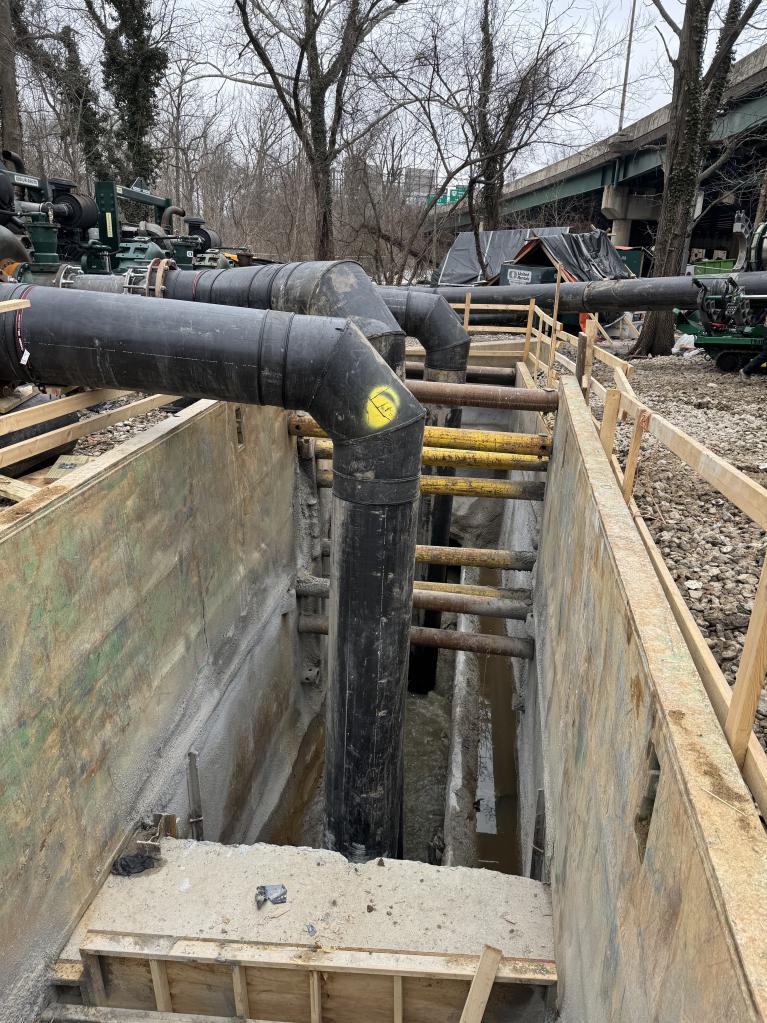
DC Water crews and its contractors, working under challenging conditions over the past month, are nearing completion of an enhanced bypass system that will allow emergency repairs to begin on a damaged section of the Potomac Interceptor. The emergency repair is expected to take another 4-6 weeks once the enhanced bypass system is activated and will address the immediate repairs to the damaged section of the pipe, restore wastewater flow back into the Potomac Interceptor, eliminate the temporary bypass pumping system in the C&O Canal, and allow for environmental restoration.
Over the weekend, a new access pit upstream of the collapse site with additional high-capacity pumps was activated, ahead of forecasted rain and snowmelt. No overflow events impacting surface waters were reported overnight. Crews are working to bring three additional bypass pumps online over the next several days. These pumps will provide the capacity and redundancy needed to move forward with repairs.
The next critical step is to install a steel bulkhead gate later this week to isolate the damaged pipe section. Once the gate is in in place, crews will work to pump out any remaining wastewater at the collapse site and start excavation to remove the rock dam that has been blocking inspection and repair.
Only after the rock dam is removed will crews be able to visually assess the full extent of the damage and proceed with targeted repairs. Until that point, some challenges remain unknown—including the stability of the surrounding ground—which may impact the timeline as work progresses.
Once the immediate emergency repair is completed and the Potomac Interceptor is fully operational, the C&O Canal bypass system can be decommissioned. At that point, DC Water will begin a longer-term rehabilitation phase, which is a separate and more extensive project. This second phase will accelerate a section of the planned rehabilitation on the Potomac Interceptor, taking approximately nine to ten months to complete.
The rehabilitation will use a combination of slip lining—installing new pipe sections to line the inside portions of the existing pipe—and applying a high-strength geopolymer lining to reinforce and strengthen sections of the pipe where slip lining is not possible. Together, these methods will rehabilitate over 2,700 linear feet of the interceptor, significantly strengthening its reliability for years to come.
Repair Scope, Timeline, and Rehabilitation
- Emergency repairs will last four to six weeks and are essential for restoring full pipe function and removing immediate risks.
Some uncertainty remains until the damaged section is fully accessible, as ground stability and pipe integrity will influence the next steps. - Additional bypass pumps have increased pumping capacity, to improve reliability and redundancy, and additional containment measures installed on site, however the risk of an overflow event remains pending the completion of emergency repairs.
- Until the bulkhead gate is installed, the rock dam is removed, and flow is fully restored within the interceptor, the bypass system and canal will continue to be used to safely manage wastewater flows.
- The longer-term rehabilitation, starting after emergency repairs, will take about nine to ten months and is focused on long-lasting pipe renewal.
DC Water is committed to protecting public health and the Potomac River. An environmental restoration plan is being developed with federal, state, and local regulators and will be released to the public once approved. DC Water understands the public’s concerns and is committed to completing both the emergency repair, and subsequent rehabilitation as safely and efficiently as possible.
Water Quality Sampling Results
The latest water quality sampling results are available on the dedicated project page at:
www.dcwater.com/potomac-interceptor-collapse
Lab results are unavailable on weekends and will be provided the following Monday (excluding holidays).
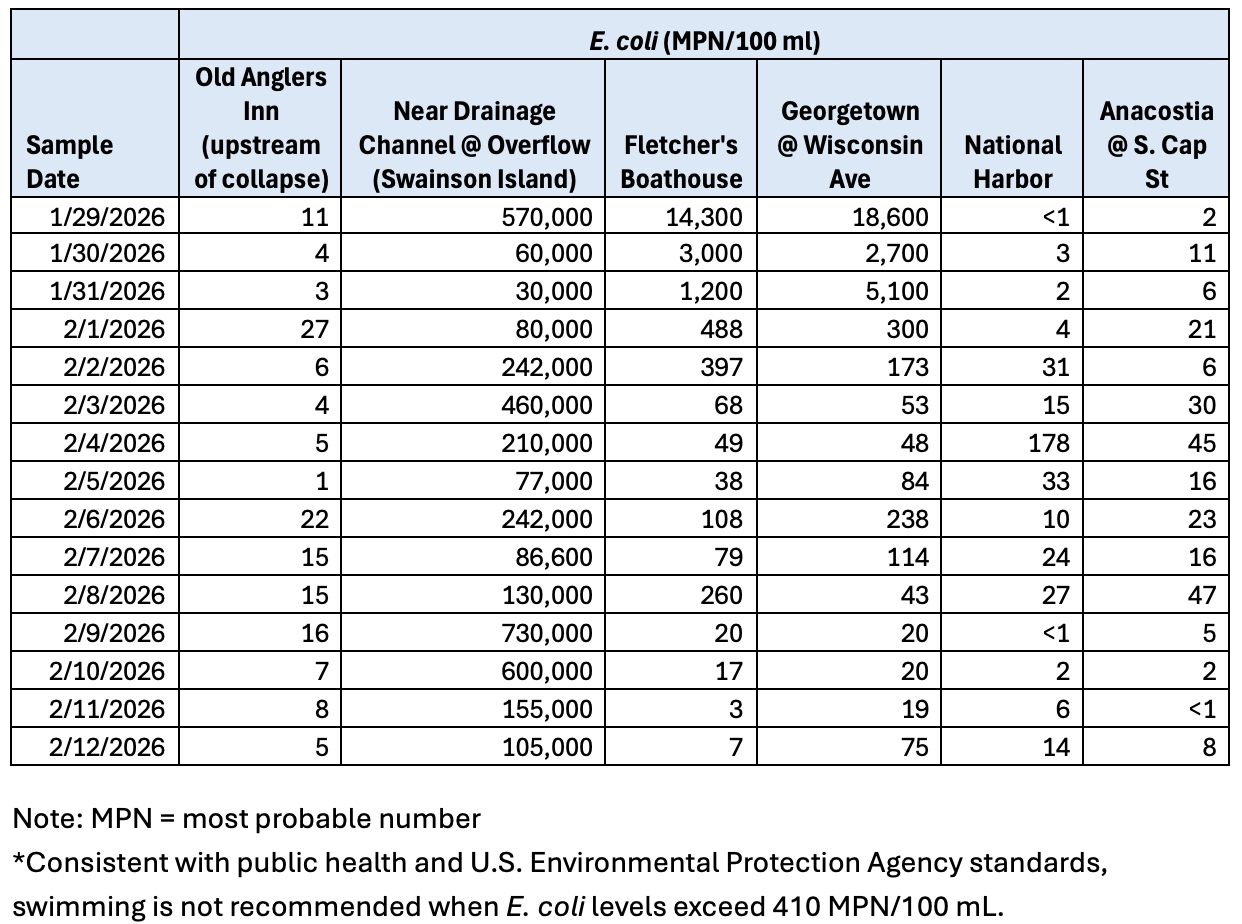
Historical data indicate typical E. coli levels in the Potomac River can range from 10 to 5,000 MPN/100mL. Variability in E. coli results is common and influenced by factors such as weather conditions, runoff, aging sewer infrastructure, and illicit discharges.