Crews Continue to Remove Impacted Soil from C&O Canal and Locks; Water Quality Testing Results Within Typical Range for Recreation on Potomac River
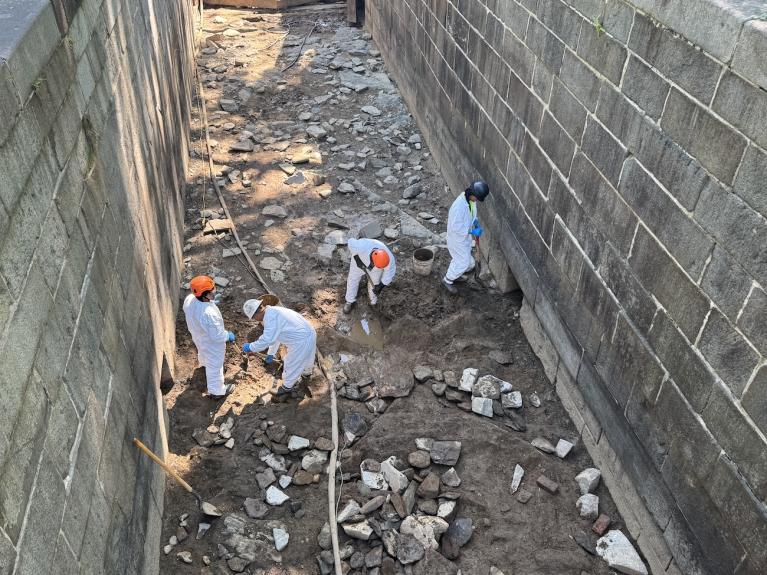
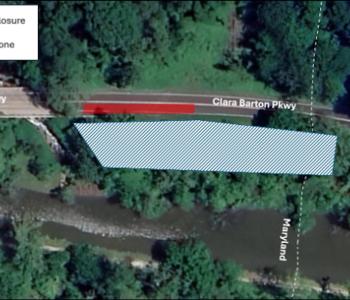
- Crews continue working to remove the remaining soil from the section of the C&O Canal that was used as an emergency bypass after the collapse of the Potomac Interceptor sewer line.
- Workers are excavating potentially impacted soil and rocks by hand from the ground at the bottom of the canal’s locks, to avoid damaging the historic structures with excavators or other heavy equipment.
- Once all of the soil is removed between Locks 14 and 10, then an environmental contractor will test samples from the bottom and sides of the canal to ensure adequate clean-up has been achieved, before crews restore the clay lining and add new topsoil.
- Parallel efforts are also underway in advance of the accelerated rehabilitation of more than 2,700 linear feet of the Interceptor.
- The first deliveries of new pipe segments for the slip lining of the Potomac Interceptor are expected to arrive on site later this month.
Water Quality Sampling
Daily water quality testing continues to show E. coli levels within the typical range for recreation, with normal historical fluctuations attributed to rain, heat, stormwater runoff, and other known environmental factors. See the District Department of Energy and Environment webpage for more details.
Ongoing sampling is precautionary and intended to address community concerns, ensuring the highest standards of public health and safety.
For the Potomac River, historical water quality data shows E. coli levels may vary from a range as low as 10 MPN/100mL to as much as 5,000 MPN/100mL on a given day.
Results April 13 – present below: (past results can be found here)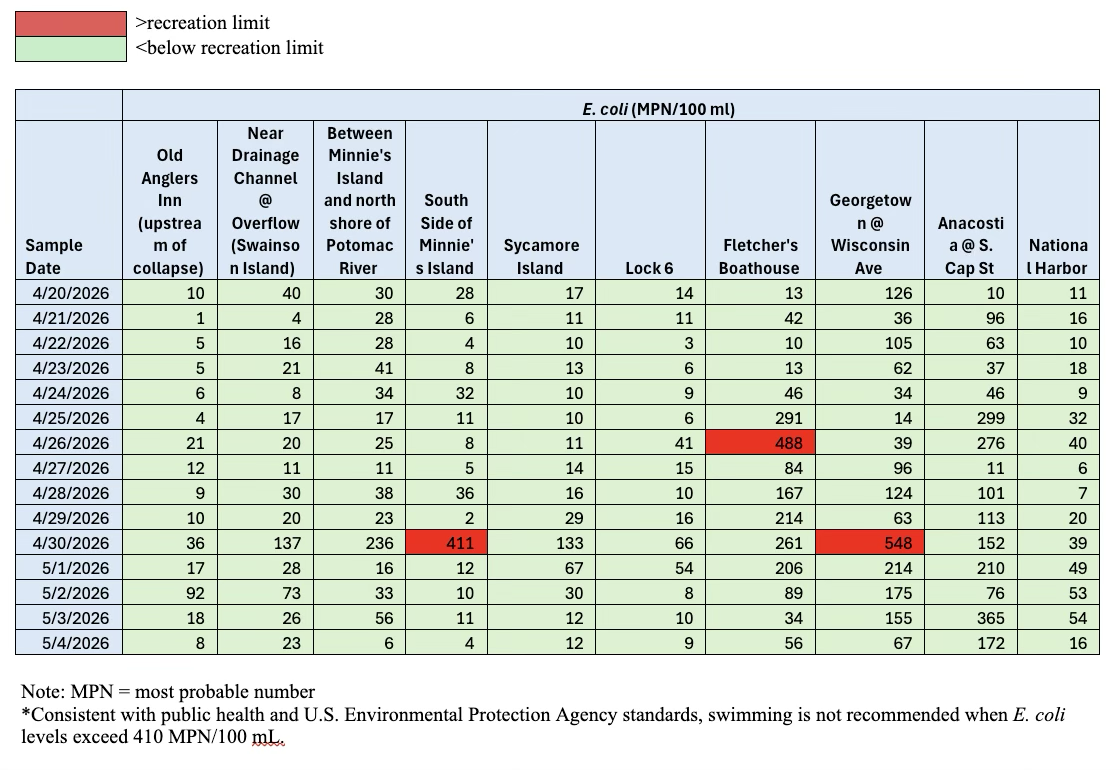
Note: MPN = most probable number
*Consistent with public health and U.S. Environmental Protection Agency standards, swimming is not recommended when E. coli levels exceed 410 MPN/100 mL.
You can find more information about the environmental rehabilitation, get the latest news and information, and results of all the water quality testing on our Potomac Interceptor Response page.