UPDATE: Potomac Interceptor Sewer Overflow Incident, February 7
Potomac Interceptor Update
Saturday, February 7, 2026
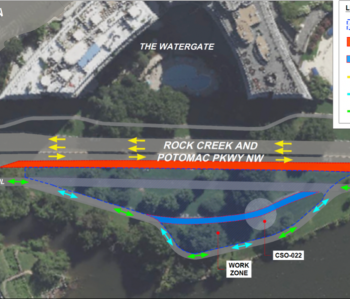
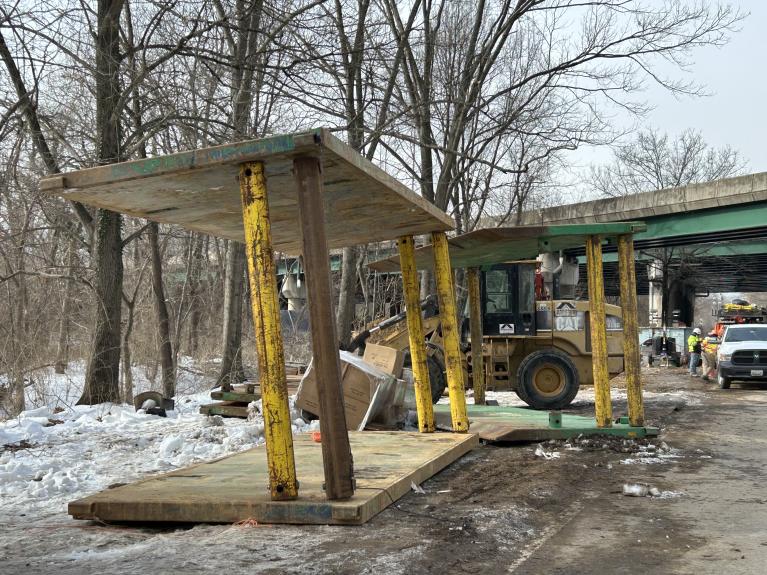
DC Water and its contractors continue to make progress constructing new access points to the Potomac Interceptor, one upstream of the damaged section, and an additional entry downstream to divert more wastewater flow from the pipe. These access points will allow crews to install a bulkhead, blocking flow in the pipe upstream of the collapsed area, keeping the site as dry as possible so crews can safely remove an extensive rock dam currently blocking the pipe.
With no overflows reported from the site yesterday and today, water quality sampling for E. coli continues to trend downward at the Lock 10 channel where the overflow occurred. Sampling results at downstream sampling locations continue to remain within EPA standards for acceptable levels.
Here is an update on today’s work:
Containment
- No overflows reported today.
- Crews continue to monitor bypass pumping operations 24/7, performing routine cleaning and maintenance to ensure continued pumping capacity and reliability.
Pipe Cleaning Efforts
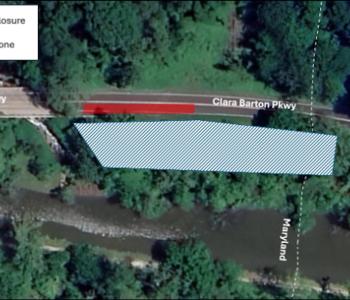
- Excavation was completed at the pit near the I-495 interchange and Clara Barton Parkway to access a section of the Potomac Interceptor upstream of the break.
- Trench boxes were installed around the upstream section of pipe and backfilled to stabilize the excavation.
- Work continues on a third flume to the Potomac Interceptor as part of the bypass system, allowing wastewater to be returned to the system further downstream of the collapse site.
- Installation of additional bypass pumps and the upstream bulkhead is expected to take 4-6 weeks from the time work began on February 6.
- These steps are necessary before crews can begin to safely remove the blockage inside the pipe.
- Removal of the rock and boulder obstruction will require a combination of manual work inside the pipe and the use of heavy equipment.
Water Quality Sampling Results
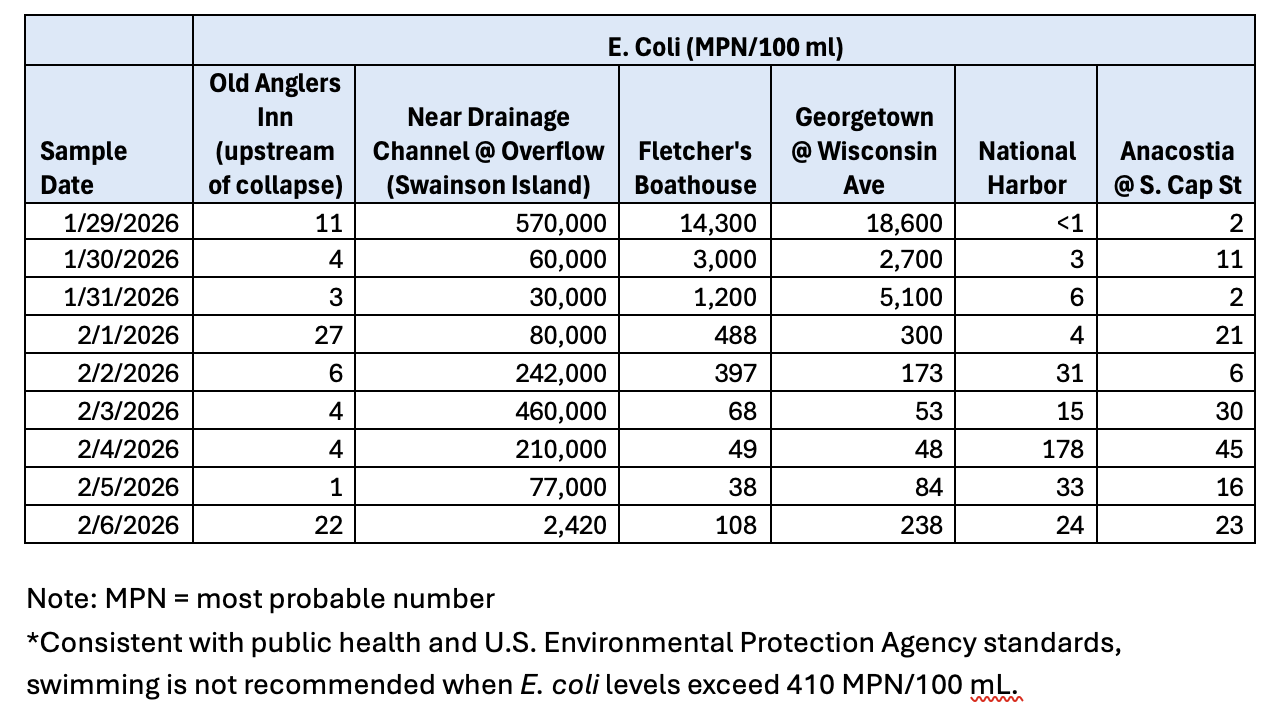
Historical data indicate typical E. coli levels in the Potomac River can range from 10 to 5,000 MPN/100mL. Variability in E. coli results are common and are influenced by multiple factors, such as weather (rainfall/snow melt and associated runoff) and subwatershed activities and conditions, including aging sewer infrastructure and illicit discharges.