UPDATE: Potomac Interceptor Repair, February 21
February 21, 2026
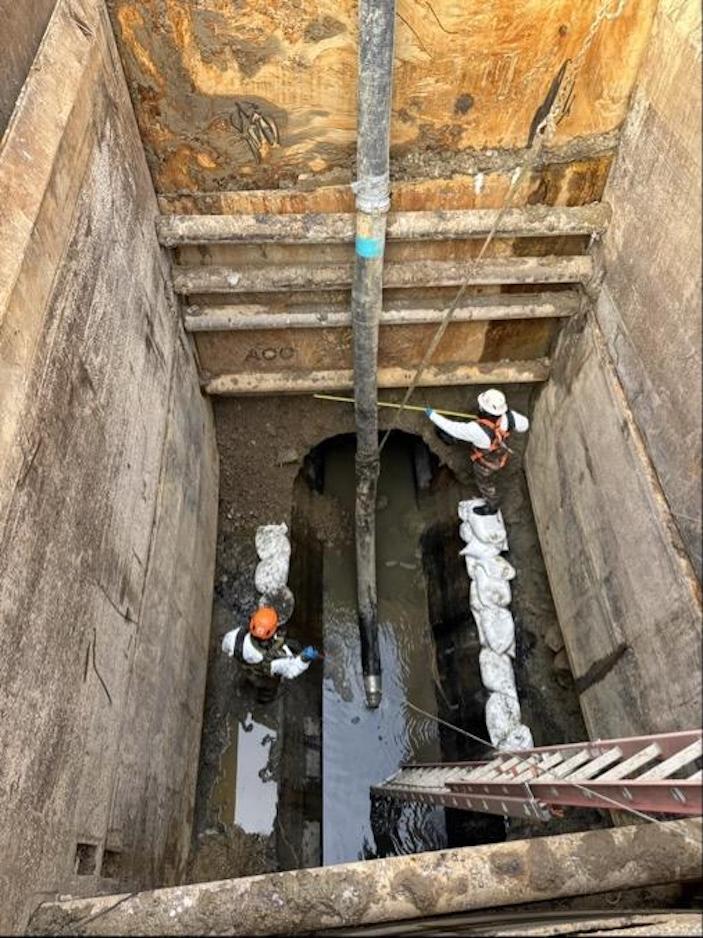
workers inside pipe cleaned of rocks and debris

Potomac Interceptor Repair Update
February 21, 2026

  • For nearly two weeks, no overflows have entered the Potomac River. The last release to the river occurred on February 8.
  • Crews are continuing to remove debris and large rocks from inside the damaged pipe section.
  • An initial assessment of the damaged pipe section determined the remaining intact structure downstream, which is blocked by an extensive rock dam, is structurally compromised and unsafe for crews to continue work inside the pipe.
  • Alternate measures are being developed to extend the excavation around the damaged section, stabilize the area, and remove portions of the pipe to remove the rock dam for repairs to begin.
  • Crews continue working around the clock to ensure continued bypass pumping operations, and ongoing cleaning efforts downstream of the collapse site.
  • Preparations are underway for forecasted rain and snow event, which could increase flow and create difficult conditions for equipment and crews.
  • Coordination continues with the National Park Service, U.S. Environmental Protection Agency, and Maryland Department of the Environment on an Environmental Restoration Plan.

Protecting public health and the Potomac River remains DC Water’s top priority. Updates will be provided as work continues.

Water Quality Sampling Results

DC Water is performing daily water quality sampling. It’s important to note that historically the E. coli levels in the Potomac and Anacostia rivers vary widely from day to day. Fluctuations in water quality are influenced by factors such as weather events, river flow, runoff, pollutants, and other sources discharging into waterways; and measurements taken much further downstream cannot be attributed solely to this incident.

For the Potomac River, historical water quality data shows E. coli levels may vary from a range as low as 10 MPN/100mL to as much as 5,000 MPN/100mL on a given day.

A more detailed explanation is posted on the District Department of Energy and Environment (DOEE) website at doee.dc.gov/release/potomac-interceptor-update-and-faqs

DC Water has added two new sampling locations to the daily sampling.  These locations add data points closer to the overflow site. The Minnie’s Island sample locations are approximately 0.54 miles from the overflow site compared to the Fletcher's location which is 5.2 miles from the overflow site. These sample locations provide a better understanding of the impact in the river near the collapse site and allow us to compare the main stem of the Potomac River (south side sample) to the inlet areas along the shoreline around Minnie’s Island (north side sample) where the water flows more slowly.

*Lab results are unavailable on weekends and will be provided the following Monday (excluding holidays).
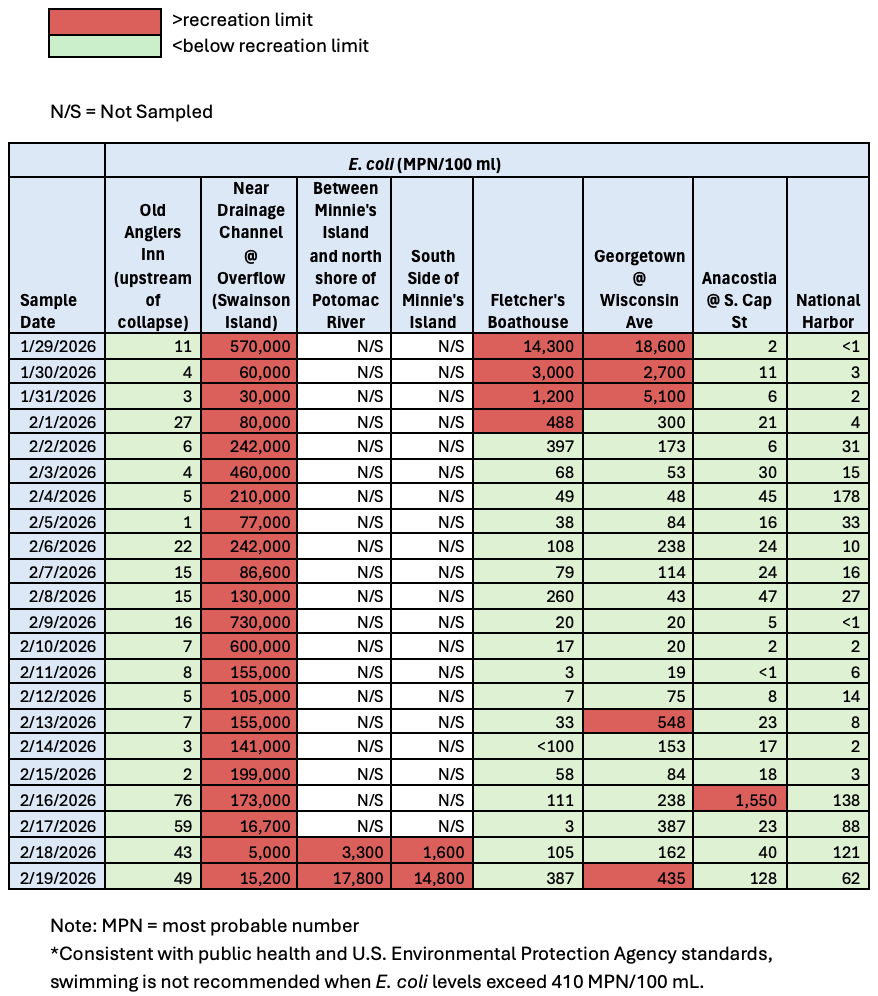
graphic of sampling results

For more information about the ongoing repair efforts go to dcwater.com/Potomac-interceptor-collapse.



Latest News

Pennyfield Lock Potomac Interceptor bypass pipeline running next to C & O Canal with equipment

There is no active spill or overflow. Work to strengthen the pipe to begin soon.

Today, DC Water completed construction on a temporary bypass system as part of sewer repairs on the Potomac Interceptor near Pennyfield Lock in Potomac, Maryland. Crews turned on the pumps and successfully tested the system. With the bypass now ready, it will allow us to begin the emergency repairs inside the pipe by carrying the wastewater around the repair area.

DC Water Officials with NPS and ANC commissioners doing ceremonial groundbreaking

Today, DC Water broke ground on the Piney Branch Tunnel, the final major tunnel in our Clean Rivers Project. This work will help keep sewage and trash out of local waterways and make Rock Creek, the Potomac River, and the Chesapeake Bay cleaner for our community.

When we finish the Piney Branch Tunnel, it will hold at least 4.2 million gallons of rainwater and wastewater during heavy storms. Instead of overflowing into Piney Branch, that water will go to the Blue Plains Water Resource Recovery Facility, where it will be treated.

Photo of the drop shaft looking from above down into the bottom

Starting the week of July 13, 2026, people who live, work or travel near the Canal Road NW entrance to Georgetown University may hear controlled blasting. This work is part of our Potomac River Tunnel Project.

When blasting happens, neighbors may hear a brief noise or feel light shaking. Drivers, cyclists, and pedestrians on Canal Road NW may also be stopped for a few minutes while we safely complete each blast.

Upcoming Meeting

Board of Directors Meeting

April 24, 2023

Monday 9:00 AM

Announcement

DC Water Officials with NPS and ANC commissioners doing ceremonial groundbreaking
DC Water Breaks Ground on Piney Branch Tunnel, Final Phase of DC Clean Rivers Project

Today, DC Water broke ground on the Piney Branch Tunnel, the final major tunnel in our Clean Rivers Project. This work will help keep sewage and trash out of local waterways and make Rock Creek, the Potomac River, and the Chesapeake Bay cleaner for our community.

When we finish the Piney Branch Tunnel, it will hold at least 4.2 million gallons of rainwater and wastewater during heavy storms. Instead of overflowing into Piney Branch, that water will go to the Blue Plains Water Resource Recovery Facility, where it will be treated.

Latest Blog Post
Five photos from the American Water Works Association (AWWA) ACE26 conference featuring panel discussions, technical presentations, networking, and attendees posing at the ACE26 display.
ACE26 Highlights: How DC Water Advanced the Conversation on Water
More than 80 DC Water employees joined thousands of water professionals in Washington, D.C., sharing expertise, building partnerships and advancing conversations that will help shape the future of water.
Upcoming Meeting
Date
July 16, 2026
Thursday, 9:30 AM

Upcoming Events

Jul 23
Jul 25

Customer Service Center Announcement

Payment Plan Incentive: provides a credit back of 50% of the last 3 payments made. Eligible participants are residential customers who have had an outstanding balance for 60 days or greater and with an outstanding balance of $500 or more.