Emergency Water Outage
Feb 07, 2026 | 04:00 PM

Emergency Water Outage
Feb 07, 2026 | 03:00 PM

Emergency Water Outage
Feb 07, 2026 | 03:00 PM

Spring Cleaning For DC Water Pipes Begins March 20

March 20, 2017

From March 20 through April 17, 2017, the disinfectant in drinking water that DC Water provides to its 681,000 customers will temporarily switch from chloramine to chlorine. The annual spring-time switch in water disinfection is part of a routine program to clean and maintain drinking water systems in the District of Columbia.
 
DC Water purchases treated drinking water from the Washington Aqueduct and distributes it to homes and businesses in the city. Each spring, the Aqueduct switches disinfectants from chloramine to chlorine to improve water quality. This program is a common practice for many U.S. water systems that use chloramine during the majority of the year.

Individuals and business owners who take special precautions to remove chloramine from tap water, such as dialysis centers, medical facilities and aquatic pet owners, should continue to take the same precautions during the temporary switch to chlorine. Most methods for removing chloramine from tap water are effective in removing chlorine. Individuals with special health concerns should consult a health care provider on the use of tap water.  
 
During this time, individuals may notice a slight change in the taste and smell of their drinking water. Local water authorities recommend running the cold water tap for approximately two minutes and refrigerating tap water to reduce the chlorine taste and odor. Water filters are also effective for reducing chlorine taste and odor. For more information, please contact the appropriate water authority.

The Washington Aqueduct provides water from the Potomac River to DC Water, Arlington County, and Fairfax Water. Those jurisdictions will also switch from chloramine to chlorine from March 20 to April 17. DC Water and other local water authorities will continue to monitor drinking water to ensure chlorine levels meet safe target levels. The Washington Aqueduct continues to add a corrosion control inhibitor during this temporary switch to prevent lead release.

DC Water: 202-612-3440 (Monday-Friday, 8:00 a.m. - 4:30 p.m.) or 202-612-3400 (24-hour)

Latest News

Trench boxes at construction site for new pit accessing Potomac Interceptor Upstream

DC Water and its contractors continue to make progress constructing new access points to the Potomac Interceptor, one upstream of the damaged section, and an additional entry downstream to divert more wastewater flow from the pipe. These access points will allow crews to install a bulkhead, blocking flow in the pipe upstream of the collapsed area, keeping the site as dry as possible so crews can safely remove an extensive rock dam currently blocking the pipe.

Photo of giant rock and boulder removed

DC Water is releasing new findings regarding the environmental impacts following the January 19, collapse in a section of the Potomac Interceptor. Based on flow monitoring data collected before and after interim bypass pumping was activated, DC Water estimates approximately 243 million gallons of wastewater has overflowed from the collapse site.

Image of rock blockage taken by CCTV inside the Potomac Interceptor downstream of the collapse

Update on Extended Repairs, Safety Measures, and Water Quality Monitoring

Overnight CCTV inspection of the Potomac Interceptor revealed the blockage inside the collapsed sewer line is far more significant, showing a large rock dam stretching approximately 30 feet downstream of the original failure.

Upcoming Meeting

Board of Directors Meeting

April 24, 2023

Monday 9:00 AM

Announcement

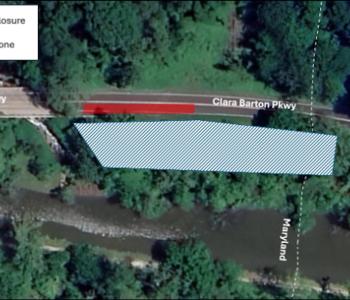
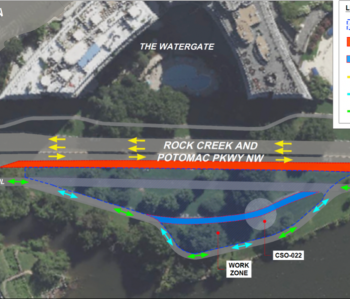
Map of lane closure
Traffic Advisory: Rock Creek and Potomac Parkway NW Lane Closure Beginning Jan 19

Beginning on or about January 19, 2026, weather permitting, DC Water will implement a temporary lane closure on Rock Creek and Potomac Parkway NW b

Latest Blog Post
A helicopter lowers a drill rig to workers on the Potomac River.
DC Water begins drilling in Potomac River to explore options to rehab underwater sewer line
When one of your major sewer lines runs through the Potomac River, a backhoe and trencher won't do. That's why we've got helicopters carrying a 14-ton drill and workers suspended midair over the Potomac.
Upcoming Meeting
Date
February 19, 2026
Thursday, 9:30 AM

Upcoming Events

Customer Service Center Announcement

Payment Plan Incentive: provides a credit back of 40% of the last 3 payments made and in the new fiscal year 50% will be credited. Eligible participants are residential customers who have had an outstanding balance for 60 days or greater and with an outstanding balance of $500 or more.