DC Water Releases Key Findings on Extent of Sewer Overflow and Potomac River Impact
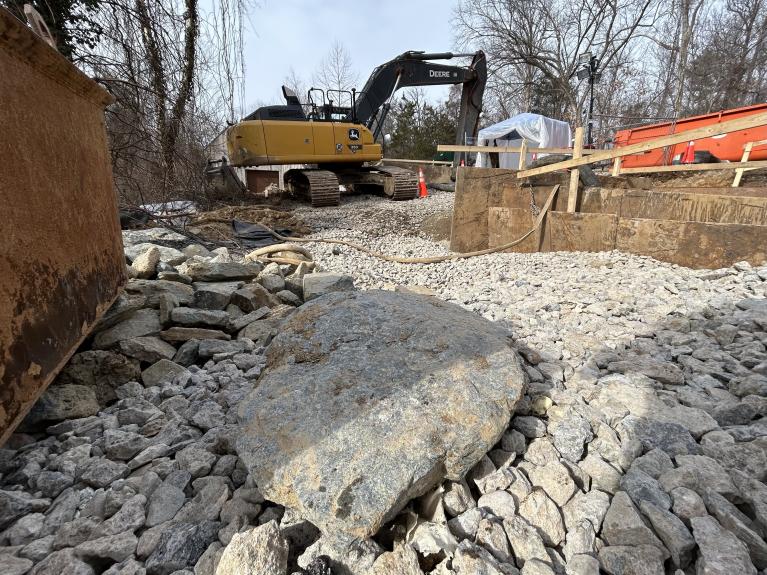
DC Water is releasing new findings regarding the environmental impacts following the January 19, collapse in a section of the Potomac Interceptor located along the Clara Barton Parkway at the 495 interchange and C & O Canal National Historical Park. Based on flow monitoring data collected before and after interim bypass pumping was activated, DC Water estimates that approximately 243 million gallons of wastewater has overflowed from the collapse site. The vast majority of this volume, approximately 194 million gallons, occurred within the first five days, prior to the overflows being significantly reduced through bypass pumping operations.
Analysis of Potomac River flow data indicates that the estimated peak discharge of wastewater, approximately 40 million gallons per day, represents about 2% of the Potomac River’s total flow during that period.
Ongoing water quality monitoring continues to show improving conditions downstream of the discharge point near Lock 10. Since February 1, E. coli concentrations at all downstream sampling locations have remained within the US Environmental Protection Agency’s acceptable range for primary contact recreational activities, apart from a single day at Fletcher’s Boathouse.
Sampling within the drainage channel where the overflow occurred continues to show elevated E. coli levels. This is not unexpected, given intermittent residual discharges and snowmelt carrying remaining wastewater from the creek bed into the channel. Concentrations in this area are expected to fluctuate until residual material is fully flushed and baseline conditions are restored.
Efforts to reach the collapse site and finalize the repair strategy remain challenging due to the discovery of a rock dam inside the interceptor, which is significantly restricting internal access. DC Water is implementing a revised construction and repair approach that is expected to take 4-6 weeks and includes:
- Construction of a new bypass pump location to enable the safe removal of rock at the collapse site.
- Creation of a new upstream access point to facilitate repairs and enhance worker safety.
- Development of a new downstream connection to the Potomac Interceptor to improve wastewater conveyance and reduce future risk.
- Installation of an upstream bulkhead to restrict wastewater flow to the damaged section as much as possible.
In the interim, the existing bypass system remains operational and is successfully diverting wastewater around the damaged pipe section and back into the Potomac Interceptor. Some limited overflows have occurred, primarily due to increased wastewater flow associated with snowmelt and brief pump maintenance and operational issues. For example, during overnight pump maintenance, up to 300 gallons of wastewater escaped but was contained and did not reach the Potomac River.
Until full functionality is restored to the Potomac Interceptor, there remains a residual risk of additional limited overflows. However, both the likelihood and volume of any future releases are expected to remain minimal.
DC Water continues to coordinate with federal, state and local partners, including Maryland Department of the Environment, DC Department of Energy and Environment, U.S. Environmental Protection Agency, public health officials, and other stakeholders. This coordination includes daily reporting, environmental impact evaluation, and development of remediation measures as appropriate.
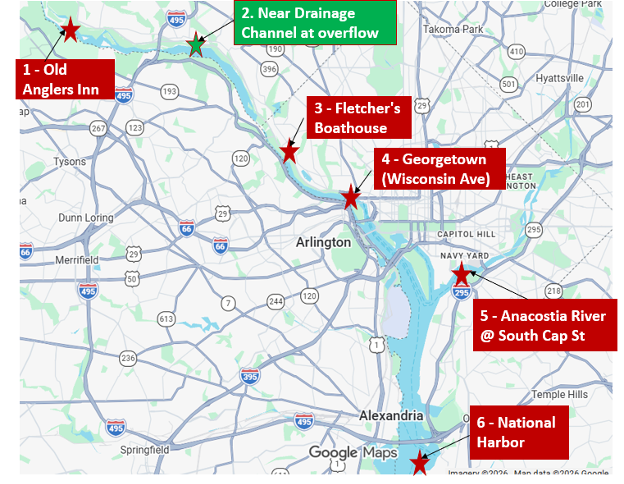
Below are the latest results of water quality samples, utilizing a contracted environmental firm and certified laboratory, DC Water initiated daily sampling for E. coli, an indicator bacterium, at six (6) locations beginning on Jan 29, 2026. To assess water quality conditions, sampling locations including the overflow area as well as upstream and downstream sites. The locations are shown on the following map, and the results are provided in the table below.
Water Quality Sampling Locations
Water Quality Sampling Results
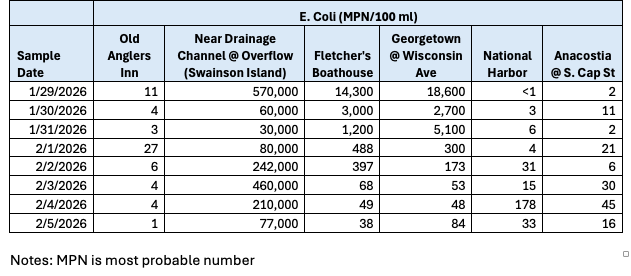
Consistent with public health and U.S. Environmental Protection Agency standards, E. coli levels below 410 MPN/100 mL are considered acceptable for primary contact recreational activity.
Historical data indicate typical levels in the Potomac River can range from 10 to 5,000 MPN/100mL. Variability in E. coli results are common and are influenced by multiple factors, such as weather and subwatershed activities and conditions, including aging sewer infrastructure and illicit discharges.