First Street Tunnel winter construction is key step before commissioning Northeast Boundary Tunnel
WASHINGTON, DC — DC Water will reach a significant milestone for the Clean Rivers Project when it places the Northeast Boundary Tunnel (NEBT) into operation during the summer of 2023. The NEBT will increase the combined storm runoff capacity of the Anacostia River Tunnel (ART) system as it directs captured flows of combined stormwater and sewage to the Blue Plains Advanced Wastewater Treatment Plant for treatment. This will significantly reduce flooding events in the Bloomingdale and LeDroit Park neighborhoods.
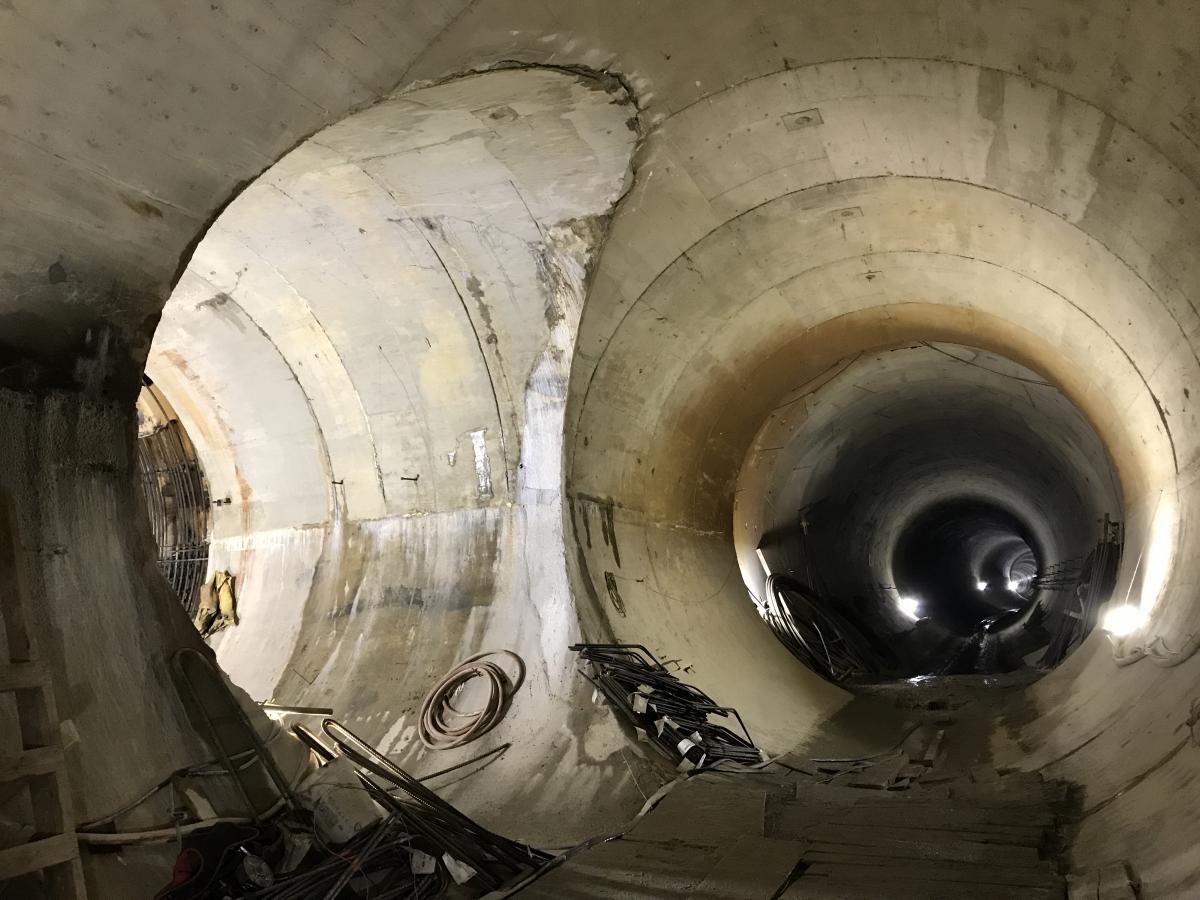
To achieve this milestone next year, DC Water will begin the next phase of construction by temporarily taking the First Street Tunnel (FST) out of service from December 2022 through February 2023.
“The work this winter is a critical preparatory step to make the final connection between the Northeast Boundary and First Street tunnels next year,” said Moussa Wone, Director of DC Water’s Clean Rivers Project. “Once that link is established and the NEBT is in service, there will be a continuous 13-mile- long, 100-foot-deep tunnel, with 190 million gallons of storage, from Bloomingdale to Blue Plains.”
Workers will isolate the tunnel from the existing sewer system, clean the tunnel and remove a concrete structure that currently directs flow to the temporary pumping station at Thomas Street, NW. The entire procedure is expected to take about three months to complete.
DC Water scheduled the work to take place during the winter season when serious storms are least likely to occur. The FST is a key component for flooding mitigation in and around the Bloomingdale and LeDroit Park neighborhoods.
DC Water’s Clean Rivers team has developed measures to mitigate the impact of taking the tunnel out of service. These measures—and the project itself—have been the subject of numerous DC Water meetings with ANCs, community groups, tunnel forums, and key stakeholders.
Facilities that will remain in service during the FST shutdown are Irving Street’s green infrastructure, the McMillan Stormwater Storage Facility, the stormwater sewer pipe under Rhode Island Ave NW, and pervious pavement (that absorbs rainwater) installed in Bloomingdale neighborhood alleys.
To mitigate flooding through this construction:
DC Water will:
- Clean catch basins in the Bloomingdale area at least once a month
- Prepare sandbags and make them available in the neighborhood if a major event is predicted. This is specific to the areas that the First Street Tunnel serves. Contact DC Water’s 24-hour Command Center at 202-612-3400.
- If during the construction, a large storm is forecast, DC Water can put the FST back into service with 24 hours advance notice
Residents in the affected areas should:
- Consider adding a backflow prevention device if they have not already (DC Water has a discount/reimbursement program for impacted residents in these neighborhoods.)
- Look into DC Water’s Floodproofing Rebate Program for residents of Bloomingdale and LeDroit Park
- Sign up to receive e-newsletters about the project, by sending your email address to dcclearrivers@dcwater.com
- Visit the project website at dcwater.com/NEBT for more information
- E-mail questions to DCCleanRivers@dcwater.com or call the 24/7 NEBT Hotline at 800-988-6151
- For emergencies, contact DC Water’s 24-hour Command Center at 202-612-3400
Channing Street residents may notice increased activity, equipment staging, vehicular traffic, and construction work in their area.
DC Water continues to work with the community during this important project to improve the Anacostia River and mitigate flooding.
More information on the complete program can be found at: dcwater.com/cleanrivers