DC Water Takes Measures Ahead of Rain, Snow to Prevent Flooding and Impacts on Potomac Interceptor Repairs
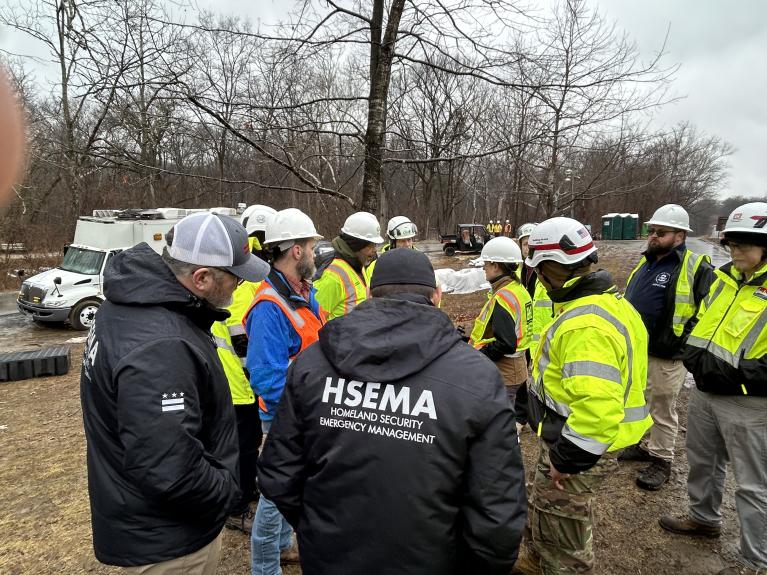
DC Water crews are working around the clock to keep the Potomac Interceptor repair site safe as another storm approaches. Since February 8, there have been no overflows to the Potomac River, and efforts are underway to bolster pump capacity and manage stormwater runoff due to expected heavy rain and snow that could flood the pumping site and endanger pumping operations.
Keeping the pumping system running is critical to prevent overflows and support ongoing emergency repairs. At the collapse site, workers are assembling materials and equipment to extend the excavation around the damaged section, stabilize the area, and remove portions of the pipe to access the rock and debris inside.
In preparation for the winter storm event, DC Water has also partnered with the U.S. Army Corps of Engineers (USACE) to provide critical support to help with stormwater management. During heavy rains earlier this week, stormwater runoff from the American Legion Bridge and Clara Barton Parkway inundated the pumping site. USACE teams have completed a site assessment and are actively implementing measures to contain and divert stormwater away from the pumping site.
Floodwaters not only put the pumps at risk but make it difficult for workers to perform the maintenance and cleaning to keep operations moving. Increased flow from stormwater rushing into the bypass system also puts additional strain on the pumps.
A section of the Potomac Interceptor, a sanitary sewer line, collapsed near Clara Barton Parkway and the C & O Canal National Historical Park on January 19. Emergency repairs are expected to restore full flow and function to the interceptor by mid-March, which will contain the risk of overflow and eliminate the need for the bypass system.
The next step in repairs is removing the rock and debris blocking the pipe near the collapse site. An initial assessment found the pipe section housing the rock dam was compromised and unsafe for crews to manually remove the rocks from inside the pipe. Once excavation is complete, workers will then cut the crown of the pipe for direct access to safely remove the large rocks and boulders forming the dam while protecting workers and the integrity of the structure.
DC Water is coordinating with National Park Service, Environmental Protection Agency, Maryland Department of the Environment, and USACE on the Environmental Restoration Plan and are looking at options to begin implementing some remediation measures in advance of the larger restoration work once the emergency repair is complete.
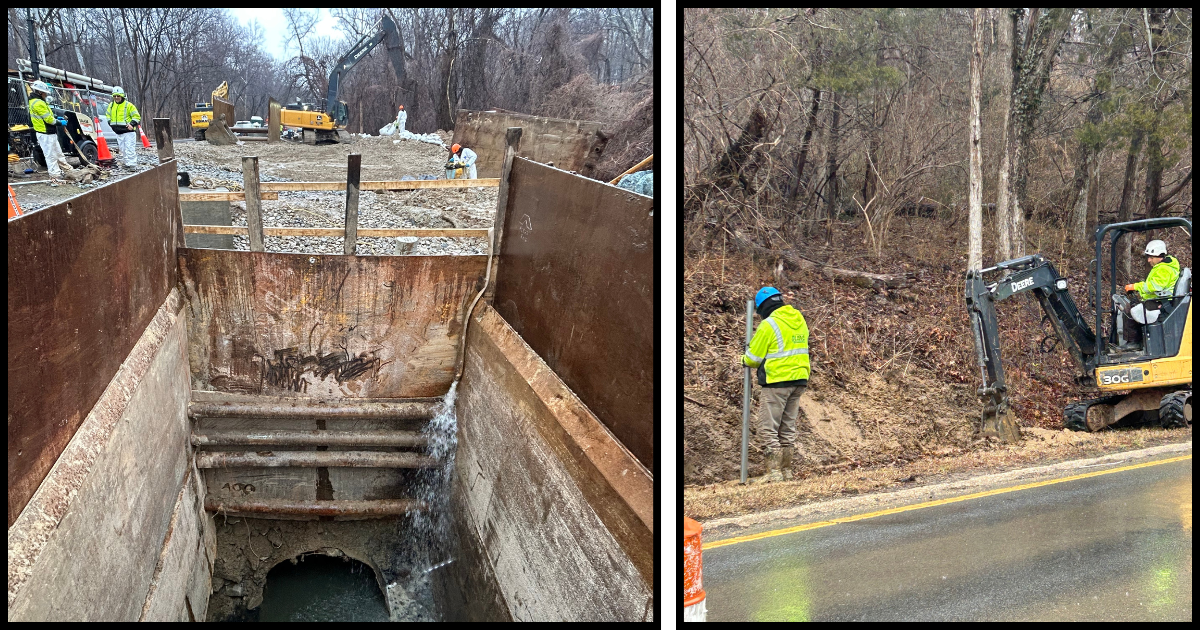
(Left) DC Water crews working to stabilize and extend excavation around collapse site. (Right) USACE crews installing stormwater management along Clara Barton Parkway.
We continue to conduct water quality sampling, and are working with our federal, state, and local partners to protect the river and mitigate the impact on the environment.
DC Water shares community concerns about the impact on the Potomac River. The public is invited to join us this week to learn more about DC Water’s response, current system status, and next steps in emergency repair and long-term rehabilitation efforts:
Wednesday, February 25 - Washington, DC
DC Water Headquarters, 1385 Canal St SE, Washington, DC 20003
Time: 7:00 PM
Thursday, February 26 – Bethesda, Maryland
Walt Whitman High School (cafeteria), 7100 Whittier Blvd., Bethesda, MD 20817
Time: 7:00 PM
Water Quality Sampling Results
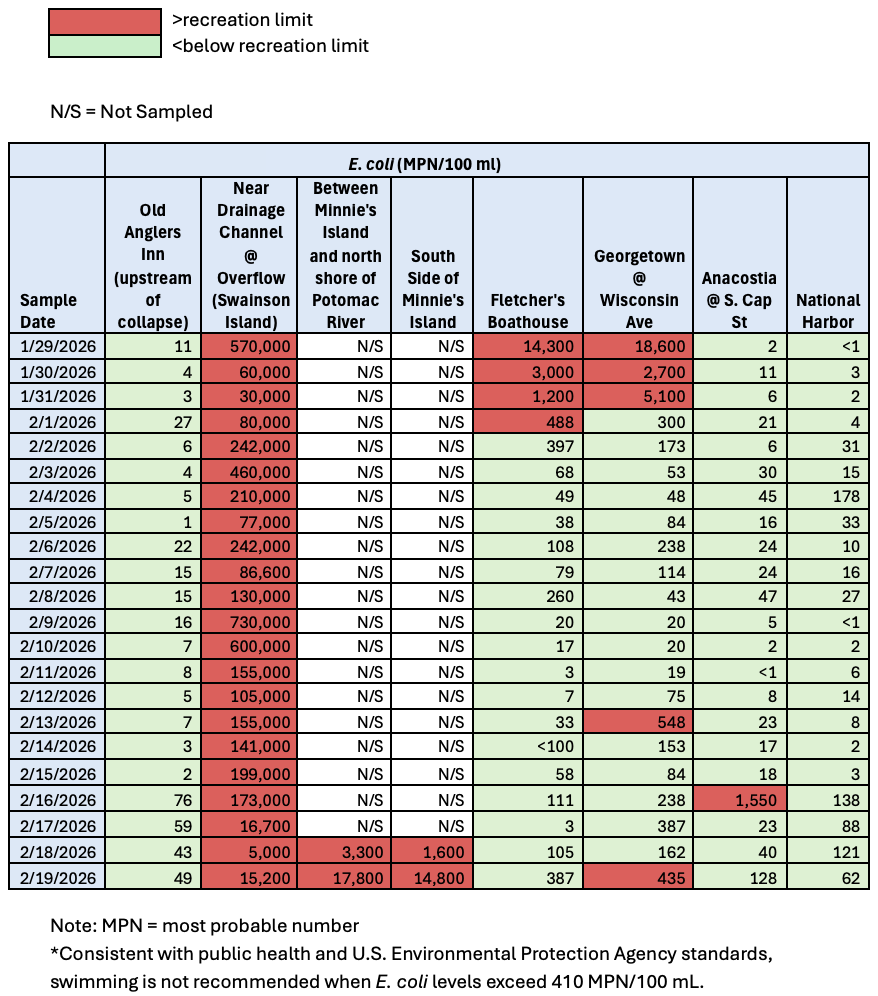
DC Water is performing daily water quality sampling. It’s important to note that historically the E. coli levels in the Potomac and Anacostia rivers vary widely from day to day. Fluctuations in water quality are influenced by factors such as weather events, river flow, runoff, pollutants, and other sources discharging into waterways; and measurements taken much further downstream cannot be attributed solely to this incident.
For the Potomac River, historical water quality data shows E. coli levels may vary from a range as low as 10 MPN/100mL to as much as 5,000 MPN/100mL on a given day.
A more detailed explanation is posted on the District Department of Energy and Environment (DOEE) website at doee.dc.gov/release/potomac-interceptor-update-and-faqs
*Lab results are unavailable on weekends and will be provided the following Monday (excluding holidays).
For more information about the ongoing repair efforts go to dcwater.com/Potomac-interceptor-collapse.