DC WASA Encourages Residents and Businesses to Clear Snow Around Catch Basins and Hydrants

February 12, 2010

(Washington, DC) – As cleanup efforts continue following a record-breaking snowfall in the District of Columbia, the District of Columbia Water and Sewer Authority (DC WASA) wants to remind residents and businesses to keep District catch basins and fire hydrants clear of snow. When shoveling or blowing snow from District sidewalks and driveways, do not pile snow near street curbs because it can potentially cover the catch basins or obstruct flow into them. To avoid flooding, sewer backups and hazardous road conditions, keep areas clear of snow in front of catch basins along District streets.

“DC WASA crews have been working around the clock responding to water emergencies and monitoring catch basins throughout the city. Because of the heavy snowfall we received, it is critically important for residents and business owners to keep our catch basins clear of snow, so when melting occurs, water can enter them safely. Otherwise, there is an increased risk of flooding, which can lead to frozen sidewalks and roads as well as other hazardous traveling conditions,” said DC WASA General Manager George S. Hawkins.

In addition, DC WASA urges all able-bodied citizens to clear snow from fire hydrants near their home and business. Our fire fighters need ready access to hydrants in an emergency. To assist our fire fighters and preserve public safety, please remove snow from fire hydrants and do not block access to fire hydrants.

If you notice a clogged catch basin or flooding in your area, call DC WASA Emergency Line at (202) 612-3400.

About The District of Columbia Water and Sewer Authority
The District of Columbia Water and Sewer Authority (DC WASA), is an industry leading multi-jurisdictional regional utility that provides drinking water, wastewater collection and treatment to more 600,000 residential, commercial and governmental customers in the District of Columbia, and also collects and treats wastewater for 1.6 million customers in Montgomery and Prince Georges counties in Maryland and Fairfax and Loudoun counties in Virginia. DC WASA’s service area covers approximately 725 square miles and the company operates the world’s largest advanced wastewater treatment plant with a capacity of 370 million gallons per day and has a peak capacity of 1.076 billion gallons per day.

###

Latest News

Photo of inside Potomac Interceptor at Dulles showing newly lined tunnel

First of four emergency repairs on Potomac Interceptor finished

DC Water has finished the first of four emergency repair projects on the Potomac Interceptor sewer line. Crews completed work today to strengthen a 600-foot section of pipe at Dulles International Airport.

Picture of repaired segment before the geopolymer work and after the work is done

Crews also reach a major milestone near Dulles International Airport as the next phase of repairs begins this week

DC Water has completed the first major step in emergency repairs to a 175-foot section of the Potomac Interceptor near Pennyfield Lock in Potomac, Maryland. Crews added a new, stronger lining inside the pipe after inspections found serious wear and damage. The work is part of ongoing repairs to 1,700 linear feet of pipe near Pennyfield Lock. Work began on Friday to apply geopolymer, a concrete-like material, inside the pipe. With the new lining complete, crews are preparing for the next phase of work for the remainder of the pipe segment.

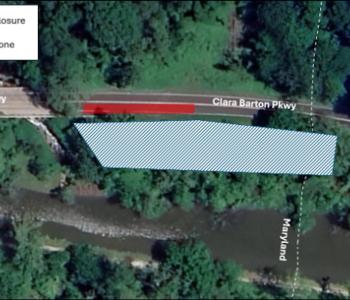
image of clara barton parkway with lane closure marked in red

Beginning this week and continuing through mid-August, DC Water will temporarily close one lane overnight on Clara Barton Parkway at the Maryland-D.C. border. The closures are needed so crews can ...

Upcoming Meeting

Board of Directors Meeting

April 24, 2023

Monday 9:00 AM

Announcement

DC Water Officials with NPS and ANC commissioners doing ceremonial groundbreaking
DC Water Breaks Ground on Piney Branch Tunnel, Final Phase of DC Clean Rivers Project

Today, DC Water broke ground on the Piney Branch Tunnel, the final major tunnel in our Clean Rivers Project. This work will help keep sewage and trash out of local waterways and make Rock Creek, the Potomac River, and the Chesapeake Bay cleaner for our community.

When we finish the Piney Branch Tunnel, it will hold at least 4.2 million gallons of rainwater and wastewater during heavy storms. Instead of overflowing into Piney Branch, that water will go to the Blue Plains Water Resource Recovery Facility, where it will be treated.

Latest Blog Post
Plastic bottles, cups and other floating debris on the surface of the Anacostia River before the Anacostia River Tunnel began operating.
Cleaner Waterways Start With Everyday Choices
Protecting our waterways starts with everyday actions and continues through critical infrastructure designed to keep pollution out of our rivers.
Upcoming Meeting

Customer Service Center Announcement

Payment Plan Incentive: provides a credit back of 50% of the last 3 payments made. Eligible participants are residential customers who have had an outstanding balance for 60 days or greater and with an outstanding balance of $500 or more.