Maryland-DC Border along Clara Barton Parkway Potomac Interceptor Rehabilitation
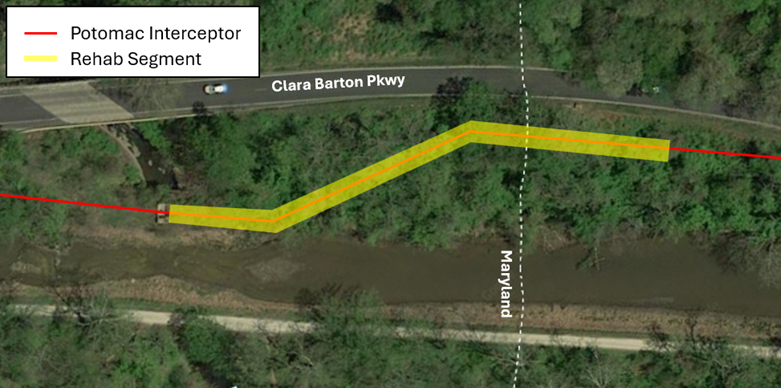
DC Water is rehabilitating a section of the Potomac Interceptor along Clara Barton Parkway at the Maryland-DC border. This project will strengthen an important sewer pipeline that helps carry wastewater from parts of Maryland, Virginia, and the District to DC Water’s Blue Plains Advanced Wastewater Treatment Facility.
The work is part of DC Water’s ongoing effort to keep critical infrastructure in good condition, reduce the risk of future repairs, and protect public health and the environment. While customers may not see this pipeline every day, it plays a major role in keeping sewer service reliable across the region.
Project Updates
July 2, 2026
DC Water to Continue Daily Potomac River Testing Through July 31 as Potomac Interceptor Repairs Continue
What is the Potomac Interceptor?
The Potomac Interceptor is a large sewer pipe that carries about 60 million gallons of wastewater each day. It collects wastewater from parts Fairfax County, Loudoun County, Town of Vienna, Herndon, Dulles International Airport, and Montgomery County, Maryland, and carries it to Blue Plains, where it is treated before the water is safely returned to the environment.
Why this work matters
Like roads, bridges, and water mains, sewer pipes need maintenance as they age. This project will reinforce a section of the Potomac Interceptor so it can continue to safely move wastewater for years to come. Investing in this work now helps prevent larger problems later and supports reliable sewer service for customers and communities.
Project Details
🛠️ Work: Rehabilitation of a major sewer pipeline to strengthen the existing pipe and extend its useful life
📍 Location: Along Clara Barton Parkway at the Maryland-DC border
📅 Timeline: July 2026 through November 2026
📏 Project length: Approximately 400 linear feet of pipe will be rehabilitated
⏰ Typical work hours: 7 a.m. to 5 p.m.; night work may occur as needed
🚧 Traffic and service impacts: No road or lane closures will occur during morning or evening rush hours. If closures are needed, they will happen overnight from 8 p.m. to 4 a.m. Daytime lane closures, if required, will be limited to 10 a.m. to 2 p.m.
What customers and stakeholders can expect
Early construction activities include clearing trees and vegetation and setting up a temporary pumping system and pipeline to bypass the section being repaired. The temporary system allows wastewater to keep moving safely while crews repair the pipe. This helps DC Water complete the work without interrupting sewer service.
Crews will use methods that allow much of the work to happen inside the existing pipe. This reduces the need for large open trenches and helps limit impacts to Clara Barton Parkway, nearby parkland, and surrounding communities.
How the pipe will be repaired
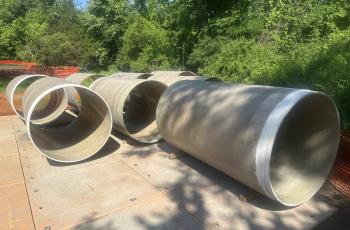
DC Water will repair the pipe using slip lining and geopolymer. Slip lining installs pipe sections through an opening in the existing sewer line to strengthen it and form a new pipe inside. Geopolymer is a strong cement-like material that crews apply to the inside of the pipe to seal worn areas, restore strength, and protect it from corrosion.
These repair methods allow DC Water to improve the pipeline without replacing the full section from the ground up. They also help reduce digging, shorten disruptions, and keep wastewater service moving during construction.
For More Information
Project email: potomac.interceptor@dcwater.com
Project Website: dcwater.com/potomacinterceptor
DC Water 24-hour Emergency: 202-612-3400