Helicopters, Heavy Rigs, and Rock Samples: DC Water's High-Stakes Mission Beneath the Potomac Interceptor
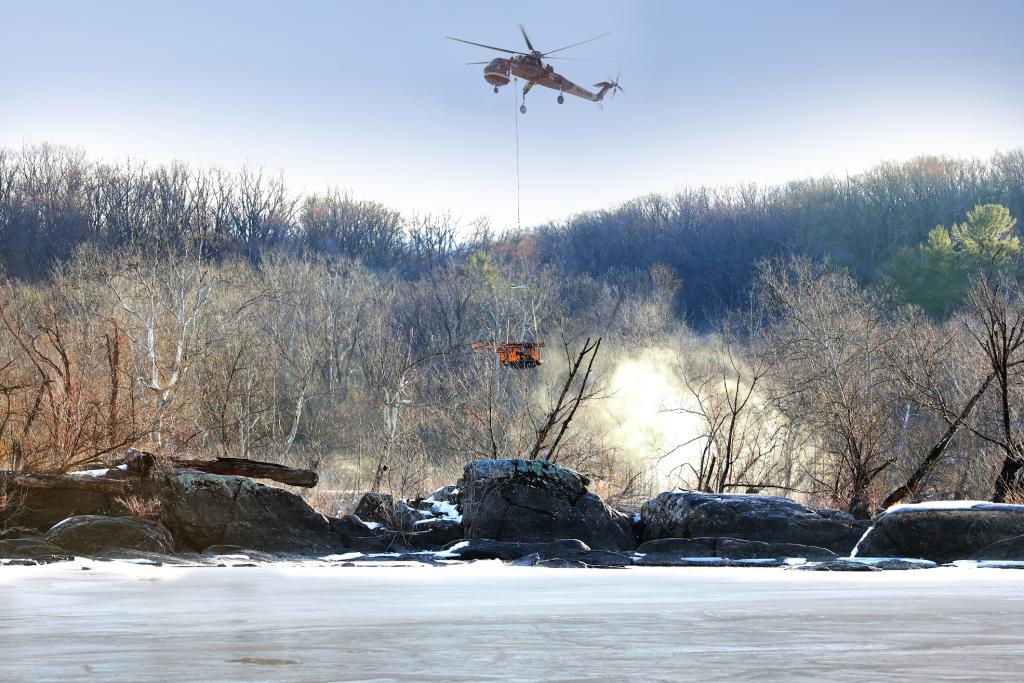
It’s not every day you see a massive drill rig dangling from a helicopter over the Potomac River, but that’s exactly what happened earlier this year when DC Water launched a daring geological investigation at Great Falls—a project as rare as it was essential.
From January 27 to February 2, 2025, DC Water conducted geological investigations in one of the most challenging environments imaginable: a stretch of the Potomac River at Great Falls. Their goal? To study the bedrock beneath the Potomac to help determine the most effective strategy and design options to replace and rehabilitate the Potomac Interceptor, a major sewer pipeline that carriers 60 million gallons of wastewater every day from Dulles Airport and the surrounding communities to DC Water’s Blue Plains Advanced Wastewater Treatment Plant.
Getting to the site was no small feat. A Sikorsky S-64E helicopter—the kind you’d expect to see battling wildfires—transported the 14-ton drill rig to the site. A second MD-500 helicopter carried crews to remote drilling locations along the river just below the Washington Aqueduct Dam.
Over the course of the week, teams collected rock core samples from five locations, drilling up to 50 feet below the surface. These samples will help engineers understand the geology and design a new, durable pipe that can withstand decades of service.
Why go to such lengths? Because this work protects the region’s waterways and ensures reliable wastewater service for hundreds of thousands of people. Built over 60 years ago, this 54-mile sewer pipeline is aging, and the section that crosses under the river is nearly 3,000 feet long and 78 inches wide. If it fails, the consequences for public health and the environment would be enormous. Planning is now underway to rehabilitate this section before its condition deteriorates further.
By investing in this critical infrastructure now, DC Water is preventing future failures that could disrupt communities and harm the Potomac—a river that defines our region. While most of us will never see the Potomac Interceptor, we all benefit from these quiet heroics that keep it flowing.
For more details on the project, view our fact sheet on the Potomac River Crossing.