UPDATE: Potomac Interceptor Overflow, February 3, 2026
Potomac Interceptor Overflow Update
Tuesday, February 3, 2026
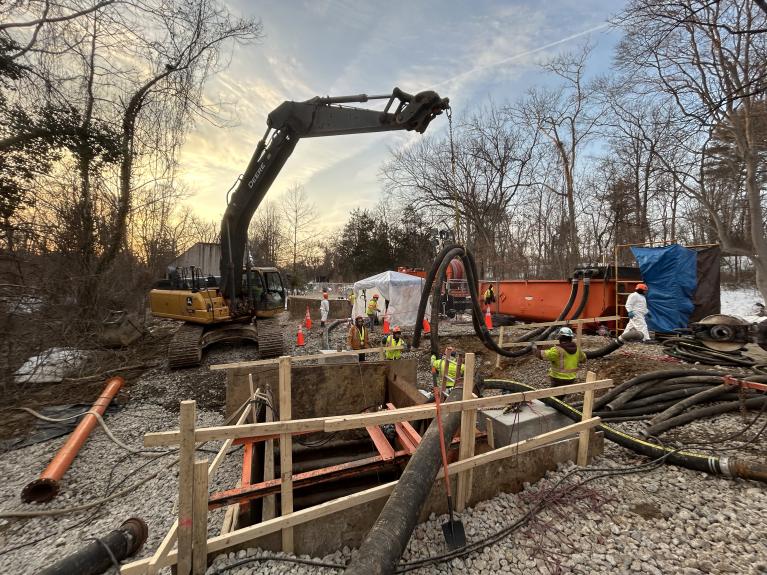
Work to clean and repair the damaged section of the Potomac Interceptor continues, though progress is being slowed by large boulders and rocks inside the pipe. Meanwhile, increased flow from groundwater infiltration attributed to snowmelt, along with periodic clogging of the bypass pumps, at times, resulted in minor overflows near the collapse site. To address these issues, crews are constructing an earthen dam in the nearby stormwater ditch to contain these minor overflows.
The 72-inch section of the sewer line collapsed along Clara Barton Parkway at the 495 interchange and the C & O Canal National Historical Park on January 19. The following is a summary of today’s efforts.
Cleaning Efforts
- Crews continue to work on removing debris and obstructions from inside the collapsed section of the pipe. While high-powered vacuuming equipment has been effective, large rocks and boulders remain inside, complicating and slowing progress.
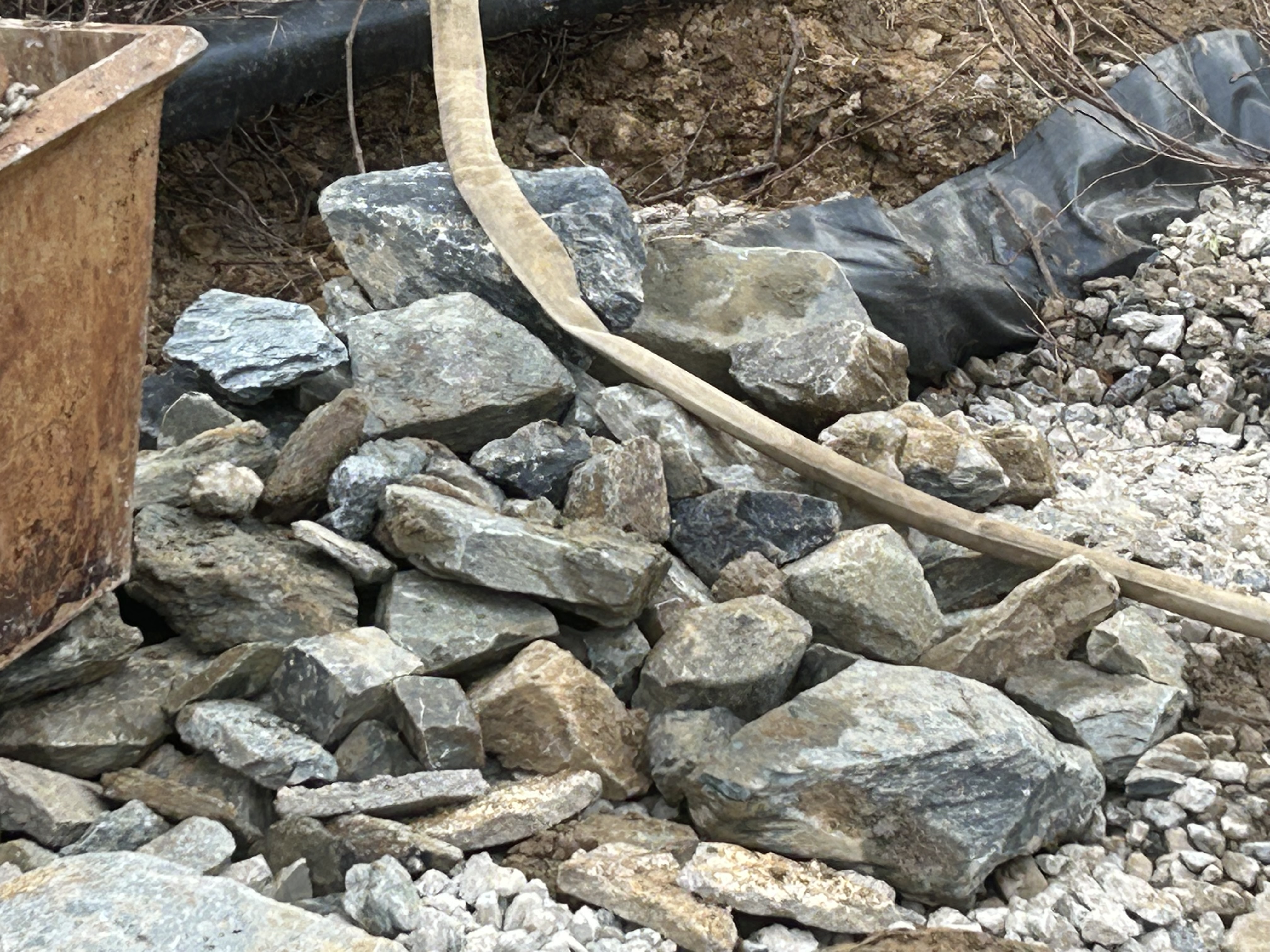
- Specialized equipment is being mobilized to allow crews to manually remove these larger materials.
- To date, approximately 18 tons of debris has been cleared since cleaning began.
- It is estimated that several hundred tons of debris will need to be removed before repairs can begin to restore full flow to the Potomac Interceptor.
Containment
- Bypass pumping operations and the existing flow through the damaged pipe are containing most of the flow, but some minor overflows have entered the creek bed adjacent to the site.
- While these overflows are limited, it is possible that small amounts of wastewater may have reached the river.
- Snowmelt is increasing groundwater infiltration into the sewer line, raising the volume of flow inside the Potomac Interceptor and contributing to these limited overflow events.
- To further reduce the risk of overflows, a small earthen dam is being built around the work site to contain overflow that escapes the immediate site and prevent the wastewater from reaching the Potomac River.
- Small, supplemental pumps are being installed within the containment area to manage minor infiltration and seepage for worker safety as they manage cleaning operations inside the excavation.
Bypass Pumping Operations
- Efforts to contain the flow remain challenging due to recurring clogs that require pumps to be taken out of service for cleaning.
- These clogs are often caused by wipes that do not dissolve and can trap fats, oils, and grease, leading to the pumps coming offline for service.
- DC Water reminds the public fats, oils, and grease should never be poured down drains, and wipes should not be flushed.
- Currently, eight pumps remain in operation. Pumping capacity is temporarily reduced whenever a pump is taken out of service for maintenance.
- To protect equipment during extreme cold and potential snowfall, heat tents and heaters have been set up on site.
- Crews are monitoring operations 24/7, allowing them to quickly address issues and ensure the bypass pump system continues to operate as safely and reliably as possible.