Our Pledge to Keep District Drinking Water Safe

February 05, 2009

The Jan. 27 front-page story "High Lead Levels Found in D.C. Kids" raised renewed concerns about lead levels in D.C. water between 2001 and 2003. As the new chairman of the D.C. Water and Sewer Authority (WASA) and the father of a child born in 2002, I take this study and the quality of the Districts water very seriously.
What people should know first and foremost is that D.C. drinking water is safe and meets or exceeds all federal safety standards.
The WASA board and management team are deeply concerned about public health and safety, particularly as it relates to the communitys children. The agencys most important job is to provide clean, quality drinking water, and we view that job as a solemn trust.
WASA relies on federal regulatory agencies, including the Environmental Protection Agency, to set water standards, and it operates under all requirements of the Safe Drinking Water Act. It also relies on the D.C. Health Department and other independent organizations to provide health expertise and direction.
The report that was at the center of the Jan. 27 article disagrees with earlier reports from epidemiologists, including one by the federal Centers for Disease Control and Prevention. The lead author of the latest study, conducted by researchers at Virginia Tech and Childrens National Medical Center, is not an epidemiologist. At this point, we cant assess the scientific merit of the methodology used in the study, how much peer review it received and how valid its conclusions are.
However, the study makes claims that WASA takes very seriously. As a result, we have asked independent experts to review the study and explain the discrepancies in conclusions made in this study and earlier reports from the D.C. Health Department and the Centers for Disease Control.
I have just been confirmed as chairman of WASA and was not involved with the agency during the period covered by the study that The Post reported on. I can assure the public that WASA will provide them with a full accounting of what we find in reexamining the research on lead in the Districts water.
Clearly, no one of any age in the area should ever be placed at risk of exposure to lead. But I would like WASA customers to know: Your water is safe to drink, and WASA is watching out for your health and well-being and that of your children. Please remember, they are our children, too.

Latest News

Photo of inside Potomac Interceptor at Dulles showing newly lined tunnel

First of four emergency repairs on Potomac Interceptor finished

DC Water has finished the first of four emergency repair projects on the Potomac Interceptor sewer line. Crews completed work today to strengthen a 600-foot section of pipe at Dulles International Airport.

Picture of repaired segment before the geopolymer work and after the work is done

Crews also reach a major milestone near Dulles International Airport as the next phase of repairs begins this week

DC Water has completed the first major step in emergency repairs to a 175-foot section of the Potomac Interceptor near Pennyfield Lock in Potomac, Maryland. Crews added a new, stronger lining inside the pipe after inspections found serious wear and damage. The work is part of ongoing repairs to 1,700 linear feet of pipe near Pennyfield Lock. Work began on Friday to apply geopolymer, a concrete-like material, inside the pipe. With the new lining complete, crews are preparing for the next phase of work for the remainder of the pipe segment.

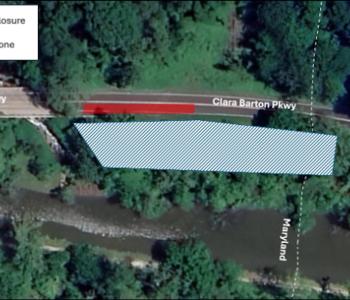
image of clara barton parkway with lane closure marked in red

Beginning this week and continuing through mid-August, DC Water will temporarily close one lane overnight on Clara Barton Parkway at the Maryland-D.C. border. The closures are needed so crews can ...

Upcoming Meeting

Board of Directors Meeting

April 24, 2023

Monday 9:00 AM

Announcement

DC Water Officials with NPS and ANC commissioners doing ceremonial groundbreaking
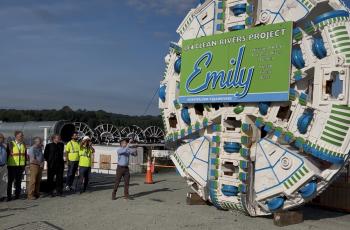
DC Water Breaks Ground on Piney Branch Tunnel, Final Phase of DC Clean Rivers Project

Today, DC Water broke ground on the Piney Branch Tunnel, the final major tunnel in our Clean Rivers Project. This work will help keep sewage and trash out of local waterways and make Rock Creek, the Potomac River, and the Chesapeake Bay cleaner for our community.

When we finish the Piney Branch Tunnel, it will hold at least 4.2 million gallons of rainwater and wastewater during heavy storms. Instead of overflowing into Piney Branch, that water will go to the Blue Plains Water Resource Recovery Facility, where it will be treated.

Latest Blog Post
Plastic bottles, cups and other floating debris on the surface of the Anacostia River before the Anacostia River Tunnel began operating.
Cleaner Waterways Start With Everyday Choices
Protecting our waterways starts with everyday actions and continues through critical infrastructure designed to keep pollution out of our rivers.
Upcoming Meeting

Customer Service Center Announcement

Payment Plan Incentive: provides a credit back of 50% of the last 3 payments made. Eligible participants are residential customers who have had an outstanding balance for 60 days or greater and with an outstanding balance of $500 or more.