DC Water unveils proposed modifications to the Long Term Control Plan to include green infrastructure
WASHINGTON, DC - Today DC Water General Manager George S. Hawkins and the DC Water Clean Rivers Team unveiled a dramatic plan leveraging green infrastructure (GI) to reduce combined sewer overflows in the District and to green portions of the city on an unprecedented scale. The plan calls for a nearly $100 million investment to green areas of DC that are impacted by combined sewer overflows (CSOs).
Green infrastructure is a natural way to manage stormwater by absorbing rain before it enters the sewer or stormwater system. Examples include green roofs, bioretention, rain barrels and pervious pavement. Keeping stormwater out of the sewer system can go a long way to improving the health of our local waterways, since it contributes to combined sewer overflows (CSOs) in heavy rain storms.
DC Water is proposing the use of a hybrid approach that will substitute green infrastructure for some - but not all - of the massive tunnels planned to convey stormwater and sewage to the Blue Plains Advanced Wastewater Treatment Plant. The proposed modifications to the Long Term Control Plan (Clean Rivers Project) have been released for public comment, and General Manager Hawkins outlined the proposal today at DC Waters second Green Infrastructure Summit.
"The use of GI provides benefits we dont get from the tunnel construction, like increased property values, neighborhood beautification, enhancing public space, a cooling effect in the summer and creating local green jobs," commented Mr. Hawkins. "Green infrastructure will also start providing improvements to receiving water quality sooner than just the tunnel system and will ease the ratepayer burden. We hope people will agree with us and will voice their support for this approach."
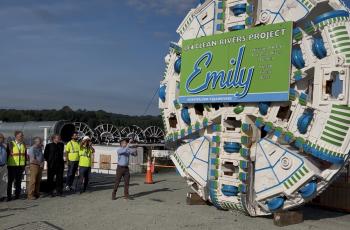
Currently, DC Water is implementing the $2.6 billion Clean Rivers Project under the terms of a federally mandated consent decree. The first phase is underway and involves constructing a massive underground tunnel system to hold stormwater during intense storms, preventing most combined sewer overflows to the Anacostia River. These overflows, which currently discharge about 1.5 billion gallons of diluted sewage to the Anacostia in an average year, will be reduced by 98 percent when the tunnel system is completed in 2022. The later phases will address overflows to the Potomac River and Rock Creek.
DC Water has been exploring the use of GI for the Clean Rivers Project for the Potomac River and Rock Creek drainage areas. There is growing evidence that green infrastructure would provide greater benefits to the community than the previously planned underground storage and conveyance tunnels for the Potomac River and Rock Creek.
The existing plans for the Anacostia River tunnels remain unchanged, but DC Water proposes including green infrastructure as part of the solution to combined sewer overflows in the Rock Creek and Potomac River drainage areas.
For Rock Creek, DC Water proposes eliminating the planned tunnel and replacing it with $60 million of green infrastructure. Implementation would begin in 2015 and be completed by 2032.
For the Potomac River, DC Water proposes $30 million of green infrastructure that would begin installation in 2016 and be completed by 2028. The green infrastructure investment, combined with new upgrades to the wet weather treatment capacity at DC Waters Blue Plains facility, will allow the previously planned underground tunnel along the Potomac River to be reduced in size. The smaller tunnel would be completed in 2030. In addition, $10 million would be invested to separate the combined sewer system in designated neighborhoods.
Todays announcement comes on the heels of the Authoritys ceremony honoring seven design teams for their innovative plans submitted to DC Waters Green Infrastructure Challenge, which ran for most of 2013. DC Water will award more than $1 million for the two phases of the Challengedesign and construction.
The Green Infrastructure Summit was held at the Metropolitan Washington Council of Governments in Washington, DC to introduce the proposal to the public and provide an opportunity for stakeholders to gain information on the 60-day public comment period process.
For more information on the proposed modifications to the Long Term Control Plan, please visit: dcwater.com/green. The public can comment on the proposal between now and March 14, 2014.
For more information on the Clean Rivers Project, please visit dcwater.com/cleanrivers.
To view the winning designs from the Green Infrastructure Challenge, please visit dcwater.com/greenchallenge.