DC Water’s pioneering Environmental Impact Bond a success
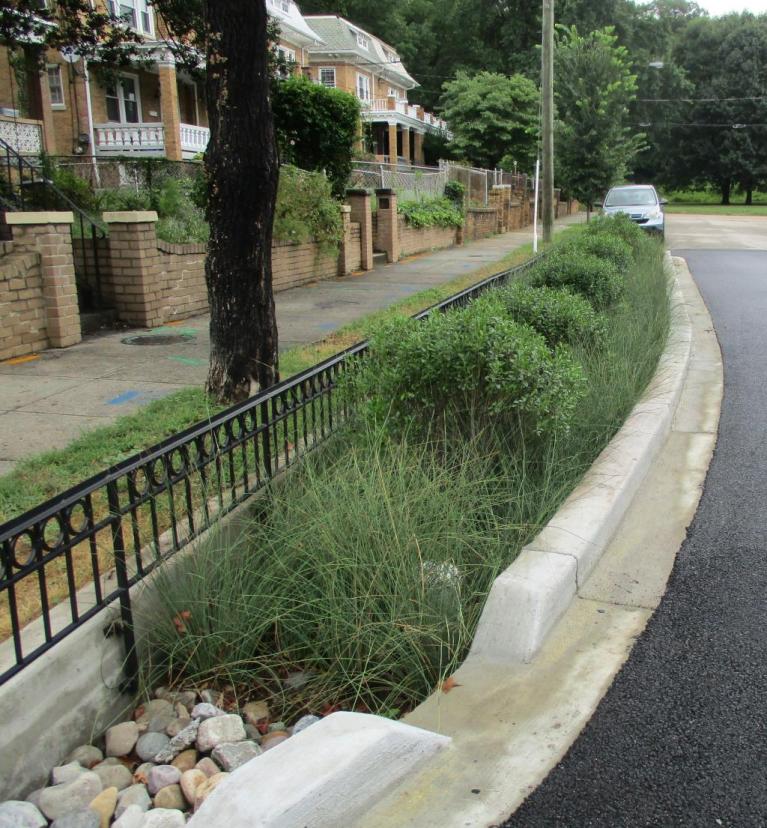
DC Water today announced the success of both its first green infrastructure (GI) projects in Rock Creek and the innovative Environmental Impact Bond (EIB) that financed them. The intent of the projects and robust evaluation of project outcomes was to establish the effectiveness of green infrastructure in the District and reduce combined sewer and stormwater runoff into Rock Creek, improving the health of waterways in the District.
These projects achieved the goals set in 2016, reducing runoff into Rock Creek by nearly 20 percent. DC Water’s prediction, measurement, and reporting of the outcomes is a signature component of the EIB, the first issuance of its kind in the country. The information gained through performance monitoring resulted in optimizations that will ensure a future for green infrastructure at DC Water.
The proceeds from the EIB provided the upfront capital needed to construct the first GI project in the DC Clean Rivers Project, which involved the installation of 25 acres of bioretention (rain gardens) in planter strips and curb extensions, permeable pavement on streets and alleys, and two green infrastructure parks in the Rock Creek sewershed in Wards 4 and 5.
DC Water achieved the objectives established at the outset of the financing:
- Ensure responsible stewardship of ratepayer funds by transferring a portion of performance risk associated with technologies that had never been implemented on a large scale in the District
- Enhance future decision-making about how much and which types of green infrastructure to build
- Create a model funding mechanism that other municipalities can leverage to advance the use of green infrastructure to address stormwater management in their communities
- Establish a green jobs initiative targeting local workforce development and sustainable job creation, including training and certification opportunities for District residents
- Improve transparency to local ratepayers by formally predicting, measuring, and publicly reporting the environmental impact of the green infrastructure
Each of these objectives was achieved. Additionally, post-construction monitoring found the green infrastructure reduced stormwater runoff by nearly 20 percent from previous levels, achieving the performance goals.
The rigorous measurement and reporting inherent to the EIB provided DC Water with lessons learned about green infrastructure that can be applied to other projects. In its final report on Rock Creek Project 1, DC Water highlights 15 lessons learned about porous pavement, bioretention, and other green infrastructure facilities, noting “significant information has been learned in terms of design, construction, and monitoring approaches that have added to DC Water’s body of knowledge and expertise related to GI. Collectively, the information gained through the performance monitoring and the resulting optimization allowed DC Water to be responsive, make corrections, and ensure a future for green infrastructure at DC Water.”
Based on these findings, DC Water plans to implement a hybrid approach in the Rock Creek sewershed that blends the best of gray and green infrastructure. The hybrid approach provides the same degree of stormwater control as the all-gray (using traditional engineering techniques) infrastructure alternative, lowers capital costs as compared to the all-gray or all-green alternatives, and will be implemented by 2030, the deadline in the 2016 Consent Decree Modification.
This hybrid approach is accountable to District ratepayers and delivers additional benefits such as more green space for public use and more local green jobs as compared to the all-gray option. DC Water’s ambitious local green jobs program includes training and certification opportunities for District residents interested in GI construction, inspection, and maintenance.
“This financing instrument required analysis at a level not usually performed,” said David L. Gadis, DC Water Chief Executive Officer and General Manager. “Utilities across the country can apply our learnings to their stormwater programs. The information and lessons learned will benefit the entire sector and will inform our future projects as well.”
DC Water CFO Matt Brown added, “This model allowed DC Water to share a portion of the financial risk associated with green infrastructure investment on this scale. Because the projects met the established goals, the District benefits with cleaner waterways and a greener environment. This EIB establishes a replicable and scalable approach to financing green infrastructure for other communities across the country.”
Gadis added, “Another component that serves as a model to utilities nationwide is the local jobs and workforce development program we created in partnership with the Water Environment Federation. We are training and certifying District residents for green jobs and we aim to fill 51 percent of the new jobs created by the GI program with District residents.”
About DC Water
DC Water provides more than 700,000 residents and 21.3 million annual visitors in the District of Columbia with retail water and wastewater (sewer) service. With a total service area of approximately 725 square miles, DC Water also treats wastewater for approximately 1.6 million people in neighboring jurisdictions, including Montgomery and Prince George’s counties in Maryland and Fairfax and Loudoun counties in Virginia.
The Blue Plains Advanced Wastewater Treatment Plant is located at the southernmost tip of the District, covering 153 acres along the Potomac River. Blue Plains is the largest advanced wastewater treatment facility in the world and home to North America’s first thermal hydrolysis plant that enables anaerobic digestion to create electricity from wastewater.
The DC Clean Rivers Project is a $2.7 billion program to control combined sewer overflows to its three waterways—the Anacostia and Potomac rivers and Rock Creek— improving the District’s water quality and creating a healthier future for District residents. More information on the Environmental Impact Bond – and hi res images—can be found at dcwater.com/EIB. More information on the Clean Rivers Project can be found at dcwater.com/cleanrivers.