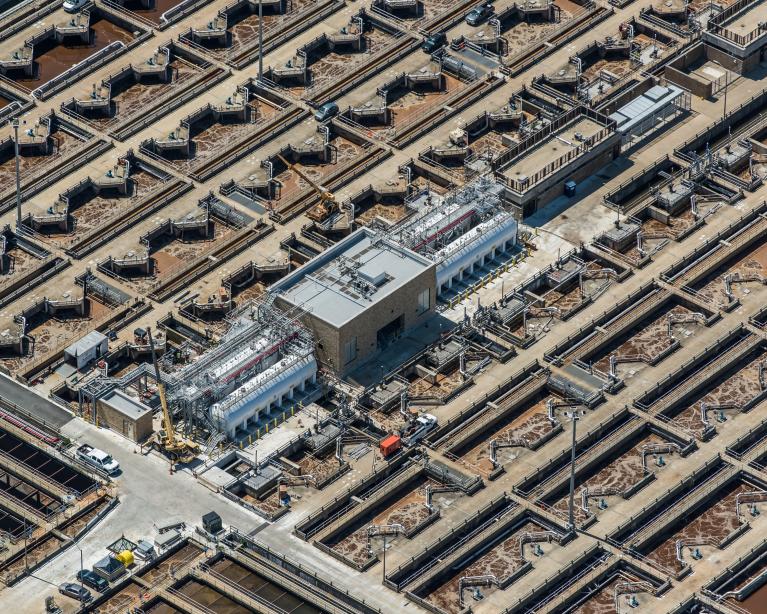
Wastewater enters the sewer system from homes, businesses, schools and other buildings from indoor plumbing. This wastewater then travels through miles of underground pipes to the Blue Plains Advanced Wastewater Treatment plant in the District for treatment.
The first treatment phase begins as debris and grit and are removed from the wastewater and then trucked to a landfill. The sewage then flows into primary sedimentation tanks. These tanks separate more than half of the solid waste from the liquid waste through settling.
Wastewater from the primary treatment phase then flows into secondary treatment tanks containing microbes. To break down the organic matter found in the wastewater, the microbes need oxygen so air is pumped into the tanks. In the next stage of treatment, microbes convert ammonia into harmless nitrogen gas. Most of the remaining solids are then settled out and the water flows down through sand filters that remove any suspended solids and associated phosphorus. The water is finally disinfected, dechlorinated and sent back into the Potomac River.
The solids, or sludge, from the primary sedimentation tanks flow into large tanks where the sludge settles to the bottom and thickens. The solids removed from the secondary and nitrification tanks are thickened separately using flotation thickeners. The solids are then blended together, screened, and dewatered. They are then sent through a thermal hydrolysis process that uses to heat and pressure to eliminate pathogens and prepare them for the digesters. After the solids go through digestion, they are dewatered again and sent out as Class A Biosolids to be used as fertilizer.
A more detailed description of the wastewater treatment process can be found in our Blue Plains Advanced Wastewater Treatment Plant Brochure.