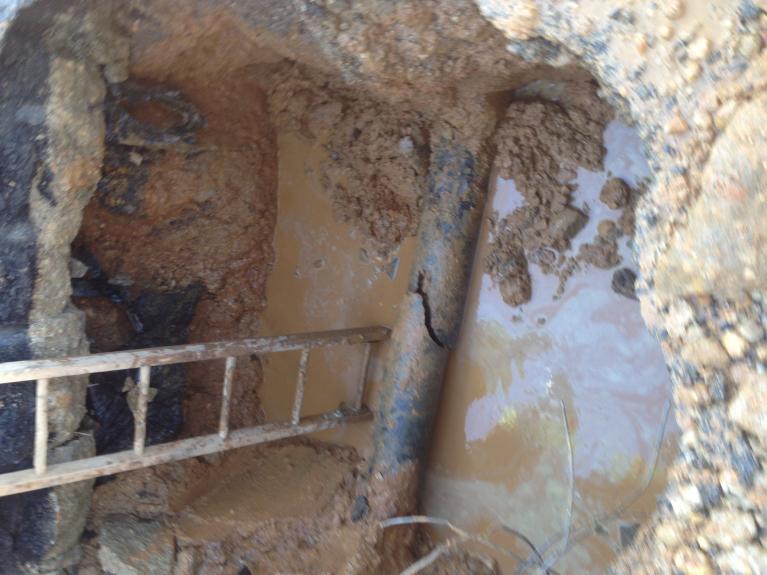
As the weather turns cold, water main breaks become more common. This is due to the expansion and contraction of the pipe material which weakens it. Pipe corrosion, soil conditions, age and ground movement can also cause water main breaks, creating unexpected problems for customers and motorists. DC Water averages between 400 and 500 water main breaks per year.
During the busiest weeks, DC Water may have over 20 different water main breaks at one time. DC Water prioritizes water main repairs based on several factors such as severity of the break, impact to customers and the environment, potential damage to public and private property, and unsafe traffic conditions due to street flooding.
Anyone observing water running from streets or sidewalks is encouraged to report the leak to DC Water. Report a problem online here, call DC Water's 24-hour line at (202) 612-3400 or tweet @dcwater with a picture and location. For listings of current repairs, view the alerts tab in the top left of the website.
Timeline of a water main break
- A leak is reported as a possible water main break.
- Crews at DC Water's Command Center dispatch an investigator to the scene.
- If the investigator determines that the leak is a water main break, he or she also determines whether the break can hold long enough to be scheduled for repair or if it is an emergency situation.
- If the leak has damaged the road or sidewalk, the area must be blocked off. If possible traffic will be routed around it; however, at times, the street must be closed completely. DDOT and MPD are notified by the DC Water Command Center. In cold weather, a salt truck may be dispatched if the water has caused icy roadway conditions.
- The Command Center contacts the foreman of the crew on duty for emergency repairs to notify him of the newly identified break and its priority.
- The Command Center notifies Miss Utility to send someone to the site to mark the utility lines. This step is required by law and DC Water may not begin to excavate until the area has been marked.
- Heavy equipment is brought in for the excavation. Some excavations can be very tricky, depending on what is underground and repair crews may have to dig by hand around gas or electric lines.
- Once the crew reaches the main, they re-route the water to minimize service disruption by closing nearby valves. This process helps them isolate the main they are working on to stop the water flow while they work.
- Crews inspect the pipe and plan the best repair or replacement. At times, breaks require unique parts in order to be repaired and crews must send for them. This can take hours or days, depending on the specialty of the part.
- If the break is complicated and the repair time long, DC Water crews will install metal plates on the roadway to alleviate traffic disruption during rush hours.
- Once the water main is repaired, the main must be re-charged. This process can take up to an hour. On rare occasions, the main may break again as the water being turned on causes intense pressure in the system.
- Once the repair is complete and the main has been re-charged, the road or sidewalk must be repaired.
A simple water main repair can be completed in six to eight hours, but large or complicated repairs may take several days to a week.