DC Water advises flushing building plumbing systems with fresh water before resuming normal operations
May 21, 2020

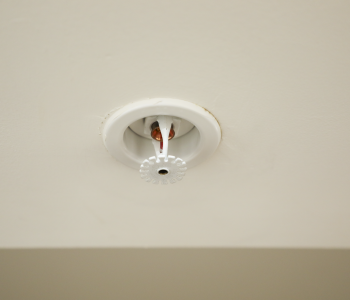
-Building plumbing systems can experience water quality issues after periods of little-to-no water use

-CDC and other experts have provided guidance for building managers and operators

DC Water is advising commercial building operators to flush their plumbing systems with fresh water before resuming normal operations. Many businesses and buildings have been closed or operating at reduced capacity to limit the spread of coronavirus (COVID-19) in accordance with Mayor Bowser’s Order requiring the closure of non-essential businesses in the District. The Mayor has extended the order through June 8, but the flushing guidance still applies.

Any water left stagnant in building plumbing systems can degrade in quality and safety, potentially causing water discoloration and elevated levels of lead and other contaminants. Bacteria like Legionella and other microbes can also grow in building pipes and fixtures during periods of little-to-no water use.

The U.S. Centers for Disease Control and Prevention (CDC) has issued updated guidance to ensure the safety of building water systems and end-use devices after a prolonged shutdown. Additional guidance for those who are responsible for maintaining building water systems has been developed by experts at the Environmental Science, Policy & Research Institute (ESPRI) and AH Environmental Consultants, Inc.

Mayor Bowser has formed a ReOpen DC Advisory Group which has developed recommendations on reopening the District safely and sustainably. When building managers prepare to reopen businesses, schools, childcare facilities, offices, hotels, campuses, and other public buildings, they should consider following this guidance to replace stagnant water in their building plumbing systems with fresh drinking water from DC Water’s distribution system.

DC tap water remains safe and unaffected by coronavirus (COVID-19). There is no evidence COVID-19, the disease caused by the coronavirus can survive in treated drinking water. The same disinfectants, like chlorine, that make the water safe to drink, are effective against COVID-19. DC’s drinking water has two stages of disinfection during the water treatment process before it is distributed to the city. The first stage is free chlorine and the second is chloramine; both are very effective at killing viruses. Additionally, residual disinfection levels throughout our pipe distribution system remain at effective levels to keep the water clean and safe.

“We are proud to continue providing clean, safe drinking water to our city,” said David L. Gadis, CEO and General Manager of DC Water. “We remain ready to support our customers when Mayor Bowser determines it is safe to begin reopening the District.” 

More information and guidance for commercial buildings can be found at dcwater.com/water-quality-commercial.

For updates on the District’s response to COVID-19, visit coronavirus.dc.gov.


###
Latest News

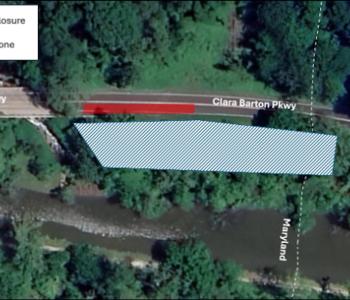
Pennyfield Lock Potomac Interceptor bypass pipeline running next to C & O Canal with equipment

There is no active spill or overflow. Work to strengthen the pipe to begin soon.

Today, DC Water completed construction on a temporary bypass system as part of sewer repairs on the Potomac Interceptor near Pennyfield Lock in Potomac, Maryland. Crews turned on the pumps and successfully tested the system. With the bypass now ready, it will allow us to begin the emergency repairs inside the pipe by carrying the wastewater around the repair area.

DC Water Officials with NPS and ANC commissioners doing ceremonial groundbreaking

Today, DC Water broke ground on the Piney Branch Tunnel, the final major tunnel in our Clean Rivers Project. This work will help keep sewage and trash out of local waterways and make Rock Creek, the Potomac River, and the Chesapeake Bay cleaner for our community.

When we finish the Piney Branch Tunnel, it will hold at least 4.2 million gallons of rainwater and wastewater during heavy storms. Instead of overflowing into Piney Branch, that water will go to the Blue Plains Water Resource Recovery Facility, where it will be treated.

Photo of the drop shaft looking from above down into the bottom

Starting the week of July 13, 2026, people who live, work or travel near the Canal Road NW entrance to Georgetown University may hear controlled blasting. This work is part of our Potomac River Tunnel Project.

When blasting happens, neighbors may hear a brief noise or feel light shaking. Drivers, cyclists, and pedestrians on Canal Road NW may also be stopped for a few minutes while we safely complete each blast.

Upcoming Meeting

Board of Directors Meeting

April 24, 2023

Monday 9:00 AM

Announcement

DC Water Officials with NPS and ANC commissioners doing ceremonial groundbreaking
DC Water Breaks Ground on Piney Branch Tunnel, Final Phase of DC Clean Rivers Project

Today, DC Water broke ground on the Piney Branch Tunnel, the final major tunnel in our Clean Rivers Project. This work will help keep sewage and trash out of local waterways and make Rock Creek, the Potomac River, and the Chesapeake Bay cleaner for our community.

When we finish the Piney Branch Tunnel, it will hold at least 4.2 million gallons of rainwater and wastewater during heavy storms. Instead of overflowing into Piney Branch, that water will go to the Blue Plains Water Resource Recovery Facility, where it will be treated.

Latest Blog Post
Five photos from the American Water Works Association (AWWA) ACE26 conference featuring panel discussions, technical presentations, networking, and attendees posing at the ACE26 display.
ACE26 Highlights: How DC Water Advanced the Conversation on Water
More than 80 DC Water employees joined thousands of water professionals in Washington, D.C., sharing expertise, building partnerships and advancing conversations that will help shape the future of water.
Upcoming Meeting
Date
July 13, 2026
Monday, 2:00 PM

Upcoming Events

Jul 23
Jul 25

Customer Service Center Announcement

Payment Plan Incentive: provides a credit back of 50% of the last 3 payments made. Eligible participants are residential customers who have had an outstanding balance for 60 days or greater and with an outstanding balance of $500 or more.