What lies beneath?

June 19, 2008

Drinking water is a critical public service and one that most of us take for granted. We expect it to be there when we turn on the tap or flush the toilet. Not many of us think about the 1,300 miles of pipelines and the 36,000 valves that bring the water to us. They’re out of sight, out of mind. At least until there’s a problem, like a water main break that could damage roadways, cause traffic delays and put homes and businesses out of water until repairs are made.
According to the American Water Works Association (AWWA), much of our drinking water infrastructure was constructed between 80 and 100 years ago, and the cost of repairing and replacing these aging pipelines ranges between $280 to $400 billion. That means we will pay more for water, and it’s an investment worth making.
Much of the District’s water system is made out of cast iron pipes, some of which are more than 100 years old. Since its creation in 1996, DC WASA has made significant progress in stabilizing the city’s water infrastructure. But, there’s much more to be done. In its 10-year Capital Improvements Program, DC WASA plans to spend more than $600 million on water system improvements.
Out of sight, out of mind doesn’t work for infrastructure; not for the maze of pipelines, much of which were laid before most of us were born, that delivers a product that’s critical to our health, public safety, and quality of life.

Latest News

Photo of inside Potomac Interceptor at Dulles showing newly lined tunnel

First of four emergency repairs on Potomac Interceptor finished

DC Water has finished the first of four emergency repair projects on the Potomac Interceptor sewer line. Crews completed work today to strengthen a 600-foot section of pipe at Dulles International Airport.

Picture of repaired segment before the geopolymer work and after the work is done

Crews also reach a major milestone near Dulles International Airport as the next phase of repairs begins this week

DC Water has completed the first major step in emergency repairs to a 175-foot section of the Potomac Interceptor near Pennyfield Lock in Potomac, Maryland. Crews added a new, stronger lining inside the pipe after inspections found serious wear and damage. The work is part of ongoing repairs to 1,700 linear feet of pipe near Pennyfield Lock. Work began on Friday to apply geopolymer, a concrete-like material, inside the pipe. With the new lining complete, crews are preparing for the next phase of work for the remainder of the pipe segment.

image of clara barton parkway with lane closure marked in red

Beginning this week and continuing through mid-August, DC Water will temporarily close one lane overnight on Clara Barton Parkway at the Maryland-D.C. border. The closures are needed so crews can ...

Upcoming Meeting

Board of Directors Meeting

April 24, 2023

Monday 9:00 AM

Announcement

DC Water Officials with NPS and ANC commissioners doing ceremonial groundbreaking
DC Water Breaks Ground on Piney Branch Tunnel, Final Phase of DC Clean Rivers Project

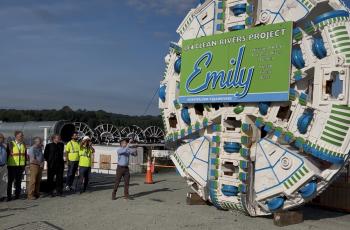
Today, DC Water broke ground on the Piney Branch Tunnel, the final major tunnel in our Clean Rivers Project. This work will help keep sewage and trash out of local waterways and make Rock Creek, the Potomac River, and the Chesapeake Bay cleaner for our community.

When we finish the Piney Branch Tunnel, it will hold at least 4.2 million gallons of rainwater and wastewater during heavy storms. Instead of overflowing into Piney Branch, that water will go to the Blue Plains Water Resource Recovery Facility, where it will be treated.

Latest Blog Post
Plastic bottles, cups and other floating debris on the surface of the Anacostia River before the Anacostia River Tunnel began operating.
Cleaner Waterways Start With Everyday Choices
Protecting our waterways starts with everyday actions and continues through critical infrastructure designed to keep pollution out of our rivers.
Upcoming Meeting

Customer Service Center Announcement

Payment Plan Incentive: provides a credit back of 50% of the last 3 payments made. Eligible participants are residential customers who have had an outstanding balance for 60 days or greater and with an outstanding balance of $500 or more.