Factory Testing Complete on DC Water’s first tunnel boring machine for the Potomac River Tunnel
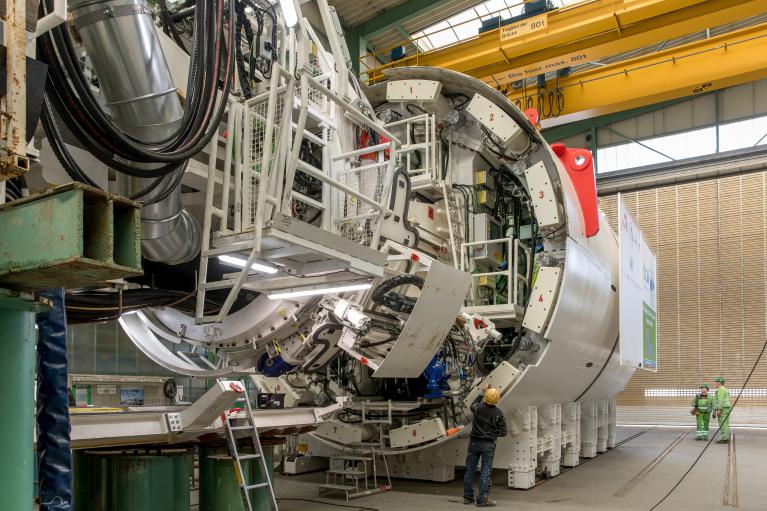
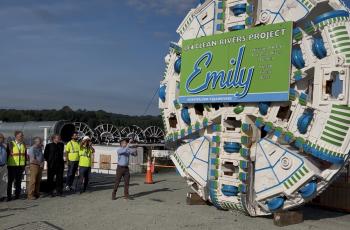
Her name is Mary and she’s a tunnel boring machine (TBM) capable of cutting through hard rock and boring a tunnel 21 feet in width. This month, she completed factory acceptance testing in Germany and will head across the pond to DC to start work on the Potomac River Tunnel.
A team from DC Water and its contractor went to Schwanau, Germany, for the factory testing. Mary passed all the necessary requirements and is one of two TBM’s on the project. The tunnel is part of DC Water’s Clean Rivers Project, to reduce the amount of sewer and stormwater discharged into the Potomac during rain events.
“We are excited to mark this major milestone. These machines are truly a marvel of modern technology and must be custom built for the project,” said DC Water Chief Executive Officer and GM David L. Gadis. “We look forward to Mary’s arrival. She and her sister TBM, Emily, will have their work cut out for them to dig the 5.5-mile tunnel.”
Mary is due to arrive in the fall. In preparation for shipment, the machine must be carefully disassembled and the parts crated for shipment to the U.S. Once here, Mary will be reassembled and get to work.
The two tunnel boring machines are named for Mary and Emily Edmonson, who made a daring attempt to escape from slavery on the Potomac River in 1848 and became heroes of the abolitionist movement.
Mary and Emily will tunnel in opposite directions slowly cutting through bedrock and soil. Mary will work north 2.4 miles toward the tunnel’s endpoint near the entrance of Georgetown University. Emily will head south, tunneling 3.1 miles to connect to the Anacostia River Tunnel system.
The boring machines are being built by Herrenknecht, which also built the TBM’s for DC Water’s other tunnels in the Clean Rivers Project. Manufacturing is already underway on Emily. Factory acceptance testing is expected to occur in October, after which it will be shipped to DC too.
The Potomac River Tunnel is designed to reduce the volume of sewer and stormwater released into the river by 93% in an average year of rainfall. That amounts to more than 600 million gallons of wastewater and stormwater which will be captured and sent to the Blue Plains Advanced Wastewater Treatment Facility for treatment. It’s expected to be completed in 2030.
Check out our video to see the factory testing being performed and learn more about the Clean Rivers Project at dcwater.com/cleanrivers.