DC Water explores sewer rehab project, drilling for rock core samples in the Potomac River
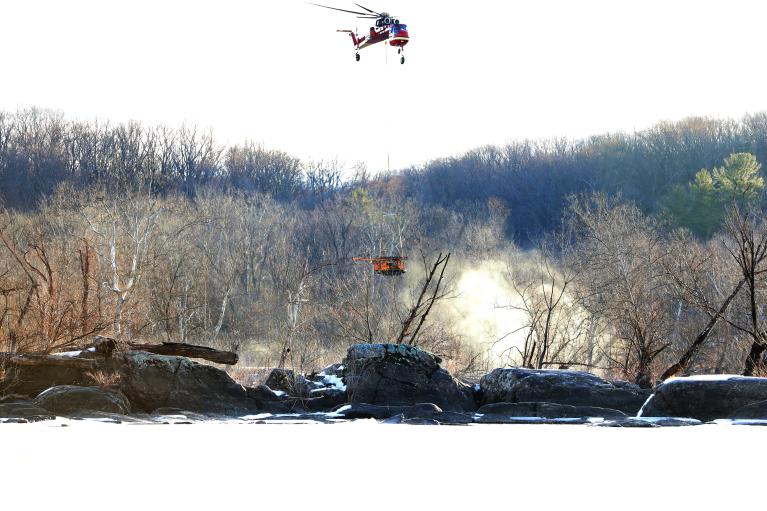
Helicopters used to drop off workers and drilling equipment mid-river
It’s not every day you see a helicopter carry a 14-ton drill rig and workers dangling mid-air over the Potomac River but if you are around Great Falls you might catch a glimpse this week. Today, DC Water began drilling for rock core samples to evaluate options for rehabilitating a sewer line across the Potomac.
The work will continue from dawn to dusk each day through January 31. A Sikorsky S-64E helicopter – similar to the ones used to fight wildfires - transports the drill rig, while a second MD-500 helicopter carries workers to bore locations using a man basket suspended from the aircraft.
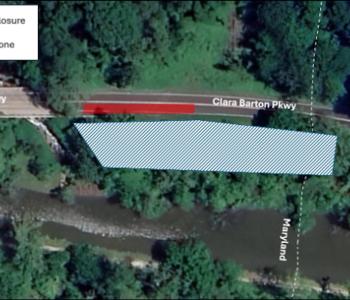
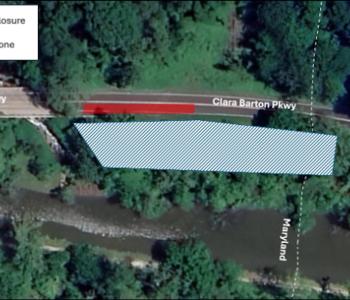
The work is taking place below the Washington Aqueduct Dam in Great Falls, where the Potomac Interceptor, a 54-mile long sewer line crosses the river. The segment at Great Falls is about 3000-feet long and 78-inches in diameter running beneath the river between Virginia and Maryland.
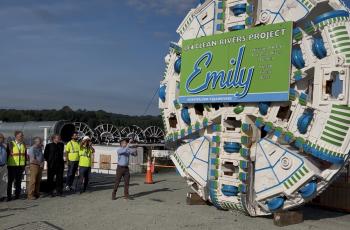
Completed more than 60-years ago, the Potomac Interceptor is a key infrastructure asset that carries 60 million gallons of wastewater daily from areas near Dulles Airport to DC Water’s advanced wastewater treatment plant. Planning is underway to rehabilitate the section at Great Falls which is nearing the end of its useful life.
The project is part of DC Water’s, 10-year, $7.7 billion Capital Improvement Plan, to upgrade and maintain the District’s aging water distribution and sanitary sewer system and ensure safe, reliable service for customers.
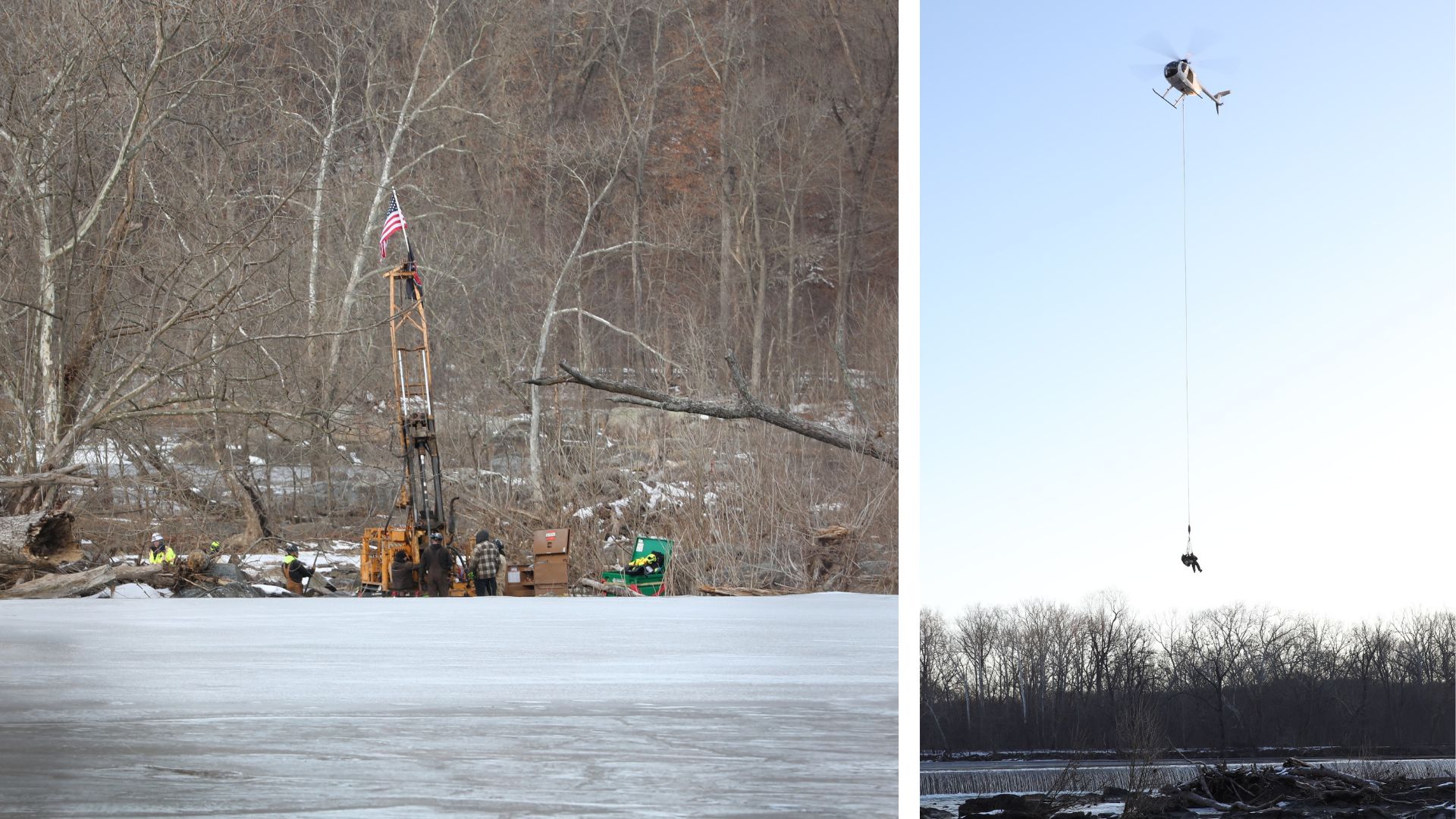
The samples will provide a better understanding of the rock formation and identify fractures in the rock that could impact design alternatives. The sewer rehab project remains in the early planning stage, but could include rehabilitating the existing pipe and adding a second line alongside it for redundancy.
Expert geologists, engineers, and their team are leading the operation. The drill rig reaches heights of 31 feet tall and is specially designed with a hollow rod and diamond tip to cut through the rock and remove a core sample. Some of the rock in this area was formed more than a billion years ago and varies in composition and type, including metagreywacke, quartz-schist, and biotite-schist.
Throughout the project, the surrounding parks, including the C&O Canal and Great Falls Park, will remain open to the public. Visitors are welcome to visit the parks and observe the work being conducted on the river. However, please note an admission fee will be required for entry to both parks.
DC Water is dedicated to minimizing disruptions to the surrounding community and ensuring the safety of all personnel involved in this important work. This geological investigation is vital to the long-term reliability of the Potomac Interceptor, which plays an essential role in maintaining the region’s wastewater infrastructure.
For more information visit our Potomac Interceptor Project page at dcwater.com/potomacinterceptor, or check out our Fact Sheet on the Potomac River Crossing.